S&T Issues #’s 37, 39, 42, 44, & 46
INTRODUCTIONThe following list of magazine articles and games represents the second installment in my series of short descriptive reviews of many of the issues of S&T magazine published during the 1970s and 80s, when James F. Dunnigan and Redmond Simonsen were still at the helm of Simulations Publications Inc. (SPI).
FIVE MORE S&T PROFILES6. Strategy & Tactics (S&T) #37, SCRIMMAGE,included a game of the same name and, like the other magazines in this series of posts, S&T #37 (Feb/Mar 1973) dates back to the “golden age” of SPI. This particular issue featured the following articles:
- The Ardennes Offensive: The Battle of the Bulge, December 1944, by Stephen B. Patrick
- Caporetto: The Austro-German Offensive in Italy, 24 October-23 November 1917, by Albert A. Nofi
- Simulation: SCRIMMAGE: Tactical Professional Football
- Outgoing Mail, by The Editors
- Sackson on Games, by Sid Sackson
- Pass in Review, by Albert A. Nofi
- Feedback, Vox Populi, Vox Dei
S&T #37 Magazine Game: SCRIMMAGEis a tactical-level simulation of the combat-like dynamic inherent in the competition between two opposing professional football teams. Although it was widely-reviled when it first appeared, this title is at least modestly intriguing because of the designer’s use of tactical-level conflict game mechanics to simulate an athletic contest. However, the fact that Dunnigan never personally revisited this type of simulation topic is probably proof enough of the lack of popularity among S&T subscribers of this attempt to broaden SPI’s product line to include “sports games.” As one of my disgusted friends — who, like me, was also a regular subscriber to S&T when this issue appeared — once observed: “If I wanted a game about football, I wouldn’t get it from SPI, I’d just join a fantasy football league!” On the other hand, purely from a collector’s standpoint, this game is interesting in that it is one of only a few “sports” simulations ever published by SPI (I can only think of one other title inspired by baseball that was designed by either — I don't remember which — Irad Hardy or Richard Berg). SCRIMMAGE was designed by James F. Dunnigan and includes the following components:
- One 22” x 34” hexagonal grid Map
- 100 ½” cardboard Counters
- One 8½” x 11” map-fold style Rules Booklet
7. Strategy & Tactics (S&T) #39, THE FALL OF ROME,included a game of the same name. Content-wise, a copy of S&T #39 (Jul/Aug 1973) featured the following articles:
- The Fall of Rome, by Albert A. Nofi
- The Battle for Guadalcanal: 7 August 1941 – 7 February 1943, by Stephen B. Patrick
- Simulation: THE FALL OF ROME: The Barbarian Invasions, 100 – 500 A.D., by John Michael Young, with graphics by Redmond A. Simonsen
- Outgoing Mail, by The Editors
- Pass in Review, by Albert A. Nofi
- Feedback, Vox Populi, Vox Dei
S&T #39 Magazine Game: THE FALL OF ROME, designed by John Michael Young, is a solitaire (or two-player) strategic level simulation of combat between the legions, auxiliaries, and other forces of the Roman Empire and various national groups of barbarian invaders that pushed against and through the Roman frontiers from approximately 100 to 500 A.D. To better simulate these long-duration historical developments, the designer makes use of an “area movement” rather than a hexagonal game map. In addition, the game is played in multi-phase game turns; each of which represents one year of real time. Not surprisingly, given the time scale and the complex nature of the historical events being simulated, each game turn is structured around a complicated set of interwoven player actions that are arranged in the following rigid sequence: the Internal Revolution Phase; the Non-Roman and Non-Loyal Roman Movement Phase; Non-Roman and Non-Loyal Roman Combat Phase; Barbarian Creation Phase; the Loyal Roman Movement Phase; Loyal Roman Combat Phase; the Legion Rebellion Phase; Control Determination Phase; Barbarian Attrition Phase; Tax Collection and Disbursement Phase; the Roman/Persian Replacement Phase; Barbarian Bribe Phase; and the Game Turn Record Phase.
I wish that it were not the case, but unfortunately, this is one of the few games designed by John Young about which I can find virtually nothing good to say. The underlying concept of this simulation is, I think, quite appealing; however, it really falls down when it comes to execution. In point of fact, because of a rushed and incomplete development process, the game — at least as originally published — is literally unplayable without the inclusion of the follow-up errata (dated 1 September 1973) that appeared in S&T #40, PANZER ARMEE AFRIKA. And even then, it requires both a lot of work and some genuine creativity on the part of dedicated players to actually make this title a moderately enjoyable gaming experience.
THE FALL OF ROME offers six scenarios: Scenario One (starts in 67 A.D.) lasts fifteen game turns; Scenario Two (247 A.D.) runs for thirteen turns; the Third scenario (260 A.D.) is fifteen game turns long; Scenario Four (332 A.D.) runs for twelve game turns; Scenario Five (420 A.D.) is twelve turns long; and Scenario Six (starts in 530 A.D.) covers the period of the final collapse of the Western Roman Empire and lasts for twenty game turns. THE FALL OF ROME includes the following game components:
- One 17” x 22” area movement Map Sheet (with Turn Record/Replacement Track, Combat Results Table, Legion Rebellion Table, Barbarian Creation Table, Internal Revolution Probability Table, Internal Revolution results Table, and Barbarian Creation Frequency Table incorporated)
- 200 ½” cardboard Counters
- One 8½” x 11” brochure-fold set of Game Rules (with Scenario Instructions incorporated)
8. Strategy & Tactics (S&T) #42, THE EAST IS RED,included a game of the same name. S&T #42 (Jan/Feb 1974) contained the following articles:
- The East is Red: The Potential for Sino-Soviet Conflict, by Stephen B. Patrick
- Napoleon at Waterloo: 18 June 1815, by Albert A. Nofi
- Simulation: THE EAST IS RED: The Sino-Soviet War
- Outgoing Mail, by The Editors
- Sackson on Games, by Sid Sackson
- Pass in Review, by Albert A. Nofi
- For Your Eyes Only, by The Editors
- Feedback Questions, Vox Populi, Vox Dei
S&T #42 Magazine Game: THE EAST IS RED is a corps/division level simulation — based on the popular KURSK Game System — of a hypothetical war between the Soviet Union and China, sometime in the late 1970’s. This title, besides being a nice little players’ game, is also interesting in that it represents (along with the 1973 game, NATO) one of the first of SPI’s numerous forays into the simulation realm of possible warfare in the near future. The game was designed by James F. Dunnigan with graphics by Redmond Simonsen. THE EAST IS RED offers four different scenarios (each 10 turns long): M+1 Current Readiness; M+1 Full Readiness; M+30 Current Readiness; and M+30 Full Readiness. In addition, the game also proposes two optional (what if?) rules: North Korean Intervention; and Soviet Strategic (nuclear) Strike.
The game mechanics of THE EAST IS RED are below average in complexity; this, plus the fact that the game is fast-moving and action-packed, makes it an excellent choice as a “beer and pretzels” game. In keeping with the game’s uncluttered design, the rules are clearly-written, short, and easy to learn; also, all of the game’s scenarios are only 10 turns long. Even better, the game system is familiar and the piece density is low; thus, besides being a fun title for experienced players, it makes an excellent introductory game. As an added bonus, it even plays surprisingly well as a solitaire game. THE EAST IS RED includes the following components:
- One 22” x 34” hexagonal grid Map Sheet (with Turn Record/Reinforcement Track, Combat Results Table, and Terrain Effects Chart incorporated)
- 100 ½” cardboard Counters
- One 6” x 11” map-fold style Rules Booklet
9. Strategy & Tactics (S&T) #44, TANK!This issue also dates from the “golden age” of SPI and included a game with the same title. S&T #44 (May/June 1974) featured the following articles:
- Tank! A Weapons System Survey, by Stephen B. Patrick
- Sea War in the Age of Sail: 1650-1830, by David C. Isby
- Simulation: TANK! Armored Combat in the 20th Century, by James F. Dunnigan and Redmond Simonsen
- Outgoing Mail, The Editors
- Sackson on Games, by Sid Sackson
- For Your Eyes Only
- Pass in Review
- Feedback Questions, Vox Populi, Vox Dei
S&T #44 Magazine Game: TANK! Armored Combat in the 20th Century, designed by James F. Dunnigan and Redmond A. Simonsen (graphics), is a two-player tactical level simulation of armored warfare from the 1930’s to the 1970’s. TANK! is played using an interactive simultaneous movement/combat system in which players plot the movement and opportunity fire missions of their units prior to the start of every game turn. Each game turn follows a set sequence of two action phases: the Plotting Phase, and the Execution Phase. The Execution Phase is further divided into five operational segments: the Panic Segment; the Initial Facing Segment; the Direct Fire Segment; the Movement [and Execution of Triggered Opportunity Fire] Segment; and the Final Facing Segment. Frustratingly, the designer mentions neither the time scale nor the map scale of the game. As an odd little note: this title is modestly interesting because, as a one-time marketing experiment, SPI offered an expansion kit (for the basic magazine game) to anyone who was intrigued enough by the original design to send the publisher a self-addressed, stamped envelope to offset the cost of mailing the expansion kit back to the interested customer. TANK! includes the following components:
- One 22” x 34” hexagonal grid Map Sheet (with Target Aspects and Scatter Directional Pattern Charts incorporated)
- 100 ½” cardboard Counters
- One 8¾” x 11” map-fold set of TANK! Rules
- One 10¾” x 11” back-printed Game Chart (with Terrain Effects Key, Terrain Effects Chart, Combat Results Tables, Spotting Table, Weapons Characteristics Chart, Scenario OOB Chart, and Scenario Instructions)
10. Strategy & Tactics (S&T) #46, COMBINED ARMS,included a game with the same title. S&T #46 (Sept/Oct 1974) features these articles:
- Combined Arms: Combat Operations in the 20th Century, by Stephen B. Patrick
- Patrol: Modern Infantry Tactics, 1914-74, by David C. Isby
- Simulation: COMBINED ARMS: Combat Operations, 1939-70’s, by James F. Dunnigan, with graphics by Redmond A.
- Outgoing Mail, The Editors
- Sackson on Games, Sid Sackson
- Footnotes, Everybody
- Players Notes, Simonsen & Young
- Feedback, Vox Populi, Vox Dei
S&T #46 Magazine Game: COMBINED ARMS: Combat Operations, 1939-70’s was designed by James F. Dunnigan, with graphic design by Redmond A. Simonsen. It is a two-player tactical (battalion/company) level simulation of the development of integrated, combined arms (infantry/armor/artillery) tactics from World War II to the 1970’s. The game map is an abstract representation of typical (western) European terrain and each map hex is scaled at 300 meters from side to side. COMBINED ARMS is played in game turns; and each game turn is equal to one hour of real time. Furthermore, a single game turn is divided into two symmetrical player turns, and each player turn is executed in the following rigid sequence of player actions: Command Control Determination Phase; Movement/Reinforcement Phase; Combat Phase; Disruption Removal Phase; and the Interdiction Removal Phase. Once both players have completed the preceding set of game actions turns, the turn record marker is advanced one space, and the next game turn begins. The actual mechanics of play for COMBINED ARMS, by today’s standards, are comparatively simple. Stacking is not permitted, except when mounting or dismounting infantry from vehicles; friendly units may, however, pass through each others’ hexes without penalty. As is typical with most tactical-level games, there are no supply requirements for infantry and armored units; artillery, however, is an exception: artillery units expend adjacent “artillery supply” when executing “rapid” fire missions. Another interesting feature of this game system is that, unlike some tactical simulations, combat units in COMBINED ARMS exert zones of control (ZOCs) into the surrounding hexes; further, these ZOCs are further divided into two classes: a Primary (adjacent) ZOC and a Secondary (extended range) zone of control. Trucks and armored carriers exert ZOCs only when transporting infantry units. The combat rules, unlike those governing supply, are fairly detailed. Combat between enemy units can take one of three forms: fire (ranged attacks); assault (adjacent infantry and mechanized infantry attacks); and air strikes. In addition to regular attacks conducted during the combat phase of a player turn, “overrun” attacks may be performed by armored vehicles, assault guns, and either mounted (armored carriers) or dismounted infantry. Truck-mounted infantry may not perform overruns because trucks are not permitted to enter an enemy ZOC, at all. It should also be noted that “overruns” represent a special form of combat that is performed only during the movement phase of a player turn. There are only four types of terrain in COMBINED ARMS: clear, rough category #1 and #2, and rivers. Finally, in order to simulate the challenges of coordinating the actions of different units during tactical combat, the game also includes detailed command and control rules.
Victory in COMBINED ARMS is based on the physical occupation or control, by one side or the other, of specific map hexes; for this reason, casualties are irrelevant except in so far as they affect a combatant’s ability to satisfy the specific geographical requirements for that side’s victory.
COMBINED ARMS offers six scenarios that examine tactical combat from the 1930’s to the 1970’s. These scenarios are, in order of appearance: Introductory Scenario Nr. 1 (hypothetical action in Russia, 24 April, 1944 — 16 game turns); Scenario No. 2 (the Defense of the Vistula Bridges along the Line Tczew, 2 September, 1939 — 12 turns); Scenario No. 3 (Prochorovka, 12 July, 1943 — 12 game turns); Scenario No. 4 (Arrancourt Tank Battle, 19 September, 1944 — 6 turns); Scenario No. 5 (Battle of the Chinese Farm, 15 October, 1973 — 8 game turns); and Scenario No. 6 (Heartbreak Ridge, 13 September, 1951 — 16 turns). The individual scenarios are all reasonably interesting; however, the nice feature about this sort of highly-abstracted game system is that it is relatively easy for players to design their own scenarios once they become bored with those presented by the game’s publisher. COMBINED ARMS includes the following components:
- One 22” x 34” hexagonal grid Map Sheet
- 200 ½” cardboard Counters
- One 8½” x 11” map-fold Rules Booklet (with Scenario Instructions and Players’ Notes incorporated)
- Two 8½” x 11” identical back-printed Player Aid Cards (with assorted Combat Results Tables, Scenario Unit Values Charts, Terrain Keys, and Terrain Effects Charts incorporated)
A FEW ADDITIONAL THOUGHTS ON THIS ONGOING PROJECTWhat should immediately be apparent to those visitors who have both worked their way through this list, and who have also looked at my first batch of “Also Ran” magazine descriptions, is that I have gone back and done a little back-filling when it comes to the S&T issues discussed above. Thus, while I have not relisted magazine games that I have already profiled elsewhere in this blog, I have added a few early issues that I had originally planned on ignoring completely. There are two reasons for this: first, it occurs to me that although I might personally find some of these early titles unappealing, it is possible (if not probable) that a few of my readers will disagree with my own highly subjective assessment of these games; and second, I have, upon further reflection, concluded that it might be helpful for me to provide additional information to those of my visitors who either presently collect old issues of Strategy & Tactics, or who plan on doing so at some point in the future. That being said, I have therefore decided, insofar as it is possible, to continue this series of descriptions with future posts that contain a more orderly and complete a list of magazine issues than was featured in either Part I or Part II of this project. I only hope that my readers will find this expanded treatment of S&T magazine and game descriptions useful.
Related Blog Posts- THE 20 BEST S&T MAGAZINE GAMES FROM THE “GOLDEN AGE” OF SPI
A Subjective List of My Personal Picks of the Best S&T Magazine Insert Games Published during the 1970’s and 80’s
- THE ‘ALSO RANS’: S&T INSERT GAMES THAT FAILED TO MAKE IT ONTO MY ‘TOP 20’ FAVORITES LIST, PART I ,S&T Issues # 38, 41, 43, 45 & 48
- THE ‘ALSO RANS’: S&T INSERT GAMES THAT FAILED TO MAKE IT ONTO MY ‘TOP 20’ FAVORITES LIST, PART II ,S&T Issues #’s 37, 39, 42, 44, & 46
- THE ‘ALSO RANS’: S&T INSERT GAMES THAT FAILED TO MAKE IT ONTO MY ‘TOP 20’ FAVORITES LIST, PART III , S&T Issues #’s 52, 54, 56, 58 & 59
Read On
With 2010 Coming to an End, It is Time to look forward to 2011

“Map and Counters,” was launched — pretty much on a whim — in April of 2009, and thus far, over two hundred and eighty separate posts have been published on its pages. The steady growth, over time, in the numbers of new and repeat visitors — currently, the site averages about fifty-five hundred unique visits and well over 12,000 page views per month — has been both a tremendous source of encouragement and the main justification for my decision to continue with this effort going into 2011. That being said, I want to take the occasion of the end of the old year, and the beginning of the new, to thank all of you who have taken the time to visit “Map and Counters” and have stayed long enough to read my often overly long and sometimes frivolous musings. Your interest is deeply appreciated.
From its start, this blog has concentrated on presenting highly-detailed game profiles and operational analysis of traditional, out-of-print, board-style wargames. The reason for this focus on older titles is simple: there are already any number of excellent internet sources for timely game reviews, After Action Reports, and even in-depth profiles of recently published titles (e.g. boardgamegeek.com or consimworld.com, just to name two); for this reason, I have, with very few exceptions, preferred to avoid this (contemporary, state-of-the-art) area of hobby commentary. Instead, I have — with my many posts on out-of-print titles — endeavored to serve as an information resource both for long-time players and collectors, and also for those enthusiasts who have entered the hobby more recently, but who, for whatever reason, have developed an interest in these older games. That being said, my blog’s emphasis will not change dramatically in the coming year; however, there may be a few modest changes “around the margins,” so-to-speak. Moreover, as regular visitors to this blog already know: in addition to my usual run of game-related posts, this site also occasionally offers commentary on other subjects as diverse as movie and book reviews, our national Holidays, convention announcements and updates, and even a few posts to cover important (in my view, anyway) breaking hobby-related news. This basic format — like the primary emphasis of my blog — will not change appreciably with the advent of the New Year. On the other hand, whatever my own preferences, it also really matters what types of offerings you, my regular visitors, actually want to see featured in the coming year. And for that reason, I have listed a number of topics that I have either begun work on already, or that I am at least considering writing about in the coming year. If any of these or other game-related subjects is of particular interest, please let me know via the comments section of this post.
Possible Topics for Future Posts- Yet more “game profiles” and/or “game analyses” of obscure, older, or less popular titles
- Articles on newer games, or on recently-introduced variants to existing titles (this would be new)
- A continuation of earlier essays on game-specific tips on play, such as a discussion of the AFRIKA KORPS “end game,” for example
- More posts on various aspects of TAHGC’s line up of classics, i.e., STALINGRAD, D-DAY, WATERLOO, etc.
- Additional lists of “game specific” articles from the General
- Reviews and/or analyses of more recent Desktop Published (DTP) games or variants (new)
- Additional reviews of movies (both old and new) with military or war-related themes
- Yet more reviews of books relating either to military history topics or, alternatively, to “Game Design”
- Guest posts (new)
- Other new and potentially interesting subjects not mentioned as part of this list

Any comments or suggestions about the preceding list or about the future direction of this Blog in the coming year are welcome. Hopefully, “Map and Counters” will continue to be a site worth visiting regularly in 2011. That, at least, is my sincere wish. The year that is now ringing to a close has, for a variety of reasons, been a difficult one; let us all hope that 2011, unlike its predecessor, will usher in better times for us all!
Read On
Discounts on BPA Membership Fees for 2011 Expire in Two Days!
 It’s hard to believe, but it is already that time of year again. Although the WBC Convention in Lancaster, PA is less than eight months away, those gamers who are planning to attend this or any of the other premier gaming events that are hosted by the Boardgame Players Association should start making their arrangements now. This means, among other things, that you “grognards” out there all need to renew your BPA memberships for the 2011 convention season. Time is rapidly running out, so those gamers who wish to vote on next year’s WBC events and who also want to receive a discount (and who doesn’t?) on their BPA membership fee for the coming year should mail in their BPA dues and 2011 WBC event ballot before January 1, 2011. Not only could Don Greenwood use the cash right after the Holidays, but a December membership renewal enables next year’s convention attendees to save a little money on their BPA 2011 tournament entry fees; more important, it also allows interested players to vote on their favorite game titles for inclusion in the 2011 WBC tournament event calendar. And if all that weren’t enough, those players who mail in their dues for a “sustaining” or higher level (read: more expensive) membership before the year’s end also get their choice of either a “free” BPA tee shirt or a cap. How can anyone turn down a deal like that?
To register or renew your BPA membership for the coming year’s tournament and convention events, click on this link to the Boardgame Players Association website 2011 membership page: http://www.boardgamers.org/forms/MemberForm.shtml
Read On
More Recommended Rules Changes for WAR IN THE EAST
INTRODUCTIONIn Part I of this essay, I presented several experimental changes to the WAR IN THE EAST (1st Ed.) rules governing railroad repair units and the formation of battle groups. The purpose of this initial batch of ‘optional’ rules modifications was two-fold: first, to offer players a simple way to increase the standard game’s historical realism; and second, to modify the rules platform in order to create a more challenging and intense gaming experience. Part II of this essay continues where Part I left off by presenting more experimental changes to the standard rules; to whit, a new set of optional rules that modify both the effectiveness and the battlefield mobility of Soviet anti-tank brigades. As was the case with Part I, these changes can be used independently or in combination with some or all of the other procedural modifications presented as part of this project. Readers are again warned, however, that some of these alternative rules — because of their divergence from those found in the standard game — can, and often will, dramatically alter the flow and tempo of WAR IN THE EAST (1st Ed.); for this reason, those adventuresome players who decide to implement some or all of these rules modifications should proceed with a certain amount of caution.
MORE OPTIONAL RULES CHANGES3a. Effect of Russian Anti-tank Units on Attacking Axis Mechanized Units (changes to Rules Case 10.5):The combat strength of Axis mechanized units that participate in an attack against a Soviet-occupied hex containing one or more anti-tank brigades is unaffected by the presence of the anti-tank unit or units. All other modifications (weather, supply, etc.) to the attacking unit or units’ combat strength still apply, but the presence of a Soviet anti-tank brigade in a defending hex NO LONGER HALVES the attack strength of assaulting Axis mechanized units. Instead, Russian anti-tank units have the following effect on combat: whenever Axis mechanized units participate in an attack against a Soviet stack containing one or more anti-tank units, at least half, rounded up, of all of the attacker’s combat losses (whatever the cause: unsupplied attack, Attacker Exchange, Exchange, ½ Exchange, etc.) must be extracted in the form of armored or mechanized strength points. The single exception to this rule arises in those cases in which the attacking Axis force does not include sufficient mechanized combat factors to satisfy this loss requirement. Such a situation might occur, for example, if the attacking force possessed no full strength German mechanized divisions but did include mechanized kampfgruppen or brigade strength units.
3b. Retreat Limitations on Soviet Anti-Tank Units (‘experimental’ changes to Combat Resolution Rules Case 11.0):Whenever a Russian anti-tank unit is forced to retreat as a direct result of an Axis attack which, after all Axis combat losses have been removed, includes at least one surviving mechanized unit of any size, the anti-tank brigade may not retreat but is eliminated instead. Please note, however, that this rule applies ONLY to anti-tank brigades: all other types of Soviet units required by the Combat Results Table to retreat — whether infantry, cavalry, mechanized, or artillery — are retreated normally.
Rationale:
 |
| Soviet anti-tank gun in the Battle of Kursk |
Rules Case 10.5 in WAR IN THE EAST (1Ed.), which stipulates the “halving” effect of Soviet anti-tank units on attacking Axis mechanized forces, appears — based on my own review of engagements involving German armor versus Russian prepared anti-tank defenses during the first three years of the war — to be significantly at odds with the historical record. Of course, it is difficult to know what Jim Dunnigan actually had in mind when he decided to include Soviet anti-tank units in the WAR IN THE EAST counter-mix, but their dramatic, if implausible effect on the Axis armor in the game — particularly when viewed in isolation — is significantly greater than was their actual impact on combat on the Eastern Front. Moreover, the astonishing (almost magical) capabilities attributed by the designer to these Soviet units tend to push the players in odd and usually ahistorical directions.
 |
| German panzer division moves up to attack, WWII. |
The simulation logic, such as it is, that underpins the standard anti-tank rules seems curious at best, and manipulative at worst. For starters — and for reasons known only to the game designer — the Russian anti-tank counters in WAR IN THE EAST have been designated as brigades, although historically, these units were usually organized as battalions or, more frequently, as independent regiments. In most cases, these specialized contingents were equipped with 45mm, 57mm (starting in 1942), and 76mm anti-tank guns, often with a smattering of marginally-effective anti-tank rifles and even canine-borne anti-tank mines. That being the case, even if one assumes that each Soviet anti-tank brigade represents two full-strength regiments, their “halving” effect on the attack strength of Axis mechanized units still comes perilously close to pure “Dunniganesque” fantasy. That is to say: there is simply no credible evidence based on a careful review of armor vs. anti-tank engagements on the Russian Front that would support the standard “anti-tank effects” rule as originally written; which, in turn, leads to an obvious question: Since it seems clear that the importance of Soviet anti-tank units has been exaggerated in the published rules for WAR IN THE EAST, what legitimate role should these specialized units actually play in the game?
 |
| German anti-tank gun in the Battle of Stalingrad. |
If we accept history as our guide, the answer necessarily would be a very different one from that envisioned by the game’s designer. Viewed strictly in terms of military doctrine, both the Soviets and the Germans considered the part played by towed anti-tank guns — versus tracked tank-destroyers, for example — as an economical means of channeling and slowing the advance of attacking enemy armor and hence as being highly useful in shaping the battle area. However, neither side considered the battlefield contribution of these mainly static defensive assets to be anywhere near as significant as the critically important role played by Russian anti-tank brigades in the standard game. On the contrary, the Soviet high command (STAVKA) assumed that an anti-tank regiment which had been deployed on suitable terrain and in prepared positions — that is: layered, interlocking defensive zones that included tank obstacles, pre-fabricated concrete block bunkers, and camouflaged, reinforced dugouts — AND WHICH WAS ALSO BACKED UP BY ARTILLERY, should be able to disable between two and three dozen enemy tanks before the regiment either defeated the German assault or was overrun by the attacking enemy force. It should be noted that this number could be higher, but usually only if the local terrain was especially well-suited to the defense. Hence, based on their experiences during the early defensive engagements around Moscow and Leningrad, Red Army commanders seem to have decided that, given optimal battlefield conditions, a well-sited anti-tank regiment should be able to both slow and blunt even a determined German armored assault before such a regiment was, itself, destroyed in place. In short, the battlefield effectiveness of Soviet anti-tank units against enemy armor, while not viewed as being decisive, was still considered to be well worth their investment in men and materiel. Needless-to-say, the loss (even if temporary) of forty-eight to seventy-two tanks — the projected casualties from amongst enemy armored vehicles inflicted by two properly supported Soviet anti-tank regiments — would be a nontrivial price for an Axis assaulting force to pay. Nonetheless, armored losses on this scale typically would not, contrary to the WAR IN THE EAST standard rules, utterly degrade the offensive capabilities of an attacking panzer corps, and most certainly would not significantly reduce the striking power of an entire panzer army.
 |
| German Tiger destroys Soviet T34 at Kursk |
Probably the most pernicious (and frustrating) effect of the “anti-tank” effects rule — at least in the case of the Campaign Game — is that, after the first few invasion game turns, it makes the printed combat strength of the German mechanized divisions largely irrelevant to Axis offensive play. Instead, what this rule really does is to magnify the utility and combat value of non-motorized German “leg” infantry divisions when they are used to attack Russian prepared positions. Moreover, for all of the Soviet anti-tank brigades’ inflated defensive power, these units, curiously enough, really do not fulfill the one function in the standard game that they actually did serve on the Russian battlefield; that is: to attrite the Wehrmacht’s mechanized strength by destroying or disabling German armored vehicles. Thus, for much of the WAR IN THE EAST Campaign Game, combat losses from amongst the mechanized forces of the two belligerents will usually be disconcertingly low. In fact, both sides will tend to suffer the greater part of their armored casualties when their mechanized units are defending against, rather than attacking the enemy. This means that — for a large part of the game — the mechanized forces available to both sides will tend to be much stronger than was the case historically. Furthermore, despite the fact that this game dynamic is unrealistic,nonetheless, it is the inevitable result of a combat system in which the losses incurred by both the Germans and the Russians when attacking will, with very few exceptions, be extracted from participating infantry units rather than from the mechanized forces directly involved in the battle.
And that's not all: there is another irksome problem with the designer’s somewhat mystical approach to Soviet anti-tank units in WAR IN THE EAST that warrants attention: Dunnigan treats all of these brigades, at least for movement purposes, as being motorized. To be fair, it is true that a certain percentage of the Red Army’s anti-tank regiments were assigned their own organic motor transport; however, from my own reading of the historical record, it appears that a substantial number, if not the majority of these specialized units, depended on horses for their mobility, particularly during the first three years of the war. This factor, when considered along with the standard Soviet practice of aggressive forward deployment of their anti-tank assets, made any kind of organized withdrawal in the face of a powerful enemy armored attack — particularly one supported by air power — exceedingly difficult, if not almost impossible. Individual gunners might escape to fight another day, but the anti-tank guns — whether pulled by horses or by trucks — were most unlikely to survive a retreat across a battlefield dominated by roving enemy armor.
Probable Effects of Recommended Rules Change 3a: Substituting the optional (3a) rules case for the standard Soviet “armored effects” rule, as might be expected given the preceding commentary, will fundamentally alter certain key aspects of play in WAR IN THE EAST. For example, players who opt to use the experimental Russian anti-tank rule instead of the regular “halving” version will quickly discover that traditional German and Soviet tactical formulas — beginning with the initial invasion game turns — are more problematical than in the regular game; moreover, adopting this procedural change will also noticeably increase battlefield attrition for both belligerents. One reason for this result, of course, is that incorporating this rules modification into the game significantly enhances the offensive hitting-power of the German mechanized forces, especially during the first few years of the war when the Wehrmacht is still ascendant; in addition, besides improving Axis offensive prospects, it also encourages the Soviets to expand the defensive role of their own mechanized units, as well. Perhaps, most importantly, this change operates to realistically redirect the general flow and tempo of the Campaign Game; and for this reason, it tends to produce — in my opinion, at least — a more historically satisfying model of mobile warfare on the Russian Front. Moreover, my reasons for recommending this rules change will, I believe, become apparent as soon as the very different battlefield effects of the standard and modified versions of the anti-tank rules are compared.
 |
| Trench warfare at Leningrad. |
The first and most obvious effect on play of the (3a) experimental rules option, as noted earlier, is that it restores the offensive power of the German mechanized arm vis-à-vis virtually any Soviet defensive system that can conceivably be arrayed against it. Of course, it goes without saying that the specific defensive arrangements deployed by the Soviet high command will oftentimes vary across different sections of the game map and these variations will inevitably be influenced by the following factors: the local availability of Soviet rifle strength; the proximity to the frontline of important Axis objectives (i.e., major Russian population centers); the presence or absence of advantageous defensive terrain; and the season of the year. However, even when taking all of these different factors into consideration, the “backbone” of the typical Russian defense — at least when using the regular (printed) anti-tank “armored effects” rule — will still be the multi-layered, easy-to-construct, and economical-to-build “fortified” line. Not surprisingly, using the (3a) change to the anti-tank rules noticeably reduces the effectiveness of this popular Soviet approach, particularly during the critical first two years of the war. If this is indeed the case, and I believe that it is, then it probably makes sense — before moving on to the specific effects on play of the proposed rules change — to briefly revisit the tactics used by both sides when the standard anti-tank rules are in force. To that end, what follows next is a brief analysis of the dominant patterns of offensive and defensive play that shape the flow of a regular game of WAR IN THE EAST, with special attention given to the German summer campaign seasons of 1941, 1942, and 1943.
 |
| Battle for Moscow, Soviet Siberian soldiers. |
Of course, a number of major engagements in Russia did not occur in summer: the Battle for Moscow (1941-42); the Battle of Rzhev (1942); the Stalingrad Encirclement (1942-43); Manstein’s “Backhand Blow” (1943), to name only a few. And true to the historical record, WAR IN THE EAST has been designed so that the Red Army will largely control the offensive tempo of the game during each and every fall, winter, and spring beginning with the first fall and winter of the war. However, during the summer months of 1941 and 1942, and to a lesser extent, 1943, the game’s basic architecture shifts the offensive advantage back in favor of the Germans. This means that, although the winter battles are important when it comes to furthering Russia’s long-term prospects for victory, the game will, in most cases, actually be won or lost depending on the outcomes of the Axis summer campaigns of 1941 and 42. Thus, the main goal of the Soviet high command, particularly during these critical early years, will be to establish and maintain a defensive posture that can successfully withstand the offensive power of the Germans during that portion of the game when the Axis forces are at their strongest.
 |
| Russian soldiers and train. |
When it comes down to the actual “nitty-gritty” of play, the most widely-used defensive strategy employed by the Soviets in the standard game — for those readers who are unfamiliar with WAR IN THE EAST — is one that relies on a contiguous line of hexes (preferably as straight as possible) each of which is occupied by a fortified infantry division, a Guards rifle corps (if available), and an anti-tank brigade. This popular linear configuration forms the foundation for the Red Army’s defensive strategy because it guarantees that, in order to capture a Soviet-controlled frontline hex, the attacking Axis divisions must overcome a perfectly-balanced Russian force that possesses a defensive combat strength of 14 factors and an exchange value of 9 factors. Moreover, to insure that the Germans do not achieve a sudden, unexpected breakthrough, the Soviets will virtually always deploy several (two to four) additional belts of static 0-3-0 fortified units (converted 1-4 infantry divisions) immediately behind this first line of continuous strong-points; these, in turn, will typically be backed-up by reserve units of varying types, all of which are close enough to move into the gaps that will inevitably appear either as the frontline lengthens, or as defending Russian units are eliminated in combat. Clearly then, this Soviet defensive strategy — at least when playing using the standard anti-tank rules — presents a formidable barrier to any German advance: the Axis cannot achieve better than 3 to 1 odds against such a prepared position from two hexes and only 5 to 1 (at best) from three hexes. Moreover, this baked-in Soviet ability to restrict Axis battle odds in the standard game is especially critical because, even when using CRT #1 (the most advantageous to the attacker of the game’s four Combat Results Tables), the best combat result (attrition-wise) that the attacker can hope to gain — even at odds of 5 to 1 — is a ½ Exchange. What is even more potentially troublesome to the assaulting Germans is that most of their attacks will have to be conducted at odds of 3 to 1. And battles fought at 3 to 1, with or without friendly air support, offer the attacker no prospect at all of generating an Exchange or ½ Exchange, but, nonetheless, still carry an appreciable risk of the “dreaded” Attacker Exchange result: a combat outcome that requires the attacker to lose factors equal to the face value of the defender’s combat strength, but leaves the defending units in the target hex unaffected.
 |
| Soviet 76mm anti-tank artillery |
In game terms, this means that Dunnigan’s anti-tank rules virtually guarantee that, after the initial massacre of Soviet frontier forces in June-July 1941, the Wehrmacht’s summer offensives of late 1941 and 1942 will, with very few exceptions, take the shape of extended and bloody, set-piece “slugging matches.” This pattern of play, although it is an inescapable feature of the standard game’s design, is problematical because, historically-speaking, the first protracted set-piece German action of this sort did not actually occur in Russia until Hitler’s failed "Zitadelle" offensive at Kursk in July, 1943. Thus, despite the fact that these types of costly, static engagements seriously undermine the German Army’s strategic goal of conservation of forces, the game’s victory conditions require the Axis to attack (regardless of casualties) during the first few summers of the war. For this reason and in spite of the Wehrmacht’s stacking and early-game CRT advantages, the heavy losses caused by these bloody attrition battles will almost always operate to damage the Germans’ long-term prospects for victory, should the game continue much past the summer of 1943. In short, the German side will have good reason be worried about their steadily accumulating casualties during these largely unavoidable slugging matches, while the Russian view of these bloody summer clashes will typically tend to be a bit more positive. This is because, as these protracted summer battles grind on, the Soviets will typically suffer significantly fewer casualties from among their high value units than will their Axis adversaries; and what losses the Red Army’s forces do suffer will mainly come from their static (fortified) infantry divisions, thanks to the commonly-used Soviet tactic of evacuating units from an exposed position as soon as it can be attacked from three or more hexes (leaving the immobile 0-3-0 behind, of course, to serve as a rear guard).
 |
| Soviet howitzers at the Battle of Kursk |
Based on my description, thus far, of the tactics most likely to be used in the standard game, it might appear that WAR IN THE EAST players should not expect to see the main effects of the recommended (3a) change to the anti-tank rules until the set-piece defensive engagements of 1941-1943; it turns out, however, that such is really not the case. Incorporating the new, “weaker” version of the anti-tank rules directly undercuts the usefulness of traditional Soviet defensive tactics both during the short Barbarossa Scenario (20 game turns) and also during the early “frontier battles” phase of the Campaign Game (208 turns) by significantly reducing the frontline Russian anti-tank brigades’ ability to impede the advance of the German mechanized forces in the critical first weeks of the Axis invasion. Why and how this change occurs actually derives from two very different features of the WAR IN THE EAST KURSK-based game system: the first is the threat of encirclement posed by enemy mechanized breakthroughs and exploitation movement; the second is the powerful effect of (unfrozen) river lines on combat. Both game elements are important, so let us briefly examine how the anti-tank rules interact with this pair of design features when it comes to the actual play of the game.
 |
| Soviet machinegun crew |
Any player who has tried one of the many titles based on the KURSK Game System will know that, because of the ability of mechanized units to move both before and after the combat phase, a defense — if it is to be successful — requires the establishment of a second line of units and/or zones of control (ZOCs) behind the defender’s initial line of resistance. The creation of such an impenetrable secondary barrier serves to prevent exploiting mechanized units from passing through any gaps suddenly opened in the non-phasing player’s front as a result of losses incurred during the immediately preceding combat phase; needless-to-say, this “double-line” defensive approach is critical because exploiting mechanized units, if left unimpeded, can slice deep into the non-phasing player’s rear areas to cut supply lines or to encircle exposed sections of the defender’s front. In the case of WAR IN THE EAST, this problem is further complicated by the fact that the rules require that, prior to the start of the game, a sizeable part of the Red Army be set up adjacent to or within a few hexes of the Axis-Soviet frontier; hence, the establishment of a second defensive line is absolutely essential if the Russians are to prevent the bulk of their frontline units from being encircled on the first and second turns of the Barbarossa Scenario or the Campaign Game. To make matters worse, the defender’s second line must be uniformly strong enough to prevent enemy mechanized units from overrunning any part of it during exploitation movement. And because of stacking limitations on overrunning units (only three attacking units may participate in the same overrun), a total of three combat factors per hex is typically required to prevent stacks of enemy armor from rolling over a defender’s position during either the initial or the mechanized movement phases. However, when using the game designer’s original anti-tank rules, a single Soviet anti-tank unit behind a river or, alternatively, an anti-tank brigade stacked in the open with an infantry or cavalry division (a total of only two defense factors) is sufficient to make the target hex immune to an Axis mechanized overrun because of the “halving” effect that the anti-tank unit has on enemy armor.
 |
| Germans advance at Kursk, July 1943 |
Unfortunately for the Russians, this all changes when the (3a) rules modification is substituted for Dunnigan’s original version of the anti-tank rules. Instead, with the new “weaker” rule in place, a Soviet anti-tank brigade — putting aside, for a moment, its 10-hex movement range — becomes no more useful in preventing German overruns than any other (one defense value) unit in the Russian counter-mix. This is no trivial matter, particularly in the north and south sections of the front where — unlike the center — there are fewer forest or swamp hexes on the map to block enemy mechanized ZOCs. Thus, until the Russian forces that were lucky enough to escape the first turn carnage near the Axis-Soviet border can withdraw beyond the reach of a supplied German army, the combination of enemy ZOCs to the front and air interdiction markers in the rear will make it very difficult for the Red Army to extricate many of its less mobile units — particularly its 1-4 rifle and 1-3 cavalry divisions — from the lethal clutches of the onrushing Wehrmacht. To this set of concerns, the Russians can also add another worry; that is: when playing with the post-publication (official SPI errata as of Sept. ’74) “Arms Center Disruption” rule — which stipulates that all on-map arms centers must cease production as soon as the Soviets lose 100 or more units (of any flavor) and may not resume producing arms points until game turn 21 — the increased exposure of Russian units, brought about by this rules change, can often mean that the 100 unit “arms disruption” threshold will be crossed one or even two turns earlier than in the standard game; this represents an increased loss to the Soviets of typically between 20 and 40+ badly-needed arms points.
 |
Soviet women dig anti-tank ditch in front of
Leningrad, Summer, 1941. |
Moreover, to add insult to injury for the Soviets, it turns out that besides making a successful Russian withdrawal vastly more complicated during the early post-invasion game turns, the substitution of the experimental (3a) rules change also makes it much more difficult to slow or block the initial advance of German mechanized forces in the north and center. The reasons for this are several, but the most important has to do with the initial role of the German infantry. Once the Barbarossa or Campaign Games begin, most of the Wehrmacht’s non-mechanized units will be tasked with liquidating the inevitable scattered pockets of Soviet units that survived the opening Axis attacks but which were unable to escape to the east; hence, Hitler’s panzers will initially be obliged to strike off in pursuit of the fleeing Russians with little or no infantry support. This common early-game dynamic, when playing with the original anti-tank rules, makes it possible for the Red Army to slow or even temporarily halt supplied German mechanized forces in the north and center using a combination of armor, anti-tank units, and river lines. Interestingly, the successful application of this Soviet approach actually depends on several different game elements, but German stacking limits are really the most important contributor to its effectiveness. In WAR IN THE EAST, the most powerful force that the Germans can concentrate in one hex is four 10-8 panzer divisions, for a total of forty attack factors; this is a force that the Soviets cannot hope to match in the early turns of the game. However, an easy-to-muster Russian stack composed of a 2-5 tank brigade, a 3-5 tank brigade, and a 0-1-10 anti-tank brigade (a total of six printed defense factors) — even if in the open — presents an attacking German mechanized force with an effective defense strength of twelve factors; more importantly, the same Soviet stack defending against an unsupplied German mechanized force or deployed behind a river is equivalent to twenty-four very intimidating (and 4 to 1 proof) defense factors. This is because the attack strength of the panzers and panzer grenadiers, in every one of these examples, is halved (in some cases, multiple times) before combat is resolved. In game terms, this means that the Russians can use this tactic to slow the progress of both Army Group Center’s and Army Group North’s mechanized units when it matters most. And because even the gain of a few extra turns of delay can buy enough time for arriving Russian reinforcements to fortify much, if not all, of the ground in front of both Moscow and Leningrad, this rule seriously impacts the Red Army’s defensive options during the critical summer game turns of 1941.
 |
| Soviet POWs under German guard, sumer 1941 |
What all this means is that, whether viewed in the context of the initial frontier battles of summer 1941, or with an eye towards the wider impact of this (3a) rules change during the first few years of the war, Russian losses (along with those of the German mechanized arm) will inevitably increase, and increase substantially. The other notable effect of this rules modification is that it, at least partially, restores the importance of terrain in shaping the battle area: river lines, especially, become much more important to the Russians when the anti-tank ‘halving’ rule is discarded and replaced by its “weaker” alternative. Stated differently: the halving effect of rivers — at least when it comes to Soviet defensive play — will, in most cases, become a more important defensive consideration for the Russians than limiting the number of hexes available to the attacker. Thus, the “ruler-straight” and “snake dance” Soviet defensive configurations that regularly appear in the standard game will tend — as a direct result of this rules change — to give way to the more meandering frontlines that actually characterized the historical campaign.
Last but not least, of course, is the increased attrition that this change will introduce into the dynamic of the WAR IN THE EAST game system. Simply stated, the Soviets will, because of this change, suffer much higher losses among their “high value” units than in the standard game; however, just as importantly, the Germans will also be forced to accept significantly higher casualties among their mechanized forces if they choose, as they almost certainly will, to commit their panzer and panzer grenadier divisions to high-odds assaults against the Russian line. Thus, this rules change will tend to produce — typically, by early 1942 — a battlefield environment in which the orders of battle of the two opposing armies will be both weaker and more brittle than in the standard game.
Probable Effects of Recommended Rules Change 3b:In the standard game of WAR IN THE EAST, the Soviet side usually constructs about forty-five to fifty anti-tank brigades during the first months of the war, and then never builds another one of these units for the rest of the game. This, in its own way, is just as ridiculously unrealistic, from a historical standpoint, as the already-railed against, but nonetheless typical game phenomenon of German panzer divisions operating for much of the war without (figuratively speaking) ever suffering so much as a scratch as a result of combat operations.
 |
| Soviet WWII tank production factory |
The adoption of the 3b rules change will, like its 3a “cousin,” affect the trajectory of the game (particularly, the Campaign version) in several important ways. First, it creates a battlefield role, albeit a small one, for the otherwise largely useless Axis allied mechanized units. The second but most immediate effect of this change, not surprisingly, will be to dramatically increase losses among Russian anti-tank units. This, in turn, will mean that the Soviets, if they wish to maintain a reservoir of these “weakened” but still useful brigades, will have to devote a fairly significant number of arms points to their construction for at least the first two to two-and-a-half years of the war. In terms of Soviet force levels, both in the short and in the long term, this is an important change. In the short term, it means that more Soviet Production capacity (Training Center tracks), along with more personnel and arms points, will have to be directed towards the construction of anti-tank brigades, particularly during the summers of 1941 and 42. Long term, of course, the diversion of increased numbers of scarce Production resources towards the construction of purely defensive units means, in turn, that the Russians will not be able to construct as many of the expensive (especially, in arms points) offensive units as they would otherwise be able to produce in the standard game. In short, both 1942 and 1943, because of the 3b rules change will tend to see a Soviet combat force with fewer tank corps, artillery corps, or air units than would typically be the case. The end result of this change therefore will often be a situation, particularly during the summer of 1942, in which the Soviet position is much more precarious than in the standard game: a strategic situation, in short, in which an Axis decisive victory is still possible, even in this, the second year of the war.
CONCLUSIONMore Recommended WAR IN THE EAST Rules Changes are Coming Soon:
 |
| Soviet Anti-tank Hunters with mine dogs |
This essay is the second of several that will propose a collection of — in my opinion, at least — challenging and historically-grounded changes to the standard rules for the first edition of WAR IN THE EAST. My goal, in presenting these rules alternatives, as I indicated earlier, is to rekindle a little interest in this great old title, and perhaps, to spur a few players to do a little experimenting with the game on their own. That being said, Part III of this series will — when I get around to publishing it — offer yet a few more recommended changes to the standard WIE Campaign Game rules that, hopefully, will compliment those presented here. Of course you can’t please everyone, so for those readers who don’t like any of the recommendations that I have put forward thus far, I urge them to do a little rules tinkering on their own. While it is rarely worthwhile to radically alter a simulation’s basic design architecture, sometimes one or two small tweaks can have a very pleasing effect on a game and its playability. And when looking for rules inspiration, the historical record is almost always a great source for new ideas.
Finally, for those players who prefer to leave the ‘rules writing’ to others, I want to repeat my earlier warning: some of the rules modifications recommended in this set of essays have been tested fairly extensively, but some have not (much like most commercially-produced games). For this reason, those readers who are tempted to actually experiment with one or both of the above optional rules are urged to proceed with caution; some of the changes that have been recommended in Part I, as already noted, will have only a modest effect on the game, but the two listed in this installment have the potential to affect play and play-balance significantly. Consider this “a word to the wise.”
Read On
S&T Issues # 38, 41, 43, 45 & 48
INTRODUCTIONIn August 2010, I published a post cataloging some of my own favorite S&T magazine games from the 1970s and 80s titled: THE 20 BEST S&T MAGAZINE INSERT GAMES FROM THE “GOLDEN AGE” OF SPI. The inspiration for this (admittedly) highly-subjective essay originally came from the queries of a reader who was interested in learning more about, and perhaps acquiring, some of the more interesting of the out-of-print game designs from the 1970s and 80s. However, this reader, not surprisingly, also wanted to make sure that the money he invested in these older, often hard-to-get titles was well-spent and not wasted. My response, as the title from my original post indicates, was that a good place for this prospective collector to start would be with some of the early S&T magazine games; specifically those from the so-called “golden age” of board wargaming. The main appeal of this “magazine-based” approach to older SPI games — in my view, at least — was that a player could actually experiment with a particular game system before springing for a larger, more expensive title. Hence, a fan of Napoleonic games who might be interested in buying a copy of Frank Davis’ wonderful (but very detailed and complex) WELLINGTON’S VICTORY could gain a real feel for the essential features of Davis’ Napoleonic tactical system by first playing the smaller, less-expensive magazine game, NEY VS. WELLINGTON. If, after trying it out, the player decided that he liked the smaller game, he could then invest in a copy of the larger, more costly WELLINGTON’S VICTORY; if not, he would, at the very least, have saved himself both a lot of time and no small amount of money.
Although the “20 BEST” essay was generally well received by my readers; in retrospect, I now think that, were I to do it over again, I would probably have handled my survey of the “Top 20” S&T magazine games a little differently. For one thing, because there were a number of games that were real contenders for a spot on the list, but which, for one reason or another didn’t quite make it, I probably should have included at least a few “honorable mentions” to go with the twenty games that actually did get featured. Secondly, S&T was, and is, more than a game mailer; it is a magazine, first and foremost, with content oriented specifically towards the interests — historical and otherwise — of wargamers. Thus, had the rapidly burgeoning length of the “20 Best” essay not been a concern, I probably would have accompanied my brief S&T game profiles with short descriptions of their associated magazines’ tables of contents. Live and learn, I suppose; which, conveniently enough, brings me to the present.
Because a number of my readers have argued (pretty convincingly, I must admit) on behalf of a number of S&T magazine games from the 1970s and 80s that did not make it onto my original “20 Best” list, I have decided to highlight some of these other titles in an ongoing series of posts, beginning with this one. In addition, because newer players must rely on “after-market” sources for these S&T magazine-game combinations, and since many of these sources do not offer much in the way of details when it comes to their auction or “resale” product descriptions, I am rectifying one of my earlier oversights by including a table of contents for each of the S&T issues that I will be featuring in this and future posts. Please note, however, that there will inevitably be gaps in this series: first, because a number of the magazine games from this period (the 70s and 80s) were repackaged and then sold as regular SPI product offerings, and, as such, have already been profiled elsewhere in this blog; second, certain of the earliest S&T games were published without mounted counters, and, for this reason (if no other), they have also been excluded from this collection of titles; and third, because there are just some S&T games (e.g., S&T #37, SCRIMMAGE) that I simply cannot summon up enough enthusiasm to revisit, even for a “retrospective” project like this one. That being said, the following five profiles, all from the “golden age” of SPI — when James F. Dunnigan and Redmond Simonsen ran things — represent the first installment in this ongoing series of posts:
FIVE S&T PROFILES1. Strategy & Tactics (S&T) #38, ‘CA’, when originally published, included a copy of the game of the same name. A copy of S&T #38 (Apr/May 1973) features the following articles:
- 'CA': Tactical Warfare in the Pacific, 1941-43, by David Isby
- The Gettysburg Campaign: 1 June-26 July 1863, by Albert A, Nofi
- Simulation: ‘CA’: Tactical Combat in the Pacific, 1941-45, by James F. Dunnigan and Redmond Simonsen
- Outgoing Mail, by The Editors
- Sackson on Games, Sid Sackson
- Feedback, Vox Populi, Vox Dei
S&T #38 Magazine Game: ‘CA’, designed by James F. Dunnigan with graphic design by Redmond A. Simonsen, is a two-player simulation of American versus Japanese ship-to-ship combat during World War II. However, unlike most titles that model naval actions in the Pacific Theater during World War II, ‘CA’ focuses exclusively on surface actions, and leaves out the more famous carrier battles completely.
‘CA’ is played on a traditional hexagonal-grid sea-type game map which, because of the requirements of several of the scenarios, also includes a small collection of differently-sized land areas. The game’s operational scale, it should be noted, is a little odd: each game-turn represents six minutes and forty seconds of real time; each hex is 926.88 meters from side to side; and a single movement point is equal to five knots in real speed. To keep the mechanics of play relatively simple, game turns are split into two symmetrical player turns. Each player turn is further divided into four phases: the Gunnery Attack Phase, the Torpedo Attack Phase, the Movement Phase, and the Acceleration/Deceleration Phase. And because of the nature of surface naval combat during World War II, the game design rightly concentrates on maneuver, night sighting, damage levels, momentum, gunnery, and torpedo attacks. Sometimes referred to as “ PANZERBLITZ at Sea” because of the way information is displayed on the ship counters (as well as the peculiarities contained in the combat and damage rules), ‘CA’ is nevertheless a fast-moving and manageable naval simulation for those players who like naval games, but who have an aversion to recordkeeping.
‘CA’ offers seven historical, and three hypothetical scenarios. Scenario 1 is a hypothetical twenty-turn action that could have occurred in the South China Sea, 10 December 1941. Scenario 2 is a fifteen-turn historical treatment of the battle at Savo Island, 9 August 1942. Scenario 3 is fifteen-turns long and covers the historical action off Cape Esperance, 11-12 October 1942. The fourth Scenario is a twelve-turn treatment of the first action off Guadalcanal, 13 November 1942. Scenario 5 is twenty-turns long, and covers the second action off Guadalcanal, 14-15 November 1942. Scenario 6 is another twenty-turn action, this time at Tassafaronga, 30 November – 1 December 1942 — a battle in which, interestingly enough, my own father’s ship, the New Orleans, lost 150 feet of her bow when the forward magazine exploded after it was hit by a Japanese shell. The seventh Scenario is fifteen game-turns, and covers the historical action at Kolombangara, 13 July 1943. Scenario 8 is a twenty-turn treatment of the action at Empress Augusta Bay, 2 November 1943. The 9th Scenario is a hypothetical twenty-turn action that could have occurred near Samar, 25 October 1944. And Scenario 10 is another hypothetical action that could have occurred near Okinawa in 1945; this final scenario is thirty game turns long. A complete copy of ‘CA’ includes the following components:
- One 22” x 35” hexagonal grid Map Sheet
- 400 ½” cardboard Counters
- One 6” x 11” map-fold set of Rules (with Scenario Instructions, Speed/Facing Table, and Combat Results Table incorporated)
2. Strategy &Tactics (S&T) #41, KAMPFPANZER, included a game of the same name. S&T #41 (Nov/Dec 1973) features these articles:
- Mechanized Warfare: Experiment and Experience 1935-40, by Albert A. Nofi
- War in the East: The Russo-German Conflict, 1951-45
, by Stephen B. Patrick
- Simulation: KAMPFPANZER: Armored Combat, 1937-40
, by James F. Dunnigan and Redmond Simonsen
- Outgoing Mail, by The Editors
- Sackson on Games, Sid Sackson
- Pass in Review, by David C. Isby
- Feedback, Vox Populi, Vox Dei
S&T #41 Magazine Game: KAMPFPANZER: Armored Combat, 1937-40, designed by James F. Dunnigan (who else?) with graphic design by Redmond A. Simonsen, is a two-player simulation, at the tactical level, of armored warfare as it was waged in the brief span of years between 1937 and 1940.
KAMPFPANZER is an interesting, if somewhat uneven, attempt at simulating small unit armored combat during the years immediately leading up to World War II; a period when both armored vehicles and the competing doctrines for their use were still changing and evolving. Each game-turn is equal to three minutes and forty seconds of real time, and an individual map hex is 100 meters from side to side. A single armored game counter represents five armored fighting vehicles (AFV’s); each unit with an infantry symbol represents a platoon; and each artillery unit stands for a single battery. This early Dunnigan design, as noted earlier, is far from perfect; however, what actually makes the KAMPFPANZER game platform unusual compared to other SPI magazine games is its use of “simultaneous movement plotting” by the opposing players in order to recreate realistic combat interactions on the battlefield. This intriguing design feature — time-consuming though it is — actually succeeds fairly well in creating a level of tactical uncertainty that is usually only found in some naval games.
KAMPFPANZER offers nine scenarios (mini-games) that cover a variety of different armored engagements. And this cross-section of relatively obscure tactical situations represented by the game’s scenarios is probably one of this title’s best features. Thus, the various KAMPFPANZER scenarios simulate little-known tactical armored engagements during the Spanish Civil War and the Russo-Finnish War; there is also even a Russo-Japanese armored clash, as well as an assortment of early World War II armored actions from the 1939 Polish and 1940 French campaigns. A complete game of KAMPFPANZER includes the following components:
- One 22” x 34” hexagonal grid Map Sheet
- 200 ½” cardboard Counters
- One 6” x 11” map-fold set of Rules
- One 11” x 13¾” back-printed combined Scenario Set Up/Charts and Tables Sheet
- Two experimental Simultaneous Movement (Simov) Sheets
3. Strategy & Tactics (S&T) #43, THE AMERICAN CIVIL WAR, when it was originally mailed, included a copy of a game of the same name. S&T #43 (Mar/Apr 1974) contains the following articles:
- The American Civil War, 1861-1865, by Albert A. Nofi
- The Soldier Kings, 1550-1770, by Frank Davis with Ron Toelke
- Simulation: THE AMERICAN CIVIL WAR, 1861-1865, by James F. Dunnigan and Redmond Simonsen
- Outgoing Mail, The Editors
- Sackson on Games, Sid Sackson
- For Your Eyes Only, The Editors
- Feedback, Vox Populi, Vox Dei
S&T #43 Magazine Game: THE AMERICAN CIVIL WAR, 1861-1865, designed by James F. Dunnigan with graphics by Redmond A. Simonsen, is a two player strategic-level simulation of the bloodiest war in American history: The War Between the States. This bitter internecine struggle began on April 12, 1861 and continued for four long years until the Confederacy, exhausted and bled white by the conflict, surrendered on April 9, 1865. When the war finally ended, the nation found itself forever changed: slavery at last had been abolished in the entire country, and the supremacy of the Federal Government over the individual States, for better or for worse, would never again be in doubt.
THE AMERICAN CIVIL WAR is played in game turns composed of two symmetrical player turns. Each game turn is three months (one season) in length, and each map hex is approximately 33 kilometers from side to side. A player turn is composed of seven phases: the Reinforcement Phase; the Attrition Phase; the Command Control Phase; the Supply Judgment Phase; the Movement Phase; the Combat Phase; and the Supply Attrition Phase. The primary focus of this design is on the protracted land war, but naval and riverine units also play a significant role in the game, as do fortifications. The American Civil War was the first “modern” war. Both the Industrialized North and the Agricultural South (partly through imports) depended upon large-scale manufacturing to produce the necessities of war. Moreover, because of the continent-wide nature of the conflict, both sides made extensive use of conscription, as well as railroads, telegraph communications, and other technological advances to transform the scale, and pace of warfare. The game examines these important changes, and, at the same time, also focuses on the critical factors of Command Control (leadership) and Supply (logistics), and their impact on the ultimate outcome of the war. Players will find that the game rewards long-term strategic planning and maneuver; major battles, as was the case historically, are relatively infrequent, bloody, and usually inconclusive.
Besides the Standard Game, THE AMERICAN CIVIL WAR also offers an interesting collection of what-if optional scenarios (Lee commands the Union Army, for example) for the players to try. A complete game of THE AMERICAN CIVIL WAR includes the following components:
- One 22” x 34” hexagonal grid Map Sheet (with Turn Record/Reinforcement Track, Terrain Effects Chart, Attrition Table, Command Control Table, and Combat Results Table incorporated)
- 200 ½” cardboard Counters
- One 6” x 11” map-fold set of Rules (with Command Control, Attrition, and Combat Results Tables incorporated)
4. Strategy &Tactics (S&T) #45, OPERATION OLYMPIC, also included a copy of the game of the same name. A copy of S&T #45 (July/August 1974) includes the following featured articles:
- Operation Olympic: The Invasion of Japan, 1945, by Frank Davis
- Science Fiction Futures: A Critical Survey, by Stephen B. Patrick, John Boardman, and Redmond Simonson
- Simulation: OPERATION OLYMPIC: The Invasion of Japan, 1945
- Outgoing Mail, by The Editors
- Footnotes, by Everybody
- Sackson on Games, by Sid Sackson
- Pass in Review, by Albert A. Nofi
- Player’s Notes, by Hardy and Young
S&T #45 Magazine Game: OPERATION OLYMPIC, designed by James F. Dunnigan, is a regiment/brigade level hypothetical simulation of the planned invasion of Japan in November 1945. The invasion of Kyushu was intended, by the Allied planners, to secure a forward base for the follow-up invasion (Operation Coronet) of the main island of Honshu in March 1946.
The standard version of OPERATION OLYMPIC is somewhat unusual among SPI titles because it is a solitaire game in which the player freely directs the American units, but is severely restricted in the movement of Japanese units by the “Japanese Doctrine Rules.” While not perfect, the solitaire system seems to produce the results intended by the designer.
Besides the solitaire version, the game also offers a pair of two-player versions: a Japanese free deployment scenario, and the same scenario with the addition of hidden “Tokko” units. These “Tokko” units were organized and trained expressly to conduct suicide attacks against the invading Allied transports. To speed play, an optional rule allows for a quicker, abstract determination of the effectiveness of “Tokko” units in both the solitaire and two-player game. A complete copy of OPERATION OLYMPIC includes the following components:
- One 22” x 34” hexagonal grid Map Sheet (with Turn Record, Combat Results Table, Terrain Effects Chart, and American Casualty Track Incorporated)
- 200 ½” cardboard Counters
- One 8½” x 11” map-fold style Rules Booklet
5. Strategy &Tactics (S&T) #48, SIXTH FLEET, like the other magazines in this series, came with a copy of a game with the same title. A copy of S&T #48 (Jan/Feb 1975) contains these articles:
- Sixth Fleet: US/Soviet Naval Operations in the Mediterranean in the 1970’s, by David C. Isby and James F. Dunnigan
- GLOBAL WAR: The War Against Germany and Japan, 1939-45, by Martin Campion
- Simulation: SIXTH FLEET: US/Soviet Naval Warfare in the Mediterranean in the 1970’s, by James F. Dunnigan with graphics by Redmond Simonsen
- Outgoing Mail, The Editors
- 1974 SPI Annual Report
- Briefings
- Feedback, Vox Populi, Vox Dei
S&T #48 Magazine Game: SIXTH FLEET: US/Soviet Naval Warfare in the Mediterranean in the 1970’s, designed by James F. Dunnigan with graphic design by Redmond A. Simonsen, is a two-player operational level simulation of a hypothetical naval/air action between NATO forces and the Soviet Union sometime in the late 1970’s. The objective for the two opposing fleets in this combined naval-air campaign is to first establish and then maintain control of the Eastern Mediterranean.
The game mechanics of SIXTH FLEET, interestingly enough, are loosely based on SPI’s NAPOLEON AT WATERLOO Game System. And while this transfer of a land-oriented game system to a sea/air game seems, at first, like an odd design choice; once players get over their initial surprise, it seems to work just fine. SIXTH FLEET is played in game turns each of which follow a simple, but unconventional REVERSED ACTION sequence; thus, a typical game turn proceeds as follows: first player Combat Phase; first player Movement Phase; second player Combat Phase; second player Movement Phase. A single game turn is equal to eight hours of real time (two daylight game-turns will be followed by a night turn), and each map hex is approximately 45.4 nautical miles from side to side. The game’s unorthodox fight-move turn sequence turns out to be much trickier than it first appears, particularly for the attacking player. Because combat precedes movement, the defender can always shoot before the attacker’s combat phase. Even with the game’s “sticky zones of control” rule, this means that one or the other combatant will be forced to retreat before the attacker’s first combat phase. After two or three attempts at the campaign scenario, I was forced to conclude that either post-World War II naval warfare isn’t my thing, or, alternatively, that I am just too stupid to play this game. Not only could I not come up with an optimal mix of Air, ASW, Anti-Aircraft, Anti-Surface, and ECM assets for my fleet elements, but I also found that conducting offensive operations was a lot like herding cats: none of my attacks ever seemed to work out the way that I had planned.
SIXTH FLEET offers two hypothetical scenarios: a ten-turn scenario that simulates the First Three Days of a NATO/Soviet clash in the Mediterranean, and a twenty-one turn Campaign Scenario that not only extends the action, but also includes the mid-game arrival of significant reinforcements for both sides. There are also four Optional Rules that the players can try: Soviet First Strike Option; Violation of Neutral Air Space; Middle East Air Force Participation; and Delay of the Soviet Black Sea Fleet. A complete game of SIXTH FLEET includes the following components:
- One 21” x 32” hexagonal grid Map Sheet (with Turn Record/Reinforcement Track, Terrain Key, Combat Results Table, and Task Force Holding Boxes incorporated)
- 200 ½” cardboard Counters
- One 8½” x 11” set of SIXTH Rules (with Scenario Set-Up Instructions) which comes stapled in the magazine
Finally, although the preceding five profiles are only the first installment in my new series on S&T magazines and games from the so-called “golden years” of SPI, an additional, more general comment or two about the early issues of Strategy & Tactics magazine seems an appropriate finish to this piece. As I indicated previously, not every game that arrived with a new edition of S&T was necessarily a “winner;” in fact, more than a few of the magazine games were mediocre, and some were downright awful. Nonetheless, even if the insert game might be a disappointment, the magazine — particularly after SPI had really started to hit its stride in the early 1970s — was almost always a treat.
There were actually two reasons for this: first was Redmond Simonsen’s talent — in spite of his always limited budget — for creating eye-catching and wonderfully illuminating graphics for the magazine and its various features; the second was the small but excellent stable of writers/game designers that Dunnigan could call upon to fill the pages of S&T with cogent, carefully-crafted, and usually gracefully written articles on both game-related and historical topics. Writers like Al Nofi, Martin Campion, Stephen B. Patrick, David Isby, Irad Hardy, Sid Sackson, Frank Davis, and even Dunnigan, himself, all contributed enormously to S&T’s reputation as both a gaming and a historical resource. In a very real sense, the early issues of S&T “raised the bar” for the entire hobby press. And this is one of the main reasons why, even after all these years, I and many other gamers still hold onto our old copies of S&T: the writing that fills the pages of these magazines, despite the passage of time, just never seems to grow stale.
Related Blog Posts- THE 20 BEST S&T MAGAZINE GAMES FROM THE “GOLDEN AGE” OF SPI
A Subjective List of My Personal Picks of the Best S&T Magazine Insert Games Published during the 1970’s and 80’s
- THE ‘ALSO RANS’: S&T INSERT GAMES THAT FAILED TO MAKE IT ONTO MY ‘TOP 20’ FAVORITES LIST, PART I ,S&T Issues # 38, 41, 43, 45 & 48
- THE ‘ALSO RANS’: S&T INSERT GAMES THAT FAILED TO MAKE IT ONTO MY ‘TOP 20’ FAVORITES LIST, PART II ,S&T Issues #’s 37, 39, 42, 44, & 46
- THE ‘ALSO RANS’: S&T INSERT GAMES THAT FAILED TO MAKE IT ONTO MY ‘TOP 20’ FAVORITES LIST, PART III , S&T Issues #’s 52, 54, 56, 58 & 59
Read On
Thoughts on the 2010 Christmas Season
Holiday Greetings to all of the visitors who, by one path or another, have found their way to the pages of this blog during the preceding year. I sincerely appreciate your interest in my sometimes eccentric but always frivolous musings.
 Traditionally, of course, the celebration of Christmas is both an uplifting period of religious renewal, and a festive time for gift-giving and for the gathering together of friends and family. That, at least, is what we and most of our friends typically expect during this, the “happiest” time of year. Unfortunately, the Christmas of 2010, like that of 2009, will probably turn out to be a very big let-down for a great many Americans. And, as the present year rapidly winds to a close, I think that it is fitting that we remember the millions of our fellow citizens who are presently without work and who now, through no fault of their own, find themselves facing serious financial hardship. This situation is especially troubling because, in many cases, their plight could actually be far worse. In point of fact, this Holiday Season would be even more difficult for many struggling American families without badly-needed assistance from the privately-funded charities and other non-profit organizations that tirelessly labor on the behalf of those in need. Thus, I think that it is important to remember — particularly when economic conditions are tough, as they are now — that the many worthwhile charities that work in our various communities across the country all depend on the voluntary contributions of individual donors. In times like these, private generosity — not just at Christmas, but year-round — really matters. It truly is “more blessed to give than to receive.”
In addition, I think that it is fitting that — at this time of year, particularly — we direct our thoughts and prayers towards the American servicemen and women who daily face an implacable enemy on our behalf in many distant and dangerous corners of the world. They are the first and truest guardians of our way of life, and their overseas’ deployment is a hardship that must be borne both by them, and by their family members back home. For that reason, I urge that we all take the time to remember and honor those fellow Americans who, because of their military service, are bound by duty to spend this and other Christmases separated from their families and loved-ones. Their ongoing gift to the rest of us, because of the many sacrifices that it entails, is a very special one, indeed.
Finally, as we approach a brand new year, let us all fervently hope that it will, in due course, end on a more up-beat note than this year or last! Perhaps, the worst news really is finally behind us; if so, then ever the optimist, I will, with fingers crossed, wish everyone a Happy New Year for 2011.
My sincerest Best Wishes for the Holidays, JCBIII
Read On
At the request of one of my visitors, I have provided a button near the top of the page for creating a downloadable PDF file of the recent “Game Analysis” post on SPI’s 1812 (Hex Version). If this works satisfactorily, the "Save as a PDF" button may be made available on other posts in the future.
- JCBIII
Read On
BPA Posts This Year’s WBC Tournament “After Action Reports”
It’s that time of year again. Don Greenwood and his tireless minions have at last — all right, maybe it was actually several weeks ago — published the long-awaited “After Action Reports” from the 2010 WBC Convention Tournaments.
 For those wargamers who, like me, were unable to attend this year’s WBC Convention, the recent publication of the latest tournament “After Action Reports” represents an excellent opportunity to vicariously enjoy the championship matches from every one of this premier convention’s hundred-plus gaming events. These extensive narratives — which are compiled by the various hard-working tournament Game Masters and which are published every year on the BPA website — provide an overview of virtually all of the late-stage convention action, and, most importantly, allow non-participants to follow the competitive ups and downs in any and all of the games that interest them. Even in those years when I make the trek to Lancaster, I still look forward to checking on the results of the various tournaments; reviewing the different reports always brings back a flood of pleasant memories both of friendships renewed and of the whole recently-past convention experience. These reports, by the way, are an excellent means for players to do a little research on gaming events that they might be considering entering at some future date; and, I should add, they are also a great way for players to check on the tournament fortunes of their friends within the hobby.
For those visitors to this blog who are specifically interested in past or future WBC Conventions, or who have a more general interest in high-level tournament play, I strongly recommend that you visit http://www.boardgamers.org/yearbook/ . I promise that you won’t be disappointed.
Read On
|


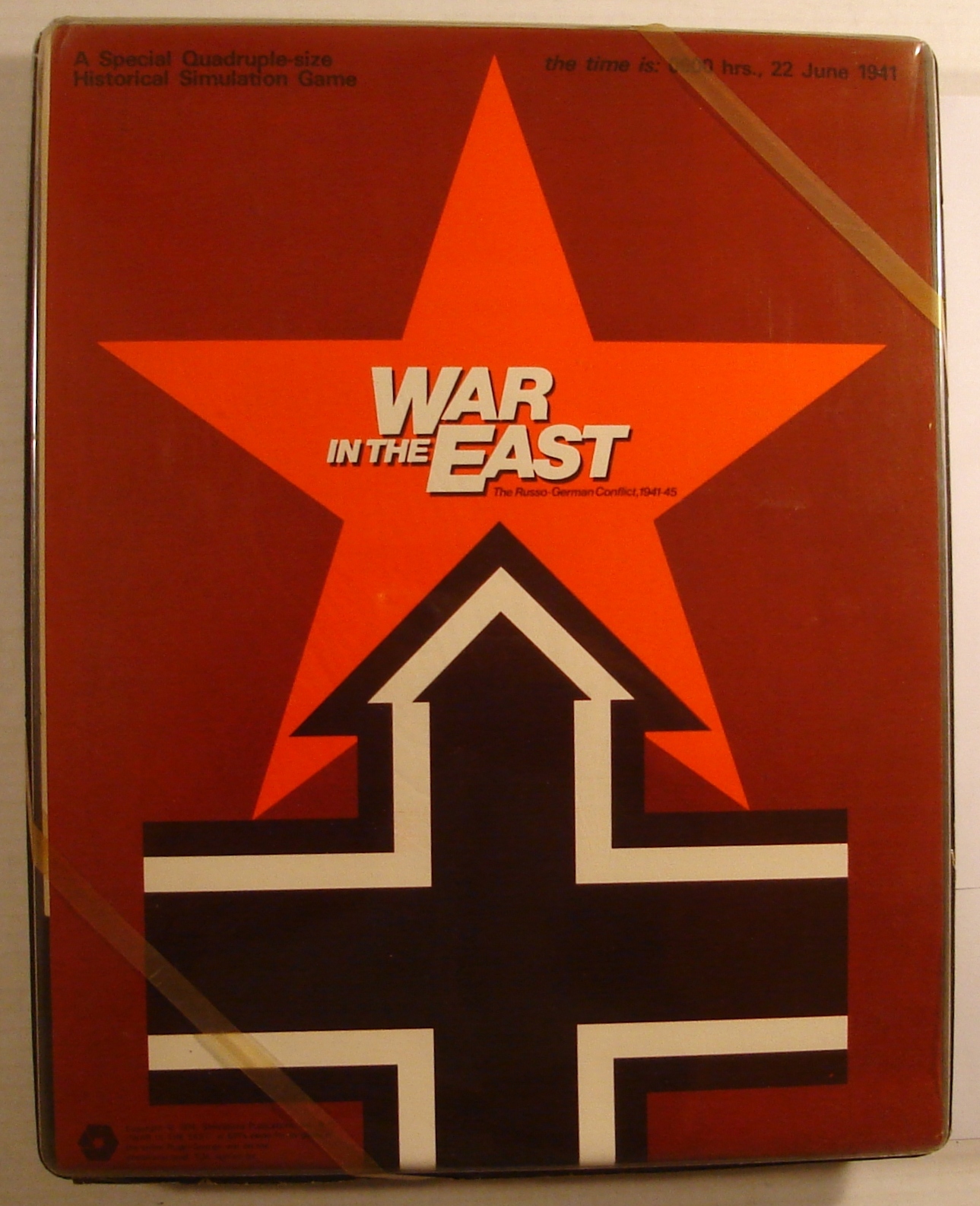


 Posts