|
Showing posts with label monster game. Show all posts
Showing posts with label monster game. Show all posts
SPI, THE NEXT WAR (1978)
THE NEXT WAR is a hypothetical simulation of a Warsaw Pact offensive against NATO forces in Europe in the late 1970’s. THE NEXT WAR was designed by James F. Dunnigan and published by Simulations Publications, Incorporated (SPI) in 1978. THE NEXT WAR is packaged in the large soap box format that SPI reserved, during this period, for its "super-sized" monster games.
HISTORICAL BACKGROUND
Almost from the day that the Nazi High Command formally surrendered to the victorious Allies in 1945, a now politically-partitioned Germany took on a dangerous new role as a key flash point for Cold War tensions between the Eastern Bloc, dominated by the Soviet Union, and the Western Allies, under the leadership of the United States. Inevitably, given their conflicting post-war political goals — particularly as they pertained to Eastern Europe and the Balkans — relations between the western democracies and the Soviet Union steadily deteriorated. Finally, on 24 June 1948, the Soviets blockaded Berlin by closing off all rail and road access to the city in an attempt to gain complete control of the divided former German Capital. The United States, Great Britain, and other members of the British Commonwealth responded with the Berlin Airlift. At its peak, the airlift was delivering over 13,000 tons of fuel and food to the beleaguered city every day. Clearly, the cooperation between East and West that had won the Second World War was at an end. However, one positive, if indirect outcome of the Berlin Airlift was the formation, on 4 April 1949, of the North Atlantic Treaty organization (NATO). Faced with an embarrassing political and military failure, the Soviets finally ended the blockade on 12 May 1949. However, they did not abandon their designs on achieving control of an economically resurgent West Germany.
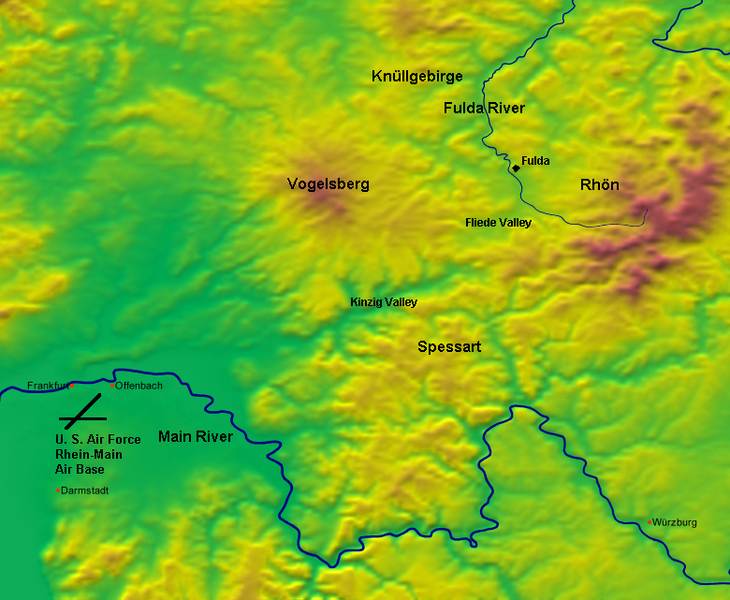
The Soviets, confronted with a strong and stable military alliance between Western Europe and the United States, reacted in kind; on 14 May 1955, the eight Communist Countries of the Eastern Bloc formed a military alliance of their own, known — because of the site chosen for the treaty’s formal signing — as the Warsaw Pact. Two great hostile military alliances now faced each other, one on each side of the “Iron Curtain.” Given the ongoing belligerence of the Communist leadership in the Kremlin; their ruthless suppression of the peoples of Eastern Europe, and their aggressive political adventurism in Africa and Latin America, the possibility of a Warsaw Pact invasion of Western Europe became, by the late 1950’s, a key feature of NATO planning as the Cold War continued. The two most likely routes for a Soviet mechanized offensive into West Germany were obvious: the North German Plain, and the Fulda Gap. The British Army of the Rhine (BAOR) was entrusted with covering the North German Plain; while the US Vth Corps was assigned the initial defense of the Fulda Gap. If the Soviets attacked without warning, these British and American formations would have to halt the Warsaw Pact offensive long enough for reinforcements from the other NATO countries to move up to the front. Permanently arrayed against these British and American trip-wire units were mechanized divisions from the Soviet, East German, and Polish Armies. The other Warsaw Pact countries, like the supporting NATO members, would be expected to send their own additional front line and reserve units into the battle area, once hostilities actually began.
DESCRIPTION One unusual design feature of THE NEXT WAR — at least for its time — is that combat is treated as a function of movement, and occurs in a series of engagements during the course of the movement phase, as individual units move into contact with the enemy. In the basic “fast game” versions of the design’s shorter scenarios, air and naval operations can be dispensed with completely. However, despite the game’s emphasis on the ground war, the air and naval campaigns have not been short-changed. The elaborate subroutines for air and naval combat operations are so richly detailed, that they both can almost stand alone as independent games outside of the larger integrated simulation. The Air Game involves allocating hundreds of units to specific airfields and sectors along the front. From these airbases, the air units of the two combatants conduct a variety of different air missions, such as (but not limited to): air supremacy, CAP, air-to air, air-to-ground, air-to-naval, ground support, and air reconnaissance. The Naval Game, on the other hand, focuses only on naval operations in the Baltic Sea and Denmark Straits, and offers, in terms of maneuver tempo and combat, a completely different gaming experience from that of the air or land games.   A PERSONAL OBSERVATION Among the many monster game players who, after giving Dunnigan's take on continent-wide modern warfare a try, decided that they didn't like his game design, three criticisms tended to recur with surprising consistency: first, they pointed out that the ground combat CRT was both asymmetrical and counter intuitive (it sometimes made sense, for example, to attack at lower rather than at higher odds); second, the rules integrating air-ground operations were cumbersome, while those for naval operations were downright unworkable; and third, whatever its other virtues, the basic architecture of the game — once the fighting actually started in earnest — quickly tended to be swamped by a "tidal wave" of different (and confusing) die-roll modifiers.  One interesting idea to emerge — at least in some gaming circles — during the years that followed the initial release of THE NEXT WAR, was for (truly ambitious) players to graft key elements from the rules package of Mark Herman's excellent, if highly derivative, GULF STRIKE (1983, 1988, and 1990) onto the basic platform of the older Dunnigan design. Because of the obvious connection between the two games, I thought at the time that this might well be a workable idea; however, for my own part, such a project seemed then (and still does, three decades later) like it would probably be more trouble than it would actually be worth. Visually, THE NEXT WAR, when it is laid out and set up for play, is an awesome game to behold. The maps are — thanks to the indefatigable Redmond Simonsen — both chock full of information and yet still attractive to the eye. The game charts and tables are easy-to-use, if a bit utilitarian. And the two thousand plus counters, although back-printed in the typical SPI matte-finish style, are both readable and colorful enough to be interesting. The rule book, at over thirty pages of relatively small print, is admittedly a slog the first couple of times through; nonetheless, it is generally well-organized, and, with a bit of practice, players can usually find a "sought after" rules case comparatively quickly. One particularly nice feature of the game package is the extensive Order of Battle information for both NATO and the Warsaw Pact forces that has been included. In the opinion of at least one of my gaming friends back when the game first appeared, the research incorporated into the OoB work, alone, was worth the price of the game. Visual appeal and size, of course, will only take a design so far when it comes to its value, both as a game and as a simulation. The graphic presentation, and the sheer scale of the game, however, are not the only elements that — to my mind, at least — make this title a "winner". In addition, the texture and historical richness of the overall game system also make this ground-breaking design a worthwhile title for any player interested in modern (post-World War II) combat operations. The optional rules included with THE NEXT WAR are so numerous and detailed that it would take an additional page, just to catalog them. Suffice to say that if SPI could glean, from unclassified sources, the characteristics of a new weapons system, operational doctrine, or special combat capability, then those militarily-relevant factors probably found their way into the rules for THE NEXT WAR. It goes without saying that, for many gamers, all this information and the operational detail that it inevitably adds to the design's basic rules architecture means that actually mastering the game system — with its many phases and subroutines — is a bit of a chore. But, I submit that, for those who are genuinely interested in modern military affairs, it is a chore that is well worth undertaking. THE NEXT WAR may not be the perfect simulation of large-scale conventional (and possibly tactical nuclear) European warfare in the late 20th century, but — in my view, at least — it still does a surprisingly good job of "delivering the goods", both as a simulation and as a game. And considering that this SPI monster was first published thirty-four years ago, that is pretty impressive, in and of itself. Clearly, given the sheer volume of simulation detail that it contains and its complexity, this Dunnigan opus is most definitely not a game for the novice or, for that matter, even for the casual player. However, I can think of no better, more comprehensive simulation of large-scale, 1970’s combat operations in Europe than THE NEXT WAR. For this reason, if for no other, (and it should be noted that it is actually a "blast" to play) I consider it to be a must own for those gamers with a serious interest in recent contemporary history, or for those with an abiding curiosity about what a conflict between the Warsaw Pact and NATO might have looked like, had it actually occurred. Design Characteristics:
Game Components:
REGISTRATION FOR CONSIMWORLD EXPO 2012/MONSTERGAME.CON XII IS NOW OPENThis year, the Cardboard Wars in Tempe, Arizona will begin on June 25th and run through July 1st, 2012Last year, as long-time visitors to "Map and Counters" may remember, a lack of advance planning and unexpected health problems conspired to keep me from actively participating in the many exciting events that were offered By Kranz and company at the 2011 Consimworld Expo. Thus, instead of a week of non-stop wargaming, designer seminars, play test sessions, and other hobby-related activities, I ended up having to settle for a couple of hours — spread over three different days — spent mainly quietly observing others (the lucky sods) having a great time. Needless-to-say, this experience left me both disappointed and frustrated, and I vowed that, come next year, I would not allow my CSW Expo 2012 convention plans to be derailed as those for 2011 had been. It’s hard to believe, but winter is limping to an end and it will soon be that time of year again. What time of year, you ask? Why, CSW Expo time, of course. On June 25th, the first convention arrivals will kick-off the early festivities at what will be — in my view, at least — one of the most enjoyable and unique wargaming events of the coming year: Consimworld Expo 2012. This year’s convention is the direct descendant of MonsterGame.Con which, thanks mainly to the vision and hard work of John Kranz, first opened its doors in 2001. And after more than a decade of event additions and enhancements, this once-a-year gathering has become a truly must-attend event with some of the best and most affable players from all over the country, along with some of the leading figures in simulation design, all coming together for this week-long celebration of the wargaming hobby. The CSW Expo is still hosted by John Kranz and company; and convention attendees, as they have in years past, will again meet in the heart of the Old West at the luxurious Tempe Mission Palms Hotel, in Tempe, Arizona. 
The CSW Expo only comes around once a year; so, if you can possibly find a way to get to Tempe during the last week of June, I strongly recommend that you do so. Of course, I may be a little biased since the convention site is only a thirty-minute drive from my house. Nonetheless, if you enjoy both congenial company and lots of gaming, I'm pretty much convinced that you won’t be able to avoid having a great time. To find out more about CSW Expo 2012/MonsterGame.Con XII, or to register online for this year’s convention, visit the website: http://expo.consimworld.com/ JUST A REMINDER: THE START OF CONSIMWORLD EXPO 2011 & MONSTERGAME.CON XI IS ALMOST UPON US!The Cardboard Wars in Tempe, Arizona (June 6th to 12th) are now only a month awayThe “game clock” is rapidly ticking down, and before we know it, one of the most enjoyable and unique wargaming events held in the US will be getting under way in sunny Arizona. On June 6th, the first convention arrivals will begin early festivities at what will be — in my view, at least — one of the very few must-attend adventure gaming conventions of the year: Consimworld Expo 2011. For those who are unfamiliar with the Expo’s past history, this year’s convention is the direct descendant of MonsterGame.Con which, thanks largely both to the vision and the hard work of John Kranz, first opened its doors back in 2001. Eleven years later, CSW Expo is still going strong and is still being hosted by John Kranz and company; and, just as they have in years past, convention attendees will be meeting at the luxurious and conveniently-located Tempe Mission Palms Hotel, in vibrant downtown Tempe, Arizona and close both to Old Town Scottsdale and Phoenix attractions.  For those prospective attendees who are still on the fence about whether this year’s Consimworld Expo will provide them with a chance to actually sit down and play their favorite titles with other like-minded opponents, it is probably worth noting that this June’s gaming at the Tempe Mission Palms will not be restricted only to traditional “map and counters” conflict simulations. On the contrary, dozens and dozens of old and new titles (from CDG, to “block”, to Euro-style) will all be a part of this year’s CSW Expo experience. What this means, from the individual gamer’s standpoint, is that the convention is both large enough and varied enough to offer players a broad menu of both conflict simulations and multi-player social gaming that — new attendees will quickly discover — should suit virtually any visitor’s particular taste in games. Nor, I should add, is the convention aimed strictly at long-time (hard-core) participants in the hobby. Instead, players who make the trek to Arizona this year will find that there are abundant opportunities for the young and not-so-young, and for both inexperienced and seasoned players to enjoy their favorite titles in a matchless gaming environment. For those prospective attendees who are still on the fence about whether this year’s Consimworld Expo will provide them with a chance to actually sit down and play their favorite titles with other like-minded opponents, it is probably worth noting that this June’s gaming at the Tempe Mission Palms will not be restricted only to traditional “map and counters” conflict simulations. On the contrary, dozens and dozens of old and new titles (from CDG, to “block”, to Euro-style) will all be a part of this year’s CSW Expo experience. What this means, from the individual gamer’s standpoint, is that the convention is both large enough and varied enough to offer players a broad menu of both conflict simulations and multi-player social gaming that — new attendees will quickly discover — should suit virtually any visitor’s particular taste in games. Nor, I should add, is the convention aimed strictly at long-time (hard-core) participants in the hobby. Instead, players who make the trek to Arizona this year will find that there are abundant opportunities for the young and not-so-young, and for both inexperienced and seasoned players to enjoy their favorite titles in a matchless gaming environment.  The CSW Expo only comes around once a year; so, if you can possibly find a way to get to Tempe during the second week of June, I strongly recommend that you do so. If you enjoy both congenial company and lots of gaming, I really don’t think that you will be able to avoid having a great time. The CSW Expo only comes around once a year; so, if you can possibly find a way to get to Tempe during the second week of June, I strongly recommend that you do so. If you enjoy both congenial company and lots of gaming, I really don’t think that you will be able to avoid having a great time.To find out more about CSW Expo 2011/MonsterGame.Con XI and its many different game-related activities, or to register online for this year’s convention, visit the website. REGISTRATION FOR CONSIMWORLD EXPO 2011 & MONSTERGAME.CON XI IS NOW OPEN!The Cardboard Wars in Tempe, Arizona are fast approaching: June 6th – June 12th, 2011It’s hard to believe, but it will soon be that time of year again. On June 6th, the first convention arrivals will kick-off the early festivities at what will be — in my view, at least — one of the most enjoyable and unique wargaming events of the coming year: Consimworld Expo 2011. This year’s convention is the direct descendant of MonsterGame.Con which, thanks mainly to the vision and hard work of John Kranz, first opened its doors in 2001. And after more than a decade of event additions and enhancements, this once-a-year gathering has become a truly must-attend event with some of the best and most affable players from all over the country, along with some of the leading figures in simulation design, all coming together for this week-long celebration of the wargaming hobby. The CSW Expo is still hosted by John Kranz and company; and convention attendees, as they have in years past, will again meet in the heart of the Old West at the luxurious Tempe Mission Palms Hotel, in Tempe, Arizona.
The CSW Expo only comes around once a year; so, if you can possibly find a way to get to Tempe during the second week of June, I strongly recommend that you do so. Of course, I may be a little biased seeing as how the convention site is only a thirty-minute drive from my house. Nonetheless, if you enjoy both congenial company and lots of gaming, I'm pretty much convinced that you won’t be able to avoid having a great time. To find out more about CSW Expo 2011/MonsterGame.Con XI, or to register online for this year’s convention, visit the website: http://expo.consimworld.com/ VG, THE CIVIL WAR (1983)
THE CIVIL WAR: 1861-1865 is a strategic level simulation of the American War Between the States. The game spans the years 1861-1865 and focuses on combat operations in the three main theaters of the Civil War: the East, the West, and the Trans-Mississippi. THE CIVIL WAR was designed by Eric Lee Smith and published by Victory Games, Inc. (VG) in 1983.
HISTORICAL BACKGROUND In the confused and chaotic days that immediately followed the outbreak of war between the anti-secessionist Northern States and the still-forming, pro-slavery Confederate States of America in the spring of 1861, clashes between the breakaway South and the Unionist North flared up repeatedly, particularly in the states that lay between the two belligerents; however, these actions were typically limited to relatively small-scale skirmishes between opposing bands of militia. Hence, although the War Between the States had actually begun with the Rebel attack on Union forces at Charleston, there had not been another major battle between Confederate and Federal troops in the four months following the surrender of Fort Sumter by its commander, Major Robert Anderson, on the 13th of April, 1861. Neither side, however, spent this period in complete idleness: volunteers were called up and new armies began to take shape on both sides of North-South divide. In the confused and chaotic days that immediately followed the outbreak of war between the anti-secessionist Northern States and the still-forming, pro-slavery Confederate States of America in the spring of 1861, clashes between the breakaway South and the Unionist North flared up repeatedly, particularly in the states that lay between the two belligerents; however, these actions were typically limited to relatively small-scale skirmishes between opposing bands of militia. Hence, although the War Between the States had actually begun with the Rebel attack on Union forces at Charleston, there had not been another major battle between Confederate and Federal troops in the four months following the surrender of Fort Sumter by its commander, Major Robert Anderson, on the 13th of April, 1861. Neither side, however, spent this period in complete idleness: volunteers were called up and new armies began to take shape on both sides of North-South divide. Finally, in mid-July, the 35,000 enthusiastic but poorly-trained Union troops bivouacked around Washington, D.C., stirred to action and began to lumber south. The Union commander, Brigadier General Irvin McDowell, although deeply skeptical about the battle-worthiness of his freshly-minted army, had at last reluctantly succumbed to political pressure and ordered his soldiers to move against the Confederate Capital at Richmond. Barring McDowell’s path were 20,000 Confederates under the command of the same Rebel general who had accepted Fort Sumter's surrender only a few months earlier, General P. T. Beauregard. The location and approximate strength of Beauregard's force was no mystery to McDowell; nor did its presence cause the head of the invading Federal army undue concern. Unbeknownst to the Union commander, however, an additional 12,000 Rebel soldiers from the Shenandoah Valley, under General J. E. Johnston, were already rushing to Beauregard’s aid. And by the time the slowly advancing Union troops at last encountered the first Confederate pickets, fresh reinforcements for Beauregard’s army were only miles away. The two opposing hosts — both composed mainly of green recruits and 90-day enlistees — spent the day after their initial contact with each other engaged in desultory sniping and minor skirmishing, but with no serious fighting. This brief period of relative calm did not last, however, and on 21 July, 1861, the two armies violently crashed into each other near the hamlet of Centerville, in Virginia.  The Union soldiers opened the battle with a flanking attack against the Confederate left, and for a time, Beauregard's troops were forced to give ground. Unfortunately for McDowell, Rebel reinforcements began to arrive just in time to shore up the wavering Confederate line. With the timely arrival of Johnston’s troops, the two armies were now almost evenly-matched. The Union soldiers, however, had been in almost constant action throughout the morning and were beginning to tire; gradually, the initiative shifted to Beauregard as Johnston’s fresh regiments continued to enter the fight. The seesaw battle lasted through most of the day, but by late afternoon, the battlefield belonged to Beauregard. Their unexpected defeat at Confederate hands quickly led to a breakdown in both the morale and the discipline of the green Union troops. And just as McDowell had feared, the Union retreat quickly turned into a rout. The confident, even eager, army that had marched out of Washington only a few days earlier, now fled back towards the same city largely as a disordered mob. The Union soldiers opened the battle with a flanking attack against the Confederate left, and for a time, Beauregard's troops were forced to give ground. Unfortunately for McDowell, Rebel reinforcements began to arrive just in time to shore up the wavering Confederate line. With the timely arrival of Johnston’s troops, the two armies were now almost evenly-matched. The Union soldiers, however, had been in almost constant action throughout the morning and were beginning to tire; gradually, the initiative shifted to Beauregard as Johnston’s fresh regiments continued to enter the fight. The seesaw battle lasted through most of the day, but by late afternoon, the battlefield belonged to Beauregard. Their unexpected defeat at Confederate hands quickly led to a breakdown in both the morale and the discipline of the green Union troops. And just as McDowell had feared, the Union retreat quickly turned into a rout. The confident, even eager, army that had marched out of Washington only a few days earlier, now fled back towards the same city largely as a disordered mob.  This action was the first real preview, for both sides of the conflict, of the true and tragic cost of the war that lay before them. Fourteen hundred and ninety-two Union troops had been killed and 1,600 taken prisoner, while the victorious Confederates’ losses numbered 1,752. Word of the outcome from the fighting at “Manassas” — also known as the “First Battle of Bull Run” — would produce rejoicing in the South, and shocked disbelief in the North. An unknown Union officer, without political connections, named William T. Sherman would first impress his military superiors with his courage and leadership during this bloody clash; while in the enemy camp, an obscure Confederate officer would, after this battle, ever after be known as Thomas “Stonewall” Jackson. Tragically for both sides, a political argument between countrymen had become a life-and-death war between states. And although neither the officers nor the men from either army who fought at Manassas on 21 July, 1861, could have known it at the time, the fight at Centerville had been the first major battle in what would ultimately become the deadliest war in American history. This action was the first real preview, for both sides of the conflict, of the true and tragic cost of the war that lay before them. Fourteen hundred and ninety-two Union troops had been killed and 1,600 taken prisoner, while the victorious Confederates’ losses numbered 1,752. Word of the outcome from the fighting at “Manassas” — also known as the “First Battle of Bull Run” — would produce rejoicing in the South, and shocked disbelief in the North. An unknown Union officer, without political connections, named William T. Sherman would first impress his military superiors with his courage and leadership during this bloody clash; while in the enemy camp, an obscure Confederate officer would, after this battle, ever after be known as Thomas “Stonewall” Jackson. Tragically for both sides, a political argument between countrymen had become a life-and-death war between states. And although neither the officers nor the men from either army who fought at Manassas on 21 July, 1861, could have known it at the time, the fight at Centerville had been the first major battle in what would ultimately become the deadliest war in American history.DESCRIPTION THE CIVIL WAR is primarily an army/corps level simulation of maneuver and ground combat during the war between the American North and South, 1861-65. The ground operations portion of the game, because it deals with the unique problems of a multi-year, continent-wide land war in the mid-nineteenth century, places special emphasis on what the designer perceives to be the three most important strategic challenges posed to both sides: leadership (which historical leaders command which armies where?); theater resource allocation (where will each side decide to concentrate their main effort?); and initiative (which side acts first during the Action Phase of each game-turn?). These three core game elements are both reasonable and comparatively standard fare in Civil War simulations presented on this scale. However, one aspect of the game’s design is particularly intriguing: this is the simulation’s requirement that players secretly choose a single one of the game map’s three operational theaters as the focus of their impending ground operations. This 'fog of war' aspect of the simulation can be important both to the flow and to the tempo of the game; if both players choose different theaters, for example, one player — typically the one without the 'initiative' — is very likely to find himself with serious operational problems. Thus, strategic misdirection and the lack of intelligence as to the enemy’s intentions and strength play a more significant role in this game than in many other large-scale simulations of the American Civil War. THE CIVIL WAR is primarily an army/corps level simulation of maneuver and ground combat during the war between the American North and South, 1861-65. The ground operations portion of the game, because it deals with the unique problems of a multi-year, continent-wide land war in the mid-nineteenth century, places special emphasis on what the designer perceives to be the three most important strategic challenges posed to both sides: leadership (which historical leaders command which armies where?); theater resource allocation (where will each side decide to concentrate their main effort?); and initiative (which side acts first during the Action Phase of each game-turn?). These three core game elements are both reasonable and comparatively standard fare in Civil War simulations presented on this scale. However, one aspect of the game’s design is particularly intriguing: this is the simulation’s requirement that players secretly choose a single one of the game map’s three operational theaters as the focus of their impending ground operations. This 'fog of war' aspect of the simulation can be important both to the flow and to the tempo of the game; if both players choose different theaters, for example, one player — typically the one without the 'initiative' — is very likely to find himself with serious operational problems. Thus, strategic misdirection and the lack of intelligence as to the enemy’s intentions and strength play a more significant role in this game than in many other large-scale simulations of the American Civil War.  Naval operations also play an important, if supporting, role in the long-range plans of both sides in the game. And, it should be noted, Eric Lee Smith does a nice job of keeping naval operations both interesting, exciting, and yet easy-to-perform for both players. The United States (Union), as was historically the case, has an enormous advantage over the Confederacy in the realm of sea-going and riverine combat power and capabilities. Nonetheless, naval operations are still relevant to both sides’ conduct of the war; nor is the Southern player completely helpless in the face of the powerful Union Navy. In the turn-to-turn play of THE CIVIL WAR, players will find that the naval conflict between the Confederate States of America (CSA) and the North has been highly abstracted. This part of the game concentrates on the three naval elements of greatest strategic significance to the outcome of the war: the Union sea blockade of Southern maritime commerce; the Southern effort to raid Northern shipping; and the Confederate campaign, using 'blockade runners' and 'ironclads', to break the commercial stranglehold imposed on Southern ports by the Union naval blockade. Naval operations also play an important, if supporting, role in the long-range plans of both sides in the game. And, it should be noted, Eric Lee Smith does a nice job of keeping naval operations both interesting, exciting, and yet easy-to-perform for both players. The United States (Union), as was historically the case, has an enormous advantage over the Confederacy in the realm of sea-going and riverine combat power and capabilities. Nonetheless, naval operations are still relevant to both sides’ conduct of the war; nor is the Southern player completely helpless in the face of the powerful Union Navy. In the turn-to-turn play of THE CIVIL WAR, players will find that the naval conflict between the Confederate States of America (CSA) and the North has been highly abstracted. This part of the game concentrates on the three naval elements of greatest strategic significance to the outcome of the war: the Union sea blockade of Southern maritime commerce; the Southern effort to raid Northern shipping; and the Confederate campaign, using 'blockade runners' and 'ironclads', to break the commercial stranglehold imposed on Southern ports by the Union naval blockade. THE CIVIL WAR, from a purely graphics’ standpoint, is attractively packaged; and the game is, on the whole, nicely presented. The title’s components are generally good to very good: the counters are a little drab, but clearly-printed, and the maps are colorful and relatively unambiguous. One minor nit regarding the game maps: the Far West map section is — in my opinion, at least — so bland as to be almost off-putting. But, on the other hand, this theater of operations was historically so unimportant to the overall outcome of the war that most players will quickly find that its inclusion in the game — unless the Union player really wants to reprise Freemont’s failed campaign in the Far West, or unless both players want to drag the Southwestern Indian tribes into 'someone else’s' war — is easily dispensed with. The back-printed charts and tables for THE CIVIL WAR are uniformly clear and easy to use. The “Rules Booklet,” on the other hand, although reasonably well-written and fairly complete, seems a little too long and awkwardly organized. For this reason, while I personally found individual rules sections to be relatively clear as to the designer’s intent, I nonetheless found it to be impossible to conduct the first read-through of the game rules without repeated references to earlier sections and rules cases. This is not a big problem, but it does mean that new players should expect to spend a bit of time acquainting themselves with both the familiar and the unorthodox elements of the game’s design architecture. THE CIVIL WAR, from a purely graphics’ standpoint, is attractively packaged; and the game is, on the whole, nicely presented. The title’s components are generally good to very good: the counters are a little drab, but clearly-printed, and the maps are colorful and relatively unambiguous. One minor nit regarding the game maps: the Far West map section is — in my opinion, at least — so bland as to be almost off-putting. But, on the other hand, this theater of operations was historically so unimportant to the overall outcome of the war that most players will quickly find that its inclusion in the game — unless the Union player really wants to reprise Freemont’s failed campaign in the Far West, or unless both players want to drag the Southwestern Indian tribes into 'someone else’s' war — is easily dispensed with. The back-printed charts and tables for THE CIVIL WAR are uniformly clear and easy to use. The “Rules Booklet,” on the other hand, although reasonably well-written and fairly complete, seems a little too long and awkwardly organized. For this reason, while I personally found individual rules sections to be relatively clear as to the designer’s intent, I nonetheless found it to be impossible to conduct the first read-through of the game rules without repeated references to earlier sections and rules cases. This is not a big problem, but it does mean that new players should expect to spend a bit of time acquainting themselves with both the familiar and the unorthodox elements of the game’s design architecture.  Although it was designed (and is best) as a two-player game, THE CIVIL WAR can be played by teams. Each game turn in THE CIVIL WAR is equal to two months (except for the winter game-turn) and consists of an integrated, interactive sequence of play. The game turn sequence has eight steps: the Reinforcement Phase; the Command Phase; the CSA Commerce Raider Phase; the Blockade Effects Phase; the Action Phase; the Command Point Table Use Phase; the Rally Phase; and the End Phase. Considering the scope of THE CIVIL WAR as a simulation, these various player operations are neither particularly cumbersome nor tedious. In fact, most player operations are intuitively logical and proceed fairly quickly. This relative simplicity in the game’s design platform, however, is deceptive. Thus, no individual turn phase is unduly complicated or time-consuming, and the piece count, given the simulation’s overall size, is really quite manageable; nonetheless, the game is still richly layered with detail and, because of this fact, is surprisingly difficult to play well. In short, on any given game turn there is almost always a lot going on, both at the strategic and the operational level — even when both sides appear to be relatively inactive — and for this reason, it can be frustratingly easy to make mistakes. Although it was designed (and is best) as a two-player game, THE CIVIL WAR can be played by teams. Each game turn in THE CIVIL WAR is equal to two months (except for the winter game-turn) and consists of an integrated, interactive sequence of play. The game turn sequence has eight steps: the Reinforcement Phase; the Command Phase; the CSA Commerce Raider Phase; the Blockade Effects Phase; the Action Phase; the Command Point Table Use Phase; the Rally Phase; and the End Phase. Considering the scope of THE CIVIL WAR as a simulation, these various player operations are neither particularly cumbersome nor tedious. In fact, most player operations are intuitively logical and proceed fairly quickly. This relative simplicity in the game’s design platform, however, is deceptive. Thus, no individual turn phase is unduly complicated or time-consuming, and the piece count, given the simulation’s overall size, is really quite manageable; nonetheless, the game is still richly layered with detail and, because of this fact, is surprisingly difficult to play well. In short, on any given game turn there is almost always a lot going on, both at the strategic and the operational level — even when both sides appear to be relatively inactive — and for this reason, it can be frustratingly easy to make mistakes.  Command and control, logistics, terrain, and manpower all play an important part in THE CIVIL WAR. However the proper use of leaders is, without doubt, the single most important consideration in the game. The Union player needs commanders like Grant and Sherman to spearhead his invasions of southern territory; the South depends on generals like Lee, Jackson, and Longstreet to move decisively during the Reaction Phase to block the invading Yankees as soon as they march into Rebel areas. This fact, however, does lead to the unrealistic player tactic of parking incompetent generals like McClellan and Butler well to the rear where they can do no real harm. Not surprisingly, long-term planning pays, but given the fluid nature of the game system, it is virtually certain that both players will suffer unexpected reversals. Of course, it can also reasonably be argued that the inevitable surprises and missteps that crop up in the course of play add a distinctly historical flavor to the simulation. Presidents Lincoln and Davis, after all, were both plagued by disobedient or incompetent subordinates, and experienced unexpected military setbacks and disappointments of their own; often because of factors completely outside of their direct control. Command and control, logistics, terrain, and manpower all play an important part in THE CIVIL WAR. However the proper use of leaders is, without doubt, the single most important consideration in the game. The Union player needs commanders like Grant and Sherman to spearhead his invasions of southern territory; the South depends on generals like Lee, Jackson, and Longstreet to move decisively during the Reaction Phase to block the invading Yankees as soon as they march into Rebel areas. This fact, however, does lead to the unrealistic player tactic of parking incompetent generals like McClellan and Butler well to the rear where they can do no real harm. Not surprisingly, long-term planning pays, but given the fluid nature of the game system, it is virtually certain that both players will suffer unexpected reversals. Of course, it can also reasonably be argued that the inevitable surprises and missteps that crop up in the course of play add a distinctly historical flavor to the simulation. Presidents Lincoln and Davis, after all, were both plagued by disobedient or incompetent subordinates, and experienced unexpected military setbacks and disappointments of their own; often because of factors completely outside of their direct control.  THE CIVIL WAR offers four basic scenarios: the 1861 Scenario; the 1862 Scenario; the 1863 Scenario; and the 1864 Scenario. Players interested in simulating the entire Civil War may opt to expand the scope of the game to include operations on the American Frontier by adding the Far West Option. In addition, the game offers a number of what-if(?) Optional Rules — for example, Jackson and Lyons aren’t killed, cavalry use in intelligence gathering, changes in restrictions on army sizes and placement, and others — from which the players can pick and choose. These additional rules options can be used either to add variety or more realism to a specific scenario, or alternatively, to adjust play-balance between unequal opponents. THE CIVIL WAR offers four basic scenarios: the 1861 Scenario; the 1862 Scenario; the 1863 Scenario; and the 1864 Scenario. Players interested in simulating the entire Civil War may opt to expand the scope of the game to include operations on the American Frontier by adding the Far West Option. In addition, the game offers a number of what-if(?) Optional Rules — for example, Jackson and Lyons aren’t killed, cavalry use in intelligence gathering, changes in restrictions on army sizes and placement, and others — from which the players can pick and choose. These additional rules options can be used either to add variety or more realism to a specific scenario, or alternatively, to adjust play-balance between unequal opponents.The victory conditions, as might be expected, vary according to the scenario being played. They are also, thankfully, both intuitively logical and historically reasonable. As was the case in the real war, the political significance of attaining certain geographical objectives, particularly the control of the Border States are often central to both players’ plans. Play balance in THE CIVIL WAR, although far from perfect, seems to fall within acceptable bounds; which is to say that, with skillful play, either side has a decent chance of winning. A PERSONAL OBSERVATION All and all, weighing the pros against the cons, THE CIVIL WAR is a very good game. And while it certainly is not a “ground-breaking” new treatment of the war between the North and South, designer Eric Lee Smith still manages to successfully meld a number of traditional gaming concepts with a few clever design wrinkles of his own to produce a well-balanced and exciting simulation. Moreover, despite its size, it is actually, once players become comfortable with the game mechanics, surprisingly playable. Still, all that being said, most players will still want to ask: how does this title stack up against other similar Civil War games? The short answer to this question, I would argue, is probably “better than most.” However, even this answer really depends on which titles this game is being matched against. Set against games like FOR THE PEOPLE and THE WAR FOR THE UNION, Smith’s design looks pretty good, particularly if a player is biased against 'Card Driven Games' (CDG) like FOR THE PEOPLE. But there’s a rub. Because of the subject matter and scale of the game, the temptation to contrast THE CIVIL WAR with Irad Hardy’s WAR BETWEEN THE STATES (WBTS) is well-nigh unavoidable. Unfortunately, this is not an easy comparison to make: the games are simply so very different in concept and execution. All and all, weighing the pros against the cons, THE CIVIL WAR is a very good game. And while it certainly is not a “ground-breaking” new treatment of the war between the North and South, designer Eric Lee Smith still manages to successfully meld a number of traditional gaming concepts with a few clever design wrinkles of his own to produce a well-balanced and exciting simulation. Moreover, despite its size, it is actually, once players become comfortable with the game mechanics, surprisingly playable. Still, all that being said, most players will still want to ask: how does this title stack up against other similar Civil War games? The short answer to this question, I would argue, is probably “better than most.” However, even this answer really depends on which titles this game is being matched against. Set against games like FOR THE PEOPLE and THE WAR FOR THE UNION, Smith’s design looks pretty good, particularly if a player is biased against 'Card Driven Games' (CDG) like FOR THE PEOPLE. But there’s a rub. Because of the subject matter and scale of the game, the temptation to contrast THE CIVIL WAR with Irad Hardy’s WAR BETWEEN THE STATES (WBTS) is well-nigh unavoidable. Unfortunately, this is not an easy comparison to make: the games are simply so very different in concept and execution.Hardy’s older (1977) WBTS design places far more emphasis on the historical problems that arose from the mobilization and organization of the manpower and economic resources of the North and South. The weekly game turns and low movement factors of the ground units, combined with the virtually perfect information available to both players about the disposition of enemy forces, means that campaigns have to be planned well in advance. Sweeping maneuvers and stunning surprises are, with the exception of rail and naval movement, almost never a factor in the game. Moreover, the combat and leadership rules for WAR BETWEEN THE STATES, although somewhat cumbersome, tend to reproduce the bloody and inconclusive battlefield results that actually characterized most of the engagements fought during the Civil War. The issue of leadership illuminates another frustrating, but historically accurate facet of WBTS: leaders are so scarce — particularly in the early phases of the war — that both sides have no choice but to place incompetent generals in positions of command. And then there is the Strategic Production Cycle that shows up every four game turns. Some players love this aspect of the game, and others just hate it. However, for those McClellan-style plodders, like me, who actually enjoy a heavy dose of administrative and organizational detail, WBTS is probably still the best strategic simulation — despite its several well-documented flaws — ever published on the War for Southern Independence. Eric Lee Smith’s 1983 design, THE CIVIL WAR, takes a very different approach to America’s bloodiest conflict from that of Irad Hardy’s WAR BETWEEN THE STATES. The two-month game turns and limited intelligence baked into THE CIVIL WAR game system makes for a much more dynamic and free-wheeling (read: nerve-racking) gaming experience. Major surprises are almost nonexistent in SPI’s WBTS; they seem to be almost commonplace in Smith’s newer simulation. By the way, one nice little historical touch in THE CIVIL WAR that is usually absent from games on this subject is that, as the war progresses and the Union naval blockade really starts to bite, Confederate rail capacity steadily deteriorates. This is a little detail, but it is one of many that give Smith’s design its unique flavor. On the down-side, several of the subroutines in THE CIVIL WAR seem almost too simple; and the outcomes of battles, although bloody enough, seem somewhat more decisive than was the case historically. That being said, Smith’s Victory Games design will probably appeal more to the R.E. Lee or Grant-style gamer than WBTS would. THE CIVIL WAR may not have the historical simulation chops that WBTS does, but it is still a richly-textured and challenging treatment of America’s costliest war. So where does all this leave us? I suppose that one way to put it is that, if I, personally, could only own one Civil War monster game, then, hands down, that game would have to be WBTS; if, on the other hand, I could add one more Civil War monster to my collection, then that second game would probably be THE CIVIL WAR. This is not to say that the Victory Games title is for everyone. This is not a simple game; and learning its game system, even for experienced players, takes a bit of work. For this reason, while THE CIVIL WAR is a good choice for those seasoned players interested in a detailed treatment of this tragic page from American history; given the sheer scope and complexity of its design, this title is probably a very poor choice for the inexperienced or casual gamer. Alternatively, for those novice or casual players who would like to own a smaller, more manageable (read: non-monster) game that still covers the entire Civil War, and not just a single battle — and for experienced players looking for a great 'beer and pretzels' game, as well — I strongly recommend GDW’s little gem of a game, A HOUSE DIVIDED, in any of its several versions. This title is an excellent game in its own right; it is also a challenging, fun, and very playable alternative to the other more complex simulations discussed in this profile. Design Characteristics:
Game Components:
Recommended ReadingSee my blog post Book Review of this title which is strongly recommended for those readers interested in further historical background.. THE WEST POINT ATLAS OF AMERICAN WARS (Complete 2-Volume Set)  ; edited by Brigadier General Vincent J. Esposito; Frederick A. Praeger, Inc. (1959); ASIN: B000MTBTEU . ; edited by Brigadier General Vincent J. Esposito; Frederick A. Praeger, Inc. (1959); ASIN: B000MTBTEU .. Also see my blog post Book Review of this definitive three volume work on the officers of the Army of Northern Virginia by Douglas S. Freeman. . Also, for those interested in battlefield maps, the "museum book" collection of historical Civil War maps by William J. Miller, released in 2004, or the atlas compiled by Stephen Hyslop in 2009 of Civil war battlefields are worth collecting. Recommended ArtworkThis Giclee print of a map of the Battle of Gettysburg is suitable for framing and makes a nice wall decoration for a game room with a Civil War theme.
Subscribe to:
Posts (Atom)
Subscribe To
 Posts
All Comments
Posts
All Comments
Popular Posts
About Me
My Nephew Joe and Three Marine Buddies
|