|
Showing posts with label interpretation. Show all posts
HOME BREW: RECOMMENDED POST-PUBLICATION ERRATA FOR SPI’S ‘JENA-AUERSTADT’ (1975)4 commentsINTRODUCTIONIn the course of preparing my recent posts on SPI’s JENA-AUERSTADT, I found myself rereading the turn-by-turn player comments from several of my old PBeM records of this title. These early exchanges were interesting both because they were pleasant reminders of enjoyable past contests, and also because they reminded me of a set of rules ambiguities that were — as far as I can determine, anyway — never addressed by SPI in any of its post-publication errata on the NAPOLEON AT WAR series of folio games. Because I and my opponents were experienced PBM players, we were pretty careful to work through these issues prior to play; ultimately, we came up with rules interpretations and/or clarifications that we felt were fair to both sides and (I like to hope) historically reasonable. Since these rules interpretations seemed to have worked out satisfactorily in both PBeM and face-to-face play, I have decided to share them with you, my readers, in the hope that you might find them personally useful.For simplicity’s sake, I have listed the original game rule first, then added the rules interpretation/clarification that I and my opponents, after some back-and-forth discussion, finally settled on. [16.21] The Effects of Fog (JENA-AUERSTADT Exclusive Rules) The Movement Allowance of all units is halved (round fractions down); artillery units may not attack unless the artillery unit is adjacent to the unit being attacked. The Problem: On its face, this rules case seems unambiguous; however, a problem arises when players apply this restriction to units with a movement allowance of three points that also happen to be expending either all or part of their movement allowance on roads. This is because, unlike the various other types of terrain depicted on the game map, road hexes impose a cost of only ½ movement point on phasing units when they are moving along intersecting road hexes. Thus, if players apply the original rule BEFORE taking the unique movement characteristics of roads into account, then units with three movement points would only be permitted to traverse two intersecting hexes when moving along roads. However, if players assume that the designer’s actual intent was that roads double the movement capabilities of units moving along them, then a “3 point” unit should be permitted to move three hexes along a road, or any combination of road/off-road movement (e.g. a unit might move one hex along a road, expending ½ movement point in the process, and then expend its remaining point to enter an adjacent clear terrain hex). Although this difference seems trivial, it actually does affect Prussian play whichever reinforcement option he selects. Recommended Rules Clarification: Although it is certainly possible for different players to hold opposing views when it comes to interpreting this rule, I and my opponents decided that the designer’s intent, in this case, was really to prohibit phasing units from expending MORE than half of their available movement points during any single movement phase of a “fog” game turn. Since fractions can be applied to road movement without requiring any “rounding” down, we decided that both sides should be permitted to expend 1½ movement points when travelling at least partly along roads. Consequently, here is recommended “Home Brew” rules interpretation: Players are permitted to move “3 point” units along roads (or some combination of road/off-road terrain) expending all 1½ of their available movement points, so long as this value is not exceeded and all other movement rules are observed. This rules interpretation, needless-to-say, benefits the slower-moving Prussians far more than the French, it nonetheless, seems both historically reasonable and completely logical within the larger confines of the game system. Also, I should add, it makes for a better, more interesting game. [7.72] Retreating and Advancing as a Result of Combat (NAPOLEON AT WAR Standard Rules) A retreating unit may not retreat into a prohibited hex, cross a prohibited hexside, or enter an Enemy controlled hex. If no hex is open to retreat into, the unit is eliminated. The Problem: In almost all of the other NAPOLEON AT WAR titles, the situations in which this simple set of retreat restrictions should be applied is abundantly clear and thus, virtually never produces problems during regular play. In the case of JENA-AUERSTADT, however, such is not always the case. In my experience, there are basically three built-in sources for potential disagreements between players: the effect of “fog” game turns on movement allowances; the amount of high movement cost terrain on the Jena portion of the game map (for example, movement from a slope to a forested crest hex requires the expenditure of four movement points); and the smaller movement allowances of Prussian (three movement factors) versus French (four movement factors) infantry units. In all three instances, of course, the critical issue for the players is the definition of the rules term: “prohibited”. Obviously, units may not retreat across unbridged river hexsides, into enemy ZOCs or off the game map; in the case of JENA-AUERSTADT, however, there are a number of situations in which a flight hex might be perfectly legal for one or both sides during regular game turns, but which, under certain circumstances, require more movement points than a unit could otherwise expend. For example, during regular game turns, a Prussian infantry unit may not legally move from a slope to a forested crest hex because it does not possess enough movement points (basic allowance: 3 points) to make the move (cost: 4 points). When it comes to combat resolution, the question naturally arises: does this mean that the same unit could not retreat into such a hex? Along the same lines, this also implies that “fog” game turns have the potential to be particularly punishing to Prussian infantry units because, while such a unit is not prohibited from moving from a crest to a slope hex (cost: one movement point), it could not legally reverse its direction and move (or retreat) from a slope to a crest hex (cost: two movement points). A strict interpretation of this retreat restriction, needless-to-say, would also prevent a Prussian infantry unit from retreating into a forest hex during “fog” game turns. In essence, this issue really comes down to whether involuntary movement into a hex which, under different circumstances would not be prohibited, should be considered to be “illegal” — hence requiring the unit’s elimination — if the affected unit does not have sufficient movement factors to effect the move voluntarily. Recommended Rules Clarification: Interpreting this rule, in one sense, is really not that problematical: assuming that both players accept a rather broad definition of the term “prohibited”, then retreats into what, based on normal movement restrictions, would be considered illegal hexes should not be permitted. The problem, of course, is that this rule really creates a “whose ox is being gored” situation for the opposing sides. This is because a strict interpretation heavily penalizes the Prussian player while leaving the French commander virtually unaffected; on the other hand, a more liberal interpretation tends to disproportionately benefit the Prussian player by negating one of the French army’s most important advantages: that of superior mobility. In the end, I and my opponents decided that, although retreating troops would almost certainly be able to retreat into terrain that would otherwise block a regular advance, they would, as a result, be so disordered as to lose unit cohesion. Since the original designer of the NAPOLEON AT WATERLOO Game System, James F. Dunnigan had previously addressed this very issue, I and my opponents decided to go along with the designer’s stated intent. Which is to say: years earlier, Dunnigan had explained that units eliminated in combat using the NAW grand-tactical game platform were really not to be viewed as having been completely destroyed; instead, he suggested that elimination, because of the one-hour time scale of the game system, should actually be seen as representing a battlefield outcome in which an affected unit had been disorganized to the point of being militarily useless. For purposes of retreat, any hex which requires more movement points to enter (for whatever reason) than a unit has available, at the instant of its retreat, is to be treated as a “prohibited” hex. Thus, if the only flight hex available for a retreating unit costs more movement points than the unit could otherwise legally expend during ordinary movement then the retreating unit is eliminated instead. Obviously, in the case of JENA-AUERSTADT, if both Dunnigan’s and the actual game designer’s intentions were taken into account, then it seemed clear that only one rules interpretation was really possible; that is: terrain costs, because of their potentially disordering effect on unit cohesion, should always be considered in determining whether a flight hex was legal or prohibited. This interpretation, although obviously hard on the Prussians, nonetheless seems consistent with the basic game system and, just as importantly, also seems to be completely plausible when considered from a purely historical point of view. A FEW FINAL THOUGHTS I am quite certain that more than a few of my readers will decide, upon coming to the end of this post, that this entire discussion has been little more than an extreme example of rules lawyerly “nit picking”. I completely sympathize with this viewpoint; unfortunately, having played many hundreds of PBM, PBeM, and face-to-face matches — usually with knowledgeable, seasoned, and skillful opponents — experience has taught me that legitimate rules disagreements have a tendency to arise where one least expects them. This, by the way, is the reason that the JENA-AUERSTADT rules examples listed above exist in the first place. Even in cases where a classic title has been around for decades and has been a popular mainstay of tournaments and gaming conventions for many, many years, rules disputes can, and occasionally do, unexpectedly crop up. That being said, my usual approach — and the one that I was trying to illustrate in the preceding paragraphs — is to attempt, insofar as possible, to clarify as many of the game’s more ambiguous rules cases as can be identified in advance of actually beginning play. This tactic, it must be admitted, rarely eliminates all potential areas of honest disagreement — particularly on less familiar, rarely played titles — but it does tend to identify the more important (and contentious) rules sections before they actually become a problem in the turn-by-turn progress of the game. In the end, of course, no set of rules can ever be so detailed and clearly-written that it eliminates every possible source of disagreement between otherwise well-intentioned and fair-minded opponents. Occasional rules problems simply go with the hobby. That being the case, it seems to me that when rules disputes do happen, the only truly reasonable approach is for the opposing players to work through their differences both logically and civilly, with the goal of arriving at a final interpretation that seems both truest to the designer’s original intent — something which, I grant you, is not always easy to determine — and to the historical record. What we are talking about here, after all, is only a game! Inevitably, taking this tack means that both players will, on occasion, have to yield to their opponent’s arguments; however, such an outcome, while sometimes disappointing, is nonetheless far superior to its alternative: an adversarial exchange in which both players allow a disagreement over the meaning of a few sentences in a rules booklet to degenerate into an unpleasant and vituperative squabble. Related Posts
Subscribe to:
Posts (Atom)
Pageviews last monthTranslateDice Rolling LinksHelpful Wargame Blogs and Links
Tournament LinksAmazonTags
1812
1815
1815 THE WATERLOO CAMPAIGN
1870
1914
1939-45
1940
1942
1944
3W
A HOUSE DIVIDED
A Study in Command
A Time for Trumpets
Aachen
Acre
ACROSS SUEZ
ADVANCED THIRD REICH
advice
AFRIKA KORPS
After Action Reports
AFTER THE HOLOCAUST
AGINCOURT
ALESIA
Allied
Allies
ALMA
alternate strategy
American
American Anniversary
American Army
American Civil War
American Revolutionary War
analysis
anniversary
ANZIO
Arab Israeli War
ARABIAN NIGHTMARE The Kuwait War
ARMADA
Armistice Day
Army of Northern Virginia
articles
ATLANTIC WALL
atlas
ATTACK IN THE ARDENNES
AUSTERLITZ
Australia
Austria
Avalanche
Axis
AXIS and ALLIES: EUROPE
BALACLAVA
Barbarossa
basic resource points
BASTOGNE
BATTLE FOR GERMANY
BATTLE FOR MIDWAY
BATTLE OF BRITAIN
Battle of Nations
BATTLE OF THE BULGE 91
battlegroup
Birthday
board economic game
board political game
board simulation
board simulations
board war game
Boardgame Players Association
boardsimulations
Boer War
bomb disposal
book
BORODINO
BPA
BREAKOUT and PURSUIT
BREAKOUT: NORMANDY
British
BULGE '65
Burma
CAESAR
CAESAR'S LEGIONS
Cambrai
Carnage and Culture
CASE WHITE
CASSINO
CAULDRON
Central Powers
CG
Charles S Roberts
CHINESE FARM
Christmas
Churchill's Generals
CIVILIZATION
classics
COAG
Coalition
COBRA
Cold War
combat results
Command Game Series
comment
components
Computer problems
confederate
ConsimWorld
Continental Congress
convention
counters
Crimea
D-Day
DAGC
Danny S. Parker
DARK DECEMBER
Darwin air raid
David Chandler
Decision Games
Declaration of Independence
description
DESERT STORM UPDATE
design
DG
Don Greenwood
DRESDEN
DRIVE ON STALINGRAD
DUNE
EAST FRONT
Eastern Front
eBay auctions
Eisenborn Ridge
Eisenhower
EL ALAMEIN
EMPIRES AT WAR
EMPIRES IN ARMS
Entente
ERIC GOLDERG'S KURSK
errata
Europa
European
Excel
EYLAU
Fall Gelb
fantasy
Father's Day
Festung Europa
Finland
Finnish
FIRE IN THE EAST
FIREFIGHT
Flag Day
FORTRESS AMERICA
FORTRESS EUROPA
founder
FRANCE 1940
Frank Chadwick
FREDERICK THE GREAT
French
FULDA GAP
game analysis
game design
game system
GDW
General
Ger
German
GETTYSBURG '64
GETTYSBURG '77
GLOBAL WAR
GMT
GOLAN
Great Siege
GRENADIER
grognards
Guadalcanal
guest post
GULF STRIKE
Gulf War
HANNIBAL
HBO
history
holidays
hypothetical
Independence Day
INDIAN OCEAN ADVENTURE
INKERMAN
interpretation
Into the Storm
INVASION SICILY
inventor
Iraqi
Italy
Japanese
Jean Lartéguy
JENA
JENA-AUERSTADT
John Churchill
John Keegan
July 4th
June 14th
kampfgruppen
Karl-Heinz Frieser
KHARKOV
KOREA
Korean War
KORSUN POCKET
KURSK
LA GRANDE ARMEE
LEE MOVES NORTH
LEE vs. MEADE
LEE'S LIEUTENANTS
LEIPZIG
LEIPZIG REVISED
Lille
links
LOST BATTLES
Lost Command
magazine
MAHARAJA
Malta
MANASSAS
Mans' Best Friend
Manstein Plan
map
Map and Counters
MARENGO
Marine Corps Birthday
Marlborough as Military Commander
MBC
Memorial Day
MIDWAY
MISSLE BOAT
MODERN BATTLES
monster game
MonsterGame.Con
Moscow
Mother's Day
movie
MUKDEN
MUSKET and PIKE
NAPOLEON AT LEIPZIG
NAPOLEON AT WATERLOO
NAPOLEON'S LAST CAMPAIGNS
Napoleonic
NAPOLEONS ART OF WAR
NATO
naval
Near Eastern
New Year
Normandy
Normandy Landings
North Africa
North Vietnam
notebook
OBJECTIVE MOSCOW
OMAHA BEACH
Operation Bagration
Operation Cobra
OPERATION CRUSADER
OPERATION TYPHOON
optional rules
OSG
Overlord
Pacific Theater
PANZER ARMEE AFRIKA
PANZER BATTLES
PANZER LEADER
PANZERBLITZ
PANZERGRUPPE GUDERIAN
PANZERKRIEG
PBeM
PBM
Pearl Harbor
Personal Notes
Personal Notes. WWII
play aide
play balance
production
Prussia
PWG
quadrigame
railroad repair rules
Rand Game Associates
reader comments
Recent Break in Blogging
RED SUN RISING
remembrance
review
RGA
RICHTHFEN'S WAR
RIFLE AND SABER
ROAD TO THE RHINE
Robert Cressman
Roman
rules
Russian
RUSSIAN CIVIL WAR
S and T
SAMURAI
SARATOGA: 1777
Saxony
science fiction
SEA LION
SEELOWE
September 11th 2001
Series 120
set-up
Sevastopol
Seven Years War
Sicily
siege
SIEGE OF CONSTANTINOPLE
SINAI
SOLDIER KING
SOLDIERS
SOLOMONS CAMPAIGN
SOUTH AFRICA
South Vietnam
Soviet
SPI
spreadsheet
SQUAD LEADER
ST #49
Stalingrad
Strategy and Tactics
tactical
TAHGC
TANNENBERG
TCHERNAYA RIVER
template
TGI
Thanksgiving
THE AMERICAN REVOLUTION
THE ARDENNES OFFENSIVE
THE ART OF SIEGE
THE BATTLE FOR MOSCOW
THE BATTLE OF LOBOSITZ
THE BATTLE OF MOSCOW
THE BATTLE OF NATIONS
THE BATTLE OF THE BULGE
The Blitzkrieg Legend
The Centurions
THE CIVIL WAR
THE CRIMEAN WAR
The Face of Battle
The Fall of France
THE FALL OF TOBRUK
THE FAST CARRIERS
THE FRANCO-PRUSSIAN WAR
THE GREAT WAR IN THE EAST
THE GUNS OF AUGUST
THE MARNE
The Mask of Command
THE MOSCOW CAMPAIGN
THE NEXT WAR
The Pacific
The Praetorians
THE RUSSIAN CAMPAIGN
THE RUSSO-JAPANESE WAR
THE WAR IN EUROPE MODULE1: THE FIRST WORLD WAR
The War in the West
THE WILDERNESS CAMPAIGN
THE WINTER WAR
THEIR FINEST HOUR
THIRD REICH
TO THE GREEN FIELDS BEYOND
TOBRUK
Toland
Torgau
tournament
Tradition
TSR
turn record chart
TURNING POINT
TURNING POINT STALINGRAD
TYPHOON
Tyre
union
US Constitution
USMC
USN
variant
Velikiye Luki
VERACRUZ
Veterans Day
VG
Victor Davis Hanson
Victory Games
Vietnam
VON MANSTEIN
WACHT AM RHEIN
WAGRAM
WAR AND PEACE
WAR BETWEEN THE STATES
war game
War in Europe
War in the East
WAR IN THE EAST 1ST EDITION
WAR IN THE EAST 2ND EDITION
WAR IN THE WEST
War of the Spanish Succession
Wargame Conventions
wargaming
Wargaming Events and Tournaments
Warsaw Pact
WATERLOO
WBC
WBC Convention
WBC Tournament Results
WBTS
WELLINGTON'S VICTORY
Western Front
WHITE DEATH
WOODEN SHIPS IRON MEN
WORLD WAR 1
WORLD WAR II
WORLD WAR II: European Theater of Operations
WURZBURG
WWI
WWII
YEAR OF THE RAT
Yom Kippur
Zitadelle
ZunTsu
Popular Posts
About Me
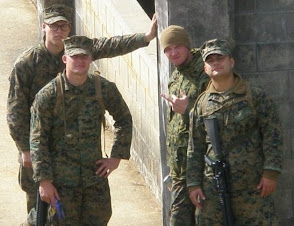
My Nephew Joe and Three Marine Buddies
Followers |

