|
Showing posts with label TURNING POINT. Show all posts
Showing posts with label TURNING POINT. Show all posts
GAME ANALYSIS: SPI’S 'TURNING POINT: The Battle of Stalingrad'HISTORICAL BACKGROUNDOn 19 November, 1942, the Red Army launched a massive offensive, code-named “Operation Uranus,” against first the northern and then the southern flanks of the German 6th Army and the 4th Panzer Army which were fighting in and around the city of Stalingrad. This operation against Army Group South had originally been intended by its planner, Marshal Georgi Zhukov, to coincide with another equally powerful offensive, code-named “Mars,” aimed at the German 9th Army which occupied a dangerously narrow salient around Rzhev. Both operations were scheduled to begin in late November, 1942. Zhukov, however, thought that he perceived an opportunity to knock the Germans in the south off-balance and thus, before all of his offensive preparations had been completed, he ordered that the attack against the Stalingrad positions start early.Ironically, Operation Mars, although it began precisely as planned, would ultimately end in a catastrophic and bloody defeat for the Red Army; Zhukov’s gamble at Stalingrad, on the other hand, would yield a tremendous Soviet victory that would save both his career and his military reputation. The Stalingrad offensive, in its aftermath, would also come within a hair’s breadth of shattering Germany’s Army Group South. GAME DESCRIPTION
Marshall Georgi Zhukov
TURNING POINT: The Battle of Stalingrad is an operational-level (division/corps) simulation of Zhukov’s great gamble in November of 1942: the Soviet Stalingrad Offensive that encircled and ultimately destroyed Paulus’ command on the Volga. The game uses a refined version of the familiar Kursk Game System to model the fluid nature of mechanized warfare during this period on the Eastern Front. The accordion-fold game rules are well-organized and clearly written; rules errata and corrections are almost nonexistent. A combined Scenario Instructions and November Setup Sheet is also included to help players position their starting units prior to beginning play. Besides the Soviet November Historical Scenario, the game also offers fifteen additional scenarios. These game variations cover different phases of the Stalingrad Campaign, and they also permit players to experiment with free deployment, and/or plausible alternatives to the two armies’ historical orders of battle and reinforcement schedules.
Supply, not surprisingly, is a central factor in TURNING POINT whichever scenario is selected for play. A unit can only be in one of three supply states: supplied (full attack strength, full defense strength, and full movement); unsupplied (half attack strength, full defense strength, and half movement); isolated (zero attack strength, full defense strength, and half movement). In addition, the supply rules for the two opposing armies differ significantly. The Russians may trace a supply line of eight hexes or less to any unblocked friendly rail line, and four hexes or less to the east edge of the map. If the Soviet supply line exceeds these ranges, then the affected unit is isolated. The Russian commander also controls two mobile depot units that can supply the advancing Red Army. In the case of these mobile depots, Russian units within four hexes are in supply; units that are five to eight hexes from these depots are unsupplied; those that are farther than eight hexes away are isolated. The German player’s supply situation is much simpler: Axis units are supplied if they are within twelve hexes of an unobstructed friendly rail line, otherwise they are unsupplied; Axis units are never isolated. Because it encompasses the entire Stalingrad-Volga River battle space, the 22” x 28” two-color game map covers a playing area that extends approximately 390 miles from north to south, and 350 miles from east to west. Terrain effects on movement and combat are negligible: only fortified zones affect enemy movement, and only river lines and fortified zones influence combat; cities and towns, strangely enough, confer no defensive advantages at all to an occupant. In addition, German reinforcements may use rail movement, but only on the turn of their arrival; Soviet reinforcements, however, may never move by rail and must enter play using regular ground movement. The Combat Results Table (CRT) is the “quasi-bloodless” type characteristic of virtually all of the SPI games that utilize the KURSK Game System. Even high-odds combat results are heavily weighted in favor of Retreats, Exchanges, and Half-exchanges. By way of example, comparatively high-odds — 6 to 1 or above — are required before the attacker has any prospect of rolling a D Elim result, and even at 9 to 1 odds, air support is necessary to avoid a one-third chance of a Half-Exchange. As might be expected, because of this distribution of combat results, “toe-to-toe” slugging matches between the opposing armies tend to produce lots of retreats and exchanges; thus, the real key, if a player wants to establish offensive momentum and favorable attrition, is the creation of fluid combat situations in which “surrounded” attacks become possible. The counters are clearly printed and easy to read. Soviet units are a dull rust color, while German counters are printed on a blue-grey background. For ease of setup, the Axis allied units — those that were part of the Italian 7th Army, and the Rumanian 3rd and 4th Armies — are a lighter shade of blue-grey than their German counterparts. Axis counters typically represent divisions; individual Russian combat units are corps. To determine who wins, players compare their respective tallies of victory points after the conclusion of the final turn. Victory points are awarded for the destruction of enemy units, the capture of terrain, the depth of the Soviet western advance, and for any gaps that can be torn and maintained in the enemy’s north-south continuous line. SITTING DOWN TO PLAY
Map of the immediate Stalingrad Battle Area
Although TURNING POINT offers sixteen different scenarios, players looking at the game for the first time should probably start with the November Historical Scenario. In this case, the game begins with the Soviets poised to attack the Rumanian 3rd and 4th Armies which defend the flanks of the German forces around Stalingrad. This scenario is relatively short (seven game turns), and it is easy to set up (if a bit time-consuming) because it provides the initial placement for all of the starting units of both armies. In addition, if the German “Hitler Insanity” rule is used, then the Axis player will have very little to do until the second turn of the game. Given these characteristics, I personally think that starting with this scenario is the best way for players to quickly develop an understanding of the mechanics of the game system, and of the probable flow and tempo of play.
The November Historical Scenario begins with narrow-front Soviet attacks on both the northern and southern flanks of the Axis forces near Stalingrad. On the first game turn only, Russian odds are increased two columns on the CRT for attacks against Axis Allied units (Rumanians and Italians) and one column against any defending Germans unlucky enough to be in the Russian Army's path. The historical setup virtually guarantees that Soviet forces will succeed in breaking through the Axis front and, during their mechanized movement phase, will be able to complete the encirclement of the German 6th Army, and most of the 4th Panzer Army, as well. This initial encircling Russian cordon, however, is both quite thin and quite brittle. Because Zhukov chose to launch his offensive before his preparations were complete, the Red Army has only ten mechanized units available when this scenario begins. Hence, as they say, this is where “the cheese gets binding” for the Russians. If the players are using the “Hitler Insanity” rule (which I strongly recommend that they do), then the German commander will have only one unsupplied mobile mechanized unit inside the pocket, and only six units (four mechanized) outside with which to block the advance of the now mainly unsupplied and isolated Soviet motorized units west of Stalingrad. This is because the “Insanity” rule prevents all Axis units in German fortified hexes from moving or attacking on the first turn of the game. Although there is one Hungarian security division and three additional German infantry divisions in the Axis rear, they are all too far from the front to reach the battle area before the third game turn, at the earliest. Moreover, any off-map reinforcements that the German player receives will not even start to show up until game turn five. What this actually means is that, if the German player is going to win, he will have to prevail the with forces that are on the map at the start of the scenario. In terms of the Novemember Historical Scenario's action, the first turn of the scenario sets the stage for the coming battle, but the game really begins on turn two. Starting on the second game turn, the Russian player will attempt to widen the breaches in the German line while, at the same time, he pushes supply and rifle units forward through these (hopefully widening) gaps to support his exposed and mainly unsupplied and isolated mechanized corps. The Soviet goal, at this stage will be to deny mobility to Paulus’ units within the pocket and also to begin to construct a second, even tighter ring around the Germans trapped in and around Stalingrad. If, at this stage in the battle, the Red Army fails to strengthen its grip on the German units inside the pocket — particularly the six German mechanized divisions — then an armored melee will probably ensue in which the German advantage in mobility will be decisive. The German problems at this stage are, of course, very different from those of the Russian. Although the Axis player (when playing with the "Insanity" rule) only gains complete freedom of maneuver starting with turn two, there will probably be very little that he can do to improve the situation of the German infantry inside the pocket. Moreover, it is doubtful that the trapped German mechanized units will be able to accomplish much either. Nonetheless, any units that are not immobile should immediately move to expand the size of the pocket and to pin any Soviet mechanized units that they can reach. Obviously, these moves should only be executed if they can be made without exposing the pinning units to surrounded Russian counterattacks. Also, starting on the second game turn, the German commander will be able to start stripping units out of the northern part of the Axis fortified line. This section can be almost denuded of defenders because Soviet supply lines do not extend far enough west to support an attack against these positions. Most of the units freed-up in the north will be weak (1-4) Italian infantry divisions, but the Axis player should also be able to shift one or two (3-5) German infantry divisions towards his new ad-hoc defense line. This temporary defensive line, given typical Soviet play, will anchor its left flank on the northern section of the Axis fortified line and will then usually extend south along the Chir River to the Don. At this point in the game, the German player must decide how daring he actually wants to be. Time works in favor of the Red Army, so if the Axis player wants to have any hope of relieving Stalingrad, he should probably begin working towards that goal immediately. Unfortunately, given the meager resources available, the German commander really has only two options: he can use the mechanized units both inside and outside the pocket to try and form a supply chain through the Russian cordon [to work, this would have to take place during their "initial" movement phase], thereby allowing the trapped German armor to squirm through the Soviet ring and into the open during their "mechanized" movement phase; or alternatively, the Axis player can counterattack — at low odds but bolstered by air support — vulnerable Soviet screening units in an effort to batter his way in to the encircled forces near Stalingrad. Both options have advantages and disadvantages, but whichever one the Axis player chooses, that choice will probably determine the course and outcome of the game. Game turns two, three, and four will usually be decisive when it comes to resolving the fate of the Stalingrad pocket. However, even if Stalingrad cannot be saved, the Germans may still be able to salvage a victory. The early elimination of enemy combat units, particularly armor, will often establish a large advantage in victory points, for one player or the other, which will be extremely difficult for the other player to overcome in the later stages of the game. Still, barring a complete battlefield disaster, it is often worthwhile for a player to play on, even when his combat losses have been heavy: the respective fortunes of the two opposing armies can swing wildly from turn to turn, and will sometimes hinge on the outcome of a single crucial battle late in the game. NOTES ON TACTICS
Field Marshall Friedrich Paulus at Stalingrad
The KURSK Game System is clean, intuitively logical, and easy to learn. However, every one of the titles that SPI published using this system possessed a few idiosyncrasies that subtly affected each game’s play. TURNING POINT is no exception. So what follows are a few tips, based on many hours spent playing this title, on using the nuances of this particular game system to help new players become more comfortable with the tactical niceties of TURNING POINT: The Battle of Stalingrad.
Supply StatusFirst, in this game, supply status is everything. An “isolated” Russian unit is halved in movement and may not attack at all. Axis units, on the other hand, are never isolated and thus, may always attack, even if their movement and offensive combat factors are halved from being “unsupplied.” In game terms, this translates into situations wherein the divisions trapped in the Stalingrad pocket can always attack Soviet pinning units, either on their own or in combination with outside units. The inability of “isolated” Russian corps to attack also means that they can be pinned or blocked, without risk, by very weak Axis units.Retreat RoutesSecond, the retreat rules require the opposing player to specify the losing unit’s retreat route. Beyond the requirement that units not be retreated into an unoccupied hex directly in an enemy ZOC or into impassable terrain, a unit can be retreated to any adjacent hex. This is particularly useful to the Russian player during his early assaults on the German fortified line: a displaced Axis unit can be retreated into a hex that has not yet been attacked; then, if a subsequent attack on the flight hex yields an Exchange or D Elim result, the retreated unit shares the fate of the defending units in the target hex without being counted in the Exchange and without having contributed anything to the hex’s defense. This same tactic is extremely useful to the Germans during the mobile battles that occur in the first few turns after the Stalingrad encirclement has been established. Often, to maintain their supply lines and their cordon of the pocket, Russian units will be positioned adjacent to each other. In these instances, the German player can attempt to retreat a powerful mechanized or tank corps onto a much weaker cavalry corps with a low-odds attack. If the first attack succeeds, a successful high odds attack against the (3-3) cavalry unit will eliminate both the cavalry corps and the bigger (7-6 or 9-6) unit with minimal cost to the Germans.Combat OddsThird, the Combat Results Table is deceptive. On one hand, it can be very difficult to attain high enough combat odds, even with air support, to give an attacker a reasonable prospect of a D Elim result in a conventional, head-on attack; on the other hand, a 1 to 1 “surrounded” attack, with air support, yields a two-thirds chance of a D or B retreat (D elim) result against a unit in open terrain. Even a “surrounded” 1 to 2, with air support, is a viable option for the truly aggressive (or desperate) player: this is because, while it does carry a one-third chance of an A Elim, it also offers a one-third chance of a D Retreat (D elim) result. These low-odds attacks will almost always be the mainstay of the German attempt, during the first four game turns, to break the Soviet ring around Stalingrad. In addition, the exchange of infantry for mechanized combat units is almost always a good trade for either player. For this reason, the Germans must be very careful to protect their armor from high-odds Soviet attacks that include infantry. However, this also means that the large percentage of Exchange and Half Exchange results possible at all but the highest combat odds, means that the Axis player may be able to delay individual Soviet tank corps with very weak units, because an attack, even with air power, can still carry an unacceptable risk of an Exchange or Half Exchange result.Air PowerFourth, air power should never be wasted. The Axis begins the game with five air units; the Soviets with six. In the early game turns, the Red Air Force will be used primarily to negate the defensive benefits of the German fortified hexes being attacked by Soviet ground forces. During the same first few game turns, two and maybe three of the Axis air units will be high-tailing it west to escape the advancing Soviet ground units, so they will, for all intents and purposes, be out of play. After the first few turns, however, some Russian aircraft should be set aside to fly close support over the most exposed Soviet mechanized units sealing the western edge of the Stalingrad pocket. Remember the German penchant for low-odds attacks supported by air. While they seem intuitively attractive, air superiority missions (i.e. attacks against enemy air base units) are rarely worth the trouble: it requires three air units to achieve a fifty percent chance of damaging the enemy unit. If that fact wasn't bad enough in and of itself, the successful elimination of an air unit is only temporary: the aircraft automatically returns to play after three game turns.Soviet Weakness in the NorthFifth, both players should always be alert to the weakness of the northern section of the Russian fortified line. Soviet units in these hexes begin the game isolated, and reinforcing this sector can be extremely difficult for the Russian player, even when mechanized reinforcements start to arrive on game turn three. If the Soviets ignore this section of their line, the Axis should seriously consider railroading their first armored reinforcements to this part of the front. The German armor can cross the Soviet fortified line relatively quickly, and there may be a real opportunity for the German panzers to force open a wide gap in the Soviet front that cannot be closed before the end of the game.CONCLUSIONTURNING POINT: The Battle of Stalingrad, despite its age and plain vanilla graphics, still offers an excellent, but manageable simulation of the first major defeat of the Wehrmacht at Stalingrad in 1942-43. No war game is perfect, but in so far as a simple simulation is able, this title helps bring to life the built-in drama of the battle itself, and the innumerable “what ifs?” that surrounded it. Moreover, the rich collection of different scenarios means that a player can experiment for many, many hours with this title and never exhaust the possibilities offered by the game. Finally, it is detailed enough to be interesting to the amateur student of East Front history, and exciting enough — with its sweeping mobile battles of encirclement and counter-encirclement — to be enjoyable to the casual gamer who is just looking for an interesting and exciting challenge.SPI, TURNINGPOINT: THE BATTLE OF STALINGRAD (1972)
TURNING POINT: The Battle of Stalingrad is an operational level game (based on the KURSK Game System) of combat on the Eastern Front. TURNING POINT was designed by James F. Dunnigan and published by Simulations Publications, Incorporated (SPI) in 1972. Despite its simple graphics, TURNING POINT’s improved game mechanics and free-wheeling scenarios make this an excellent addition to any East Front game collection.
DESCRIPTIONTURNING POINT is an historical simulation, at the operational level, of the Soviet winter offensive in November 1942 (Operation Uranus) that led to the encirclement and surrender of the German 6th Army, part of the 4th Panzer Army, and the Romanian 3rd and 4th Armies in Stalingrad. This defeat was rooted in the strategic dispersal of Axis forces across southern Russia in fall 1942, and in the German High Command’s fatal underestimation of Soviet strength and capabilities during this stage in the war. Thus, as the battle is about to begin in November 1942, the Axis military situation in southern Russia is far more precarious than German commanders realize. As the SPI game description observes: “NOVEMBER 1942. The German Sixth Army grinds block by block through the rubble of Stalingrad. In the Caucasus, Army Group A closes in on Maikop and Batum, the oil cities, source of fuel for Soviet armies and industries. Suddenly the Red Army strikes, shocking the German High Command. Soviet troops envelope the Sixth Army in Stalingrad and threaten to isolate Army Group A to the south.” The smashing Soviet breakthroughs on both flanks of Paulus’ 6th Army confront the German commander with the stark choice either of obeying Hitler (and standing fast) on the Volga, or of abandoning his soldiers’ hard-won gains in an effort to retrieve the steadily worsening situation through mobile operations. This is the historical situation presented on 19 November in TURNING POINT: The Battle of Stalingrad.Despite its age, if I personally had to pick one East Front game to own and play: this is it! In fact, I like the game so much that, at one point, I owned three separate copies. The action is fast and furious as clashing mechanized forces maneuver to encircle and cut each other off in one mobile battle after another. Fortunes can swing wildly with the outcome of a single attack. TURNING POINT shows — in game terms, at least — how big a gamble the Soviet attack actually was; and how, with a less lethargic and more decisive leadership, the Wehrmacht might have turned the tables on the Red Army. TURNING POINT offers sixteen different scenarios: the historical November 19th Breakthrough scenario (turns 1-7), the December 16th Relief scenario (turns 15–21), and the November 19th Campaign scenario (turns 1–21); in addition, there are five optional Breakthrough scenarios, three optional Relief scenarios, and five optional Campaign scenarios. The different scenarios vary as to orders of battle, deployment restrictions, and reinforcement arrivals. The game also offers two optional rules: Russian Army Integrity and the German Insanity (or Hitler “stand fast”) rule. To appreciate the difficulties confronting the two armies, I highly recommend that both optional rules be used.  Design Characteristics:
Game Components:
Recommended ReadingSee my blog post Book Reviews of these titles; both of which are strongly recommended for those readers interested in further historical background. THE WEST POINT ATLAS OF AMERICAN WARS (Complete 2-Volume Set)  ; edited by Brigadier General Vincent J. Esposito; Frederick A. Praeger, Inc. (1959); ASIN: B000MTBTEU ; edited by Brigadier General Vincent J. Esposito; Frederick A. Praeger, Inc. (1959); ASIN: B000MTBTEU
Subscribe to:
Posts (Atom)
Subscribe To
 Posts
All Comments
Posts
All Comments
Popular Posts
About Me
My Nephew Joe and Three Marine Buddies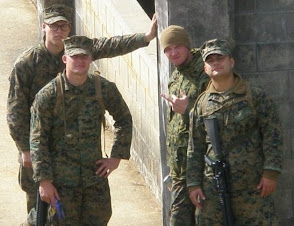
|


