|
Showing posts with label USN. Show all posts
Showing posts with label USN. Show all posts
SPI, USN (1971)
USN is a strategic air-land-sea simulation of the war in the Pacific during the crucial years 1941 through 1943. USN was originally published as the insert game for S&T #29; later it was reissued as an independent game in the standard SPI flat plastic game tray format. USN was designed by James F. Dunnigan with help from John Young and Robert Champer, and published in 1971 by Simulations Publications, Incorporated (SPI).
HISTORICAL BACKGROUNDAt 07:40 on Sunday, 7 December 1941, a mixed-force of Japanese carrier aircraft composed of 45 fighters, 54 dive bombers, 40 torpedo bombers, and 50 horizontal bombers appeared in the sky over the island of Oahu, part of the American territory of the Hawaiian Islands. This was the first wave of a devastating surprise aerial attack on the American naval and air forces in and around Pearl Harbor. Fifty minutes later, a second wave of Japanese carrier-based aircraft struck the island again in a follow-up raid. As a result of these two Japanese attacks, eighteen U.S. ships including seven battleships were either sunk or so badly damaged that they would be out of action for months. In addition, of the nearly 400 military aircraft on the island, 188 were destroyed, and 159 were damaged. Total American casualties were 3,581, of which 2,403 were killed. The pillars of black smoke billowing up from the burning ships and airfields at Pearl Harbor after the Japanese airstikes bore witness to the stark fact that, although no formal declaration had yet been made by either nation, the United States and the Empire of Japan were now at war.DESCRIPTION USN is a historical simulation of the war in the Pacific 1941-1943. In concept, if not in execution, USN was really a prototypical rough draft for the SPI monster games to come. The visually ugly and almost unplayable STRATEGY I actually predated USN by a few months. However, despite having two map sheets and twice as many counters as USN, STRATEGY I was little more than an ad hoc collection of quasi-historical, poorly play-tested scenarios (sixteen to be precise) that attempted to simulate combat from ancient to modern times. SPI actually broke new ground with USN, and the research and development experience that Dunnigan and company acquired doing this project, besides laying the ground work for future monster games, would later show up in titles like SOLOMONS CAMPAIGN and FAST CARRIERS, among others. USN is a historical simulation of the war in the Pacific 1941-1943. In concept, if not in execution, USN was really a prototypical rough draft for the SPI monster games to come. The visually ugly and almost unplayable STRATEGY I actually predated USN by a few months. However, despite having two map sheets and twice as many counters as USN, STRATEGY I was little more than an ad hoc collection of quasi-historical, poorly play-tested scenarios (sixteen to be precise) that attempted to simulate combat from ancient to modern times. SPI actually broke new ground with USN, and the research and development experience that Dunnigan and company acquired doing this project, besides laying the ground work for future monster games, would later show up in titles like SOLOMONS CAMPAIGN and FAST CARRIERS, among others.USN is a strategic/operational simulation of combined land-sea-air combat in the Pacific Theater of Operations during the first years of World War II. The game covers the intense fighting between the Allies and the forces of Imperial Japan during the period 7 December, 1941, through the end of June, 1943. A game like USN, which combines ground, naval, and air operations, can be expected to have a complex turn sequence. And so, in fact, it does.  The USN game turn weaves the land-sea-air operations of both players together in an interesting pattern of action and reaction. This turn sequence consists of ten steps. Step one: both players introduce reinforcements onto the game map. Step two: the Japanese player moves air and naval units, and naval units then engage in combat and bombardment. Step three: the Allied player moves land units. Step four: the Allied player moves air and naval units, and naval units then engage in combat and bombardment. Step five: the Allied land units attack enemy units; both sides air units conduct bombing attacks. Step six: the Allied player moves air and naval units, and naval units engage in combat and bombardment. Step seven: the Japanese player moves his land units. Step eight: the Japanese player moves air and naval units, and naval units engage in combat and bombardment. Step nine: Japanese land units attack enemy units; both sides air units conduct bombing attacks. Step ten: the players adjust the Turn Record Chart, check the status of naval units, and adjust the Damage Records of naval units. These last two operations, require the players to maintain their own separate paper records (no logs or forms are provided). As this outline of the game turn sequence shows, USN is not for the casual gamer. It is, to say the least, complicated and time consuming. Nonetheless, if the players are ambitious enough to learn the game system (and do the staff work), it can actually be quite interesting and even oddly enjoyable to play. The USN game turn weaves the land-sea-air operations of both players together in an interesting pattern of action and reaction. This turn sequence consists of ten steps. Step one: both players introduce reinforcements onto the game map. Step two: the Japanese player moves air and naval units, and naval units then engage in combat and bombardment. Step three: the Allied player moves land units. Step four: the Allied player moves air and naval units, and naval units then engage in combat and bombardment. Step five: the Allied land units attack enemy units; both sides air units conduct bombing attacks. Step six: the Allied player moves air and naval units, and naval units engage in combat and bombardment. Step seven: the Japanese player moves his land units. Step eight: the Japanese player moves air and naval units, and naval units engage in combat and bombardment. Step nine: Japanese land units attack enemy units; both sides air units conduct bombing attacks. Step ten: the players adjust the Turn Record Chart, check the status of naval units, and adjust the Damage Records of naval units. These last two operations, require the players to maintain their own separate paper records (no logs or forms are provided). As this outline of the game turn sequence shows, USN is not for the casual gamer. It is, to say the least, complicated and time consuming. Nonetheless, if the players are ambitious enough to learn the game system (and do the staff work), it can actually be quite interesting and even oddly enjoyable to play. USN offers four short (mini-game) scenarios, two campaign games, and one extended campaign game. The four short scenarios, in chronological order, are: the Battle of the Coral Sea, 8 May 1942 (two game turns); the Battle of Midway, 4 June, 1942 (three game turns); the Battle of the Eastern Solomons, 25 August, 1942 (two game turns); and the Battle of the Santa Cruz Islands, 28 October, 1942 (two game turns). Campaign Game 1 covers theater-wide operations, December 1941-May 1942 (twenty game turns); Campaign Game 2 covers operations, May 1942-September 42 (twenty game turns). The extended game, Campaign Game 3, covers the war in the Pacific, December 1941-July 1943 (eighty-one game turns). Several optional rules are also included in USN to increase realism and or/adjust play balance. These rules include: Allied variable deployment; Japanese variable deployment; garrisons; Japanese ferry carriers; the Burma Campaign; and (Japanese) submarine warfare. USN offers four short (mini-game) scenarios, two campaign games, and one extended campaign game. The four short scenarios, in chronological order, are: the Battle of the Coral Sea, 8 May 1942 (two game turns); the Battle of Midway, 4 June, 1942 (three game turns); the Battle of the Eastern Solomons, 25 August, 1942 (two game turns); and the Battle of the Santa Cruz Islands, 28 October, 1942 (two game turns). Campaign Game 1 covers theater-wide operations, December 1941-May 1942 (twenty game turns); Campaign Game 2 covers operations, May 1942-September 42 (twenty game turns). The extended game, Campaign Game 3, covers the war in the Pacific, December 1941-July 1943 (eighty-one game turns). Several optional rules are also included in USN to increase realism and or/adjust play balance. These rules include: Allied variable deployment; Japanese variable deployment; garrisons; Japanese ferry carriers; the Burma Campaign; and (Japanese) submarine warfare.A PERSONAL OBSERVATIONUSN is an interesting game on a number of different levels. Clearly, its appearance in S&T #29 shows that Jim Dunnigan was already beginning to think about designing and publishing large-scale, highly detailed, complex historical simulations. STRATEGY I had appeared a few months earlier and, for the reasons already mentioned, had been a tremendous disappointment to the majority of those loyal SPI gamers who had actually attempted to play it. Unfortunately, neither Redmond Simonsen (creatively) nor SPI (financially) was quite up to the job of developing and publishing a true monster game when STRATEGY I and USN first saw print. The appearance of such a true monster game would have to wait until SPIs publication, in April, 1974, of WAR IN THE EAST.Design Characteristics:
Game Components:
Subscribe to:
Posts (Atom)
Subscribe To
 Posts
All Comments
Posts
All Comments
Popular Posts
About Me
My Nephew Joe and Three Marine Buddies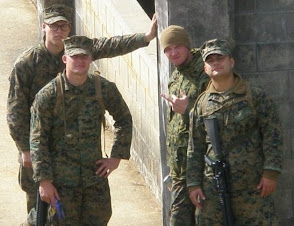
|


