|
Showing posts with label ST #49. Show all posts
Showing posts with label ST #49. Show all posts
SPI, FREDERICK THE GREAT (1975)
FREDERICK THE GREAT: The Campaigns of the Soldier King, 1756-1759 is a two-player operational level simulation of Eighteenth Century combat during the Seven Years War. The game was designed by Frank Davis and Edward Curran, and initially published as the insert game for S&T #49, by Simulations Publications, Inc. (SPI), in 1975. Later it was repackaged in the familiar SPI plastic flat-pack and sold as a ‘stand-alone’ title. The game was again reissued — this time in a bookcase-style boxed version with an upgraded game map and additional unit counters — by the Avalon Hill Game Company (TAHGC), in 1982.
HISTORICAL BACKGROUND On 5 November, 1757, a Prussian army of 22,000, under Frederick the Great, faced a combined French and Austrian army, commanded by Lt. General Prince de Soubise, of over 41,000 troops. To compensate for his inferiority in numbers, Frederick deployed his forces in a powerful defensive position on the heights of Rossbach and prepared to receive the enemy attack. Waiting patiently until the enemy troops had begun their advance towards his line, Frederick unleashed the Prussian cavalry, led by the able General von Seydlitz, in a downhill charge that sabered its way into and through the advancing enemy columns, smashing the Austrian and French formations and throwing them into disorder. The tangled Allied ranks were given no chance to reform; instead, the sight of the Prussian infantry marching forward to lend support to the victorious but blown Prussian cavalry was enough to turn disorder into rout. On 5 November, 1757, a Prussian army of 22,000, under Frederick the Great, faced a combined French and Austrian army, commanded by Lt. General Prince de Soubise, of over 41,000 troops. To compensate for his inferiority in numbers, Frederick deployed his forces in a powerful defensive position on the heights of Rossbach and prepared to receive the enemy attack. Waiting patiently until the enemy troops had begun their advance towards his line, Frederick unleashed the Prussian cavalry, led by the able General von Seydlitz, in a downhill charge that sabered its way into and through the advancing enemy columns, smashing the Austrian and French formations and throwing them into disorder. The tangled Allied ranks were given no chance to reform; instead, the sight of the Prussian infantry marching forward to lend support to the victorious but blown Prussian cavalry was enough to turn disorder into rout.  Discipline crumbled and the Austrians and French abandoned the field losing 3,000 killed and 5,000 prisoners. Along with the bag of Allied prisoners, Frederick’s troops also captured eleven enemy generals and sixty-three guns. The Prussian losses numbered perhaps five hundred and forty men. With de Soubise’s army retreating in disarray, Frederick quickly regrouped his forces and turned his attention to another powerful Austrian army; this one in Silesia. Exactly one month later, on 5 December, Frederick — again outnumbered by almost two-to-one — met and defeated the 60,000 man army of Prince Charles of Lorraine and Count Daun at Leuthen. Discipline crumbled and the Austrians and French abandoned the field losing 3,000 killed and 5,000 prisoners. Along with the bag of Allied prisoners, Frederick’s troops also captured eleven enemy generals and sixty-three guns. The Prussian losses numbered perhaps five hundred and forty men. With de Soubise’s army retreating in disarray, Frederick quickly regrouped his forces and turned his attention to another powerful Austrian army; this one in Silesia. Exactly one month later, on 5 December, Frederick — again outnumbered by almost two-to-one — met and defeated the 60,000 man army of Prince Charles of Lorraine and Count Daun at Leuthen. DESCRIPTION FREDERICK THE GREAT is a historical simulation of the Eighteenth Century art of war as practiced by the brilliant Prussian Soldier King, Frederick the Great, during the Seven Years War. The game focuses on the critical importance of leadership and on the resurgence of maneuver as a means of bringing about a decisive battle. The campaigns of Frederick the Great helped to spur the transformation of European warfare from the plodding, often inconclusive military chess games of the Seventeenth Century, to the new, much larger and more destructive national conflicts of the age of Napoleon. FREDERICK THE GREAT is a historical simulation of the Eighteenth Century art of war as practiced by the brilliant Prussian Soldier King, Frederick the Great, during the Seven Years War. The game focuses on the critical importance of leadership and on the resurgence of maneuver as a means of bringing about a decisive battle. The campaigns of Frederick the Great helped to spur the transformation of European warfare from the plodding, often inconclusive military chess games of the Seventeenth Century, to the new, much larger and more destructive national conflicts of the age of Napoleon. The game map for FREDERICK THE GREAT is a two-color representation of that part of Europe over which Frederick’s various campaigns were waged, and each map hex is scaled at 13.5 miles (estimated) from side to side. The various unit counters represent the forces of the opposing armies. The combat units of the contesting armies are represented by game pieces that — like different denominations of currency — symbolize different numbers of ‘strength points’. Each ‘strength point’ in the game represents approximately 2,500 men. FREDERICK THE GREAT is played in game turns, each of which is divided into two symmetrical and interwoven player turns.  One complete game turn is equal to fifteen days of real time. A typical player turn proceeds, as follows: Reinforcement Phase; Morale Recovery Phase; Depot Creation Phase; Phasing Player March Phase; Non-phasing Player Forced March Phase; Combat Phase; Siege Resolution Phase; and Non-phasing Player Attrition Phase. Once both players have completed the preceding set of game actions, the turn record marker is advanced one space, and the next game turn begins. One complete game turn is equal to fifteen days of real time. A typical player turn proceeds, as follows: Reinforcement Phase; Morale Recovery Phase; Depot Creation Phase; Phasing Player March Phase; Non-phasing Player Forced March Phase; Combat Phase; Siege Resolution Phase; and Non-phasing Player Attrition Phase. Once both players have completed the preceding set of game actions, the turn record marker is advanced one space, and the next game turn begins. The actual mechanics of play for FREDERICK THE GREAT, even by today’s standards, are comparatively detailed. At its core, FREDERICK THE GREAT is built around a ‘leadership-based’ game system. The various leaders in the game have different ‘initiative’ ratings, and these ratings are critical both in terms of movement and in terms of combat resolution.  Other aspects of the game are also somewhat unusual. The rules on stacking, for example, are relatively generous: an unlimited number of leader and combat units (of all nationalities) may stack in a single hex; however, ‘depot’ units may never stack together in a hex. The stacking rules also help to recreate the ‘fog of war’, in that opposing players are not permitted to examine the strength and contents of an enemy stack unless the enemy stack is actually being attacked. Other rules are equally odd. Only Austrian units, for example, exert a zone of control (ZOC). The effects of Austrian ZOC’s, however, are rather limited: they have no effect on movement, nor do they extend into enemy occupied hexes; their one real benefit is that they do block supply paths through affected hexes. Other aspects of the game are also somewhat unusual. The rules on stacking, for example, are relatively generous: an unlimited number of leader and combat units (of all nationalities) may stack in a single hex; however, ‘depot’ units may never stack together in a hex. The stacking rules also help to recreate the ‘fog of war’, in that opposing players are not permitted to examine the strength and contents of an enemy stack unless the enemy stack is actually being attacked. Other rules are equally odd. Only Austrian units, for example, exert a zone of control (ZOC). The effects of Austrian ZOC’s, however, are rather limited: they have no effect on movement, nor do they extend into enemy occupied hexes; their one real benefit is that they do block supply paths through affected hexes.  Movement (March) rules in FREDERICK THE GREAT — because the game system is heavily focused on the effectiveness of leaders — are quite ornate. Combat units must be accompanied by a leader in order to move, and the movement allowance of all leader counters belonging to the phasing player are determined by a combination of each different leader’s initiative rating and the results of a single die roll made at the beginning of the March Phase. Whatever the die roll, however, no leader may expend more than six movement points in a single March Phase. One additional feature that adds a bit of excitement to the game is that of the Overwhelming Attack. This special type of combat, like ‘overruns’ in armored games, takes place during the March Phase, and a force that is subject to an Overwhelming attack is simply surrendered en mass to the phasing player as prisoners of war with no combat roll or loss to the attacker. Movement (March) rules in FREDERICK THE GREAT — because the game system is heavily focused on the effectiveness of leaders — are quite ornate. Combat units must be accompanied by a leader in order to move, and the movement allowance of all leader counters belonging to the phasing player are determined by a combination of each different leader’s initiative rating and the results of a single die roll made at the beginning of the March Phase. Whatever the die roll, however, no leader may expend more than six movement points in a single March Phase. One additional feature that adds a bit of excitement to the game is that of the Overwhelming Attack. This special type of combat, like ‘overruns’ in armored games, takes place during the March Phase, and a force that is subject to an Overwhelming attack is simply surrendered en mass to the phasing player as prisoners of war with no combat roll or loss to the attacker.  Combat between opposing forces is always voluntary and occurs, but is not required, when opposing forces occupy the same hex. The results of individual battles are determined by using a LEIPZIG type ‘percentage ratio’ combat results table (CRT). The process by which battles are conducted is both ingenious and, after a little practice, easy to execute. The first step in any combat is for the strength of the two opposing forces to be revealed and then converted to a percentage value: for example, a force that was twice, but not quite three times as large as the enemy contingent would use the 200-299% column on the CRT. The next step is to subtract the initiative value of the senior defending leader along with the terrain effects die roll modifier (if any) from that of the highest ranking — in terms of seniority, not effectiveness — attacking leader’s initiative rating. Combat between opposing forces is always voluntary and occurs, but is not required, when opposing forces occupy the same hex. The results of individual battles are determined by using a LEIPZIG type ‘percentage ratio’ combat results table (CRT). The process by which battles are conducted is both ingenious and, after a little practice, easy to execute. The first step in any combat is for the strength of the two opposing forces to be revealed and then converted to a percentage value: for example, a force that was twice, but not quite three times as large as the enemy contingent would use the 200-299% column on the CRT. The next step is to subtract the initiative value of the senior defending leader along with the terrain effects die roll modifier (if any) from that of the highest ranking — in terms of seniority, not effectiveness — attacking leader’s initiative rating.  In a battle, for example, pitting Frederick (initiative rating of ‘3’) against a defending force led by the senior French commander (initiative rating of ‘0’) in a mountain hex, Frederick’s force would still receive a +1 die roll modification (DRM). On the other hand, if Frederick were defending in the same hex, his force would receive the benefit of a -5 DRM. Once these preliminary calculations are out of the way, the die is rolled and the appropriate combat results are implemented. The force that loses the greater number of strength points, not surprisingly, loses the battle and must retreat and then become demoralized. Before rolling for retreat however, the losing commander must surrender additional strength points as prisoners of war (POW’s) equal to the difference between his casualties and those of the winner. For example, if the losing side lost four strength points and the victor lost two, the loser would, besides removing his four points of casualties, also have to give up two more strength points to the victor to represent captured POW’s. Combat will typically result in percentage losses for both sides; in addition, Overwhelming Attacks will result in the surrender of the entire defending force, and every combat except for those at 400% (the maximum) odds may result in the loss of a leader counter. Although it seems somewhat cumbersome when described; the combat system actually works very well and imparts a distinctly Eighteenth Century warfare ‘feel’ to the game. In a battle, for example, pitting Frederick (initiative rating of ‘3’) against a defending force led by the senior French commander (initiative rating of ‘0’) in a mountain hex, Frederick’s force would still receive a +1 die roll modification (DRM). On the other hand, if Frederick were defending in the same hex, his force would receive the benefit of a -5 DRM. Once these preliminary calculations are out of the way, the die is rolled and the appropriate combat results are implemented. The force that loses the greater number of strength points, not surprisingly, loses the battle and must retreat and then become demoralized. Before rolling for retreat however, the losing commander must surrender additional strength points as prisoners of war (POW’s) equal to the difference between his casualties and those of the winner. For example, if the losing side lost four strength points and the victor lost two, the loser would, besides removing his four points of casualties, also have to give up two more strength points to the victor to represent captured POW’s. Combat will typically result in percentage losses for both sides; in addition, Overwhelming Attacks will result in the surrender of the entire defending force, and every combat except for those at 400% (the maximum) odds may result in the loss of a leader counter. Although it seems somewhat cumbersome when described; the combat system actually works very well and imparts a distinctly Eighteenth Century warfare ‘feel’ to the game. There are only five types of terrain in FREDERICK THE GREAT: clear, mountain, fortress, mountain pass hex-sides, and river hex-sides. It costs all units one extra movement point to cross a mountain pass or river hex-side, or to enter an enemy occupied hex. Only mountain and fortress hexes affect combat: mountain hexes reduce the attacker’s die roll by two; fortresses must be reduced through siege rather than regular combat.  The supply rules for FREDERICK THE GREAT are both intuitively logical and cleverly handled. Supply, for all nationalities, must have, as its point of origin, a friendly (garrisoned) fortress. The supply path can then be extended through the creation of a chain of ‘depot’ units that in turn connect back to a friendly supply source. To establish a new depot during the Depot Creation Phase, a force must number at least ten strength points. Moreover, depots, once created, may not be moved. To be operative, a depot unit must be occupied by at least one friendly strength point, and it must be within a certain number of hexes (which varies according to nationality) of another friendly operational depot or garrisoned friendly fortress. The supply rules for FREDERICK THE GREAT are both intuitively logical and cleverly handled. Supply, for all nationalities, must have, as its point of origin, a friendly (garrisoned) fortress. The supply path can then be extended through the creation of a chain of ‘depot’ units that in turn connect back to a friendly supply source. To establish a new depot during the Depot Creation Phase, a force must number at least ten strength points. Moreover, depots, once created, may not be moved. To be operative, a depot unit must be occupied by at least one friendly strength point, and it must be within a certain number of hexes (which varies according to nationality) of another friendly operational depot or garrisoned friendly fortress. _+duke+of+Rohan-Rohan_+seigneur+of+Roberval_+and+marshal+of+France+from+1758.jpg) Supply paths can be traced into but not through enemy occupied hexes or Austrian ZOC’s. Supplied leader and combat units operate normally in every way, and the supply state of a force has no effect on its combat strength for attack or defense. However, unsupplied forces must roll for losses during the appropriate Attrition Phase; in addition, Leader units may or may not be able to march out of supply. Leaders with high initiative ratings, like Frederick, may operate without supply indefinitely, but lower rated leaders either can not march out of supply, at all; or if they begin the March Phase unsupplied, must attempt to return to a supplied status by the end of their movement. Supply paths can be traced into but not through enemy occupied hexes or Austrian ZOC’s. Supplied leader and combat units operate normally in every way, and the supply state of a force has no effect on its combat strength for attack or defense. However, unsupplied forces must roll for losses during the appropriate Attrition Phase; in addition, Leader units may or may not be able to march out of supply. Leaders with high initiative ratings, like Frederick, may operate without supply indefinitely, but lower rated leaders either can not march out of supply, at all; or if they begin the March Phase unsupplied, must attempt to return to a supplied status by the end of their movement. FREDERICK THE GREAT is won by either capturing or retaining control of the various fortresses on the game map, and by destroying (through elimination or capture) enemy combat strength. A player may achieve a Marginal, Substantive, or Decisive Victory. Victory for one side or the other is not guaranteed, however, because the game can also result in a Draw.  FREDERICK THE GREAT: The Campaigns of the Soldier King, 1756-1759 offers four scenarios that examine different stages in the Seven Years War. These scenarios are, in order of appearance: The Campaign of 1756 (10 game turns); The Campaign of 1757 (18 turns); The Campaign of 1758 (18 turns); and The Campaign of 1759 (18 turns). The individual scenarios each present different strategic problems to Prussia and its allies, and all incorporate ‘special’ scenario rules to represent the individual circumstances of each campaign. In addition, although there are even special rules for Prisoner Exchanges and Winter operations, there are no ‘optional’ rules offered to add to the historical flavor of the game; and so far as I can tell, none are needed. FREDERICK THE GREAT: The Campaigns of the Soldier King, 1756-1759 offers four scenarios that examine different stages in the Seven Years War. These scenarios are, in order of appearance: The Campaign of 1756 (10 game turns); The Campaign of 1757 (18 turns); The Campaign of 1758 (18 turns); and The Campaign of 1759 (18 turns). The individual scenarios each present different strategic problems to Prussia and its allies, and all incorporate ‘special’ scenario rules to represent the individual circumstances of each campaign. In addition, although there are even special rules for Prisoner Exchanges and Winter operations, there are no ‘optional’ rules offered to add to the historical flavor of the game; and so far as I can tell, none are needed. A PERSONAL OBSERVATION FREDERICK THE GREAT: The Campaigns of the Soldier King, 1756-1759 is one of those little gems that, just when you least expected it, would periodically show up with S&T and which kept a lot of us subscribing to the magazine year after year. It is certainly not an ‘eye grabber’ by any stretch of the imagination: the brown and blue, two-color map, and the generic ‘strength point’ unit counters certainly don’t contribute much to the historical ‘feel’ or good looks of the game. And it should be noted that the Avalon Hill version that appeared seven years later is not — despite a hard-backed game map and sixty additional counters — all that big an improvement, appearance-wise, over the original. Thus, it is probably not surprising that when I first received my own copy of this title in the mail, I glanced at the map and counters briefly and then put the game aside. It wasn’t until a month or two later, mainly at the urging of one of my gaming friends, that I took the game out again and gave it a more serious look. I’m glad that I did. FREDERICK THE GREAT: The Campaigns of the Soldier King, 1756-1759 is one of those little gems that, just when you least expected it, would periodically show up with S&T and which kept a lot of us subscribing to the magazine year after year. It is certainly not an ‘eye grabber’ by any stretch of the imagination: the brown and blue, two-color map, and the generic ‘strength point’ unit counters certainly don’t contribute much to the historical ‘feel’ or good looks of the game. And it should be noted that the Avalon Hill version that appeared seven years later is not — despite a hard-backed game map and sixty additional counters — all that big an improvement, appearance-wise, over the original. Thus, it is probably not surprising that when I first received my own copy of this title in the mail, I glanced at the map and counters briefly and then put the game aside. It wasn’t until a month or two later, mainly at the urging of one of my gaming friends, that I took the game out again and gave it a more serious look. I’m glad that I did. What I discovered during that second, closer examination, was that FREDERICK THE GREAT, more than anything else, is about leadership: both good leadership and, perhaps even more importantly, incompetent leadership. For this reason, probably more than any other, the game succeeds better than virtually any other title dealing with this period — at least, that I have ever tried — at conveying the problems of campaigning under the limitations and conventions of the Eighteenth Century. I should note in passing, however, that I have not yet looked closely at GMT’s series of games on the Seven Years War, PRUSSIA’S GLORY. That having been said, in FREDERICK THE GREAT, the Prussian King is virtually unbeatable in battle when defending in good defensive terrain, and superior to even the best enemy commanders when on the attack. Moreover, the political realities of the time dictate that, in most cases, the best enemy commanders will not be in command of the larger enemy forces. Moreover, warfare during this period, as it does today, requires a great deal more than fighting battles; lines of communication and logistical centers must also be established and maintained. And Frederick, gifted as he is, cannot be everywhere at once. And that’s not all. Players who try this game for the first time will also quickly discover that waging battles under favorable circumstances; that is: when and where a player might choose, is usually a lot more difficult than it first appears. What I discovered during that second, closer examination, was that FREDERICK THE GREAT, more than anything else, is about leadership: both good leadership and, perhaps even more importantly, incompetent leadership. For this reason, probably more than any other, the game succeeds better than virtually any other title dealing with this period — at least, that I have ever tried — at conveying the problems of campaigning under the limitations and conventions of the Eighteenth Century. I should note in passing, however, that I have not yet looked closely at GMT’s series of games on the Seven Years War, PRUSSIA’S GLORY. That having been said, in FREDERICK THE GREAT, the Prussian King is virtually unbeatable in battle when defending in good defensive terrain, and superior to even the best enemy commanders when on the attack. Moreover, the political realities of the time dictate that, in most cases, the best enemy commanders will not be in command of the larger enemy forces. Moreover, warfare during this period, as it does today, requires a great deal more than fighting battles; lines of communication and logistical centers must also be established and maintained. And Frederick, gifted as he is, cannot be everywhere at once. And that’s not all. Players who try this game for the first time will also quickly discover that waging battles under favorable circumstances; that is: when and where a player might choose, is usually a lot more difficult than it first appears.  If I had to select the best single element about Davis and Curran’s game design, I think that I would have to choose the combat system. Certainly, the interwoven game turn sequence of FREDERICK THE GREAT is ingenious and easy to follow, but — in my opinion, at least — the combat subroutine is the real star in this game system. In a page or so of rules, the two designers present a combat system that can actually reproduce outcomes like Frederick’s decisive victory at Leuthen: a battle in which 33,000 Prussians defeated 60,000 Austrians. And the game can do so without the usual pages of special “idiocy’ rules that most designers end up resorting to in order to reproduce otherwise unlikely battlefield outcomes. In short, this combat system has the twin virtues of being both clever and simple. I only wish more designers, over the years, would have followed in this path. If I had to select the best single element about Davis and Curran’s game design, I think that I would have to choose the combat system. Certainly, the interwoven game turn sequence of FREDERICK THE GREAT is ingenious and easy to follow, but — in my opinion, at least — the combat subroutine is the real star in this game system. In a page or so of rules, the two designers present a combat system that can actually reproduce outcomes like Frederick’s decisive victory at Leuthen: a battle in which 33,000 Prussians defeated 60,000 Austrians. And the game can do so without the usual pages of special “idiocy’ rules that most designers end up resorting to in order to reproduce otherwise unlikely battlefield outcomes. In short, this combat system has the twin virtues of being both clever and simple. I only wish more designers, over the years, would have followed in this path.  Finally, FREDERICK THE GREAT is more than a simple exposition on the Prussian Soldier King’s military prowess; it is actually a historical survey of the changing nature of warfare in the Eighteenth Century. This was a time when decisive battles, rather than the ponderous maneuvers and methodically-conducted sieges of the preceding century, reemerged as a central feature of European warfare. And this change was mainly the product of Frederick’s successes on the battlefield. It is no accident that Napoleon carefully studied the campaigns of Frederick the Great; the Prussian King had begun a revolution in military thinking that Napoleon would complete; and he would do so a mere four decades after the end of the Seven Years War. Thus, it is not inaccurate to say that Frederick the Great, and not Napoleon, can be described as the real father of what, today, we would consider to be the modern approach to the art of war. In one way, it is a very odd legacy from a man who, as a youth, hated the harsh rigors and strict discipline of military life, and who, instead of being a soldier, wanted nothing more than to pursue his interests in literature, philosophy, and music. Finally, FREDERICK THE GREAT is more than a simple exposition on the Prussian Soldier King’s military prowess; it is actually a historical survey of the changing nature of warfare in the Eighteenth Century. This was a time when decisive battles, rather than the ponderous maneuvers and methodically-conducted sieges of the preceding century, reemerged as a central feature of European warfare. And this change was mainly the product of Frederick’s successes on the battlefield. It is no accident that Napoleon carefully studied the campaigns of Frederick the Great; the Prussian King had begun a revolution in military thinking that Napoleon would complete; and he would do so a mere four decades after the end of the Seven Years War. Thus, it is not inaccurate to say that Frederick the Great, and not Napoleon, can be described as the real father of what, today, we would consider to be the modern approach to the art of war. In one way, it is a very odd legacy from a man who, as a youth, hated the harsh rigors and strict discipline of military life, and who, instead of being a soldier, wanted nothing more than to pursue his interests in literature, philosophy, and music. Design Characteristics:
Game Components:
Subscribe to:
Posts (Atom)
Subscribe To
 Posts
All Comments
Posts
All Comments
Popular Posts
About Me
My Nephew Joe and Three Marine Buddies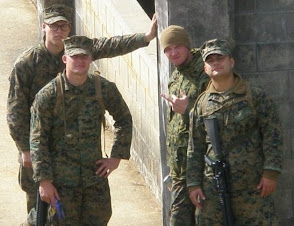
|


