|
Showing posts with label template. Show all posts
Showing posts with label template. Show all posts
TRICKS OF THE TRADE: ‘JENA-AUERSTADT’ PBeM PLAY AIDMOVEMENT & COMBAT TURN RECORD TEMPLATE FOR SPI’S ‘JENA-AUERSTADT’ (1975)Back on 27 January of this year, I published a set of PBeM (spreadsheet-style) Turn Record Templates for SPI’s MARENGO and WAGRAM; at the time, I didn’t include similar templates for the other two titles (BATTLE OF NATIONS and JENA-AUERSTADT) that make up the NAPOLEON AT WAR Quadri-game because, frankly, I couldn’t remember where I had stored their files. A few days ago, and quite by accident, I finally stumbled across the turn record spreadsheet for JENA-AUERSTADT. Given the fact that there are still no internet game platforms for this batch of older SPI titles, I have decided to publish this PBeM player aid as a favor to those gamers who continue to enjoy these early Napoleonic games, but who nonetheless have a difficult time finding face-to-face opponents when it comes to these titles. Needless-to-say, if I ever figure out where I hid the template for BATTLE OF NATIONS then I will immediately publish it, as well.  The Excel ‘spreadsheet’ file offered here is for the original SPI version of JENA-AUERSTADT (1975). This file has been set up to permit competing players to exchange new game moves via email attachments and, at the same time, to keep an accurate and detailed, ongoing record of all of the various game operations that can potentially occur in the course of a complete twelve turn match of this simple, but elegant game of Napoleonic warfare.  Additional useful game-related Internet linksTRICKS OF THE TRADE: ‘STALINGRAD’ PBeM PLAY AIDMOVEMENT & COMBAT TURN RECORD TEMPLATE FOR THE TAHGC GAME, ‘STALINGRAD’ (1963/1974)  The specific Excel ‘spreadsheet’ attachment offered with this post is for the 2nd Edition version (1974) of the Avalon Hill classic game, STALINGRAD (1963). This multi-page file has been set up to permit competing players to exchange game moves via email attachments and, at the same time, to keep an accurate and detailed, ongoing record of all of the various game operations that could potentially occur in the course of a complete twenty-four turn match.  A Few Online Gaming SitesSome of my Favorite Online Support Sites
Related Stalingrad Map and Counters Blog Posts:TRICKS OF THE TRADE: ‘WATERLOO’ PBeM PLAY AID
MOVEMENT & COMBAT TURN RECORD TEMPLATE FOR THE ‘TOURNAMENT’ (28 Game Turn) VERSION OF TAHGC GAME, ‘WATERLOO’ (1962)
One of the great and unanticipated benefits of the internet age — speaking as an aging wargamer — has been the extraordinary proliferation of home computers and laptops, and the now almost universal ability of modern players to substitute ‘Play by Electronic Mail’ (PBeM) for its tiresome precursor, traditional ‘Play by Mail’ (PBM). This has meant that most games between geographically separated opponents can now — if both players are conscientious in their move-making — be completed in a matter of months or even weeks, instead of the year or more that postal play used to require.  Happily, the ‘internet revolution’ has also led to the appearance of subscription (pay-as-you-go) wargame sites such as ‘Hexwars,’and also to the development of easy-to-use gaming software applications such as ‘Vassal’ which has made ‘electronic’ wargaming even faster (no set-up time) and more convenient. In fact, in the case of ‘Vassal,’ players who are familiar with a game system no longer even have to have physical access to a copy of a favorite title in order to play it. Of course, reliance on software applications like ‘Vassal’ or ‘Cyberboard by Dale Larson’ is not always either practical or even preferable. In many cases, players will find that platforms for their favorite older games are not yet available on line. This, by the way, is currently the case with WATERLOO. Thus, for those old line grognards who still enjoy this game, there really isn’t a good alternative to the type of PBeM template offered here. Moreover, even when their favorite title is available on line, players will occasionally find that existing internet gaming software — programmers being human — will have map or order of battle mistakes that seriously detract from the actual playability of the game. Finally, there are the modern ‘Luddites’ like me who just don’t much care for the ‘point and drag’ mode of moving counters on a screen; gamers who, instead, would actually rather have the real map and counters in front of them when they play. For this type of player, using a ‘spreadsheet’ format for internet gaming is a convenient alternative. And it is also, not surprisingly, the online gaming format that I personally prefer.  The Excel ‘spreadsheet’ file offered with this post is for the Avalon Hill classic game, WATERLOO (1962). This particular file is set up for the Tournament version of the game; that is: the version used in tournament competition at the WBC Convention in Lancaster. For those players who are unfamiliar with this version of the game: unlike the Standard Game, the Tournament Game adds one extra 7:00 pm daylight turn on each day, but allows the game to run for only four rather than five days. This turn record change has the effect of postponing Prussian Anglo-Allied reinforcements, starting on June 17th, while, at the same time, shortening the overall game by two turns. The Excel ‘spreadsheet’ file offered with this post is for the Avalon Hill classic game, WATERLOO (1962). This particular file is set up for the Tournament version of the game; that is: the version used in tournament competition at the WBC Convention in Lancaster. For those players who are unfamiliar with this version of the game: unlike the Standard Game, the Tournament Game adds one extra 7:00 pm daylight turn on each day, but allows the game to run for only four rather than five days. This turn record change has the effect of postponing Prussian Anglo-Allied reinforcements, starting on June 17th, while, at the same time, shortening the overall game by two turns.Finally, although it actually has no bearing on play, the units of both the French and Prussian armies have been listed according to their parent (corps) organizations. Also, it should noted that because these counters are never used in Tournament play, the various French and Prussian Anglo-Allied commanders have been left off of this template.  Excel spreadsheet link: http://spreadsheets.google.com/ccc?key=0AqCInXkTQsAadGlCVFVqRE13NnpnOV9QN3VaaG5UZXc&hl=en
Subscribe to:
Posts (Atom)
Subscribe To
 Posts
All Comments
Posts
All Comments
Popular Posts
About Me
My Nephew Joe and Three Marine Buddies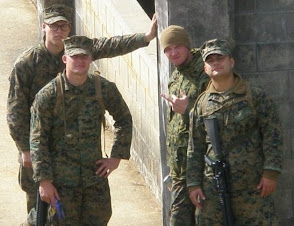
|


