A PERSONAL ASIDE TO THE GAMING COMMUNITYIn Memoriam: The Founder of Modern Board “Adventure” Gaming, Charles S. Roberts, Passes AwayCharles Swann Roberts, the father of modern wargaming, passed away on Friday, 20 August, 2010. Roberts was 80 years old. He leaves behind four sons and four daughters, and is also survived by twelve grandchildren. His passing is a great loss to his family and to his many friends and colleagues. Roberts’ passing, however, also marks a notable and somber date for the multitude of gamers — of whom many probably have never even heard his name — who currently participate in the “adventure” board gaming hobby that Charles Roberts single-handedly invented.
Several years of modest commercial success followed Charles Roberts’ move into full-time game marketing, but an economic downturn during the early 1960’s hurt the fledgling company’s sales badly, and unplanned-for losses finally induced Roberts to turn control of the Avalon Hill Game Company over to his printer and main creditor, Monarch Services, in 1963. Once the game company that he had created had been placed under the direction of his friend Eric Dott at Monarch Services, Charles Roberts left the field of board games. He flirted briefly with a new design project in the early 1970's, but ultimately abandonned this second foray into game design in favor of traditional publishing; and for the rest of his long career worked in several areas of publishing all of which were completely unrelated to games. Interestingly, in the years that followed his stint at the helm of Avalon Hill, Roberts and his wife formed their own publishing company which — in spite of the fact that Roberts was not a Catholic — concentrated almost exclusively on printing Catholic religious materials. However, after two decades in religious publishing, Roberts finally shifted his company’s emphasis to focus on one of the great interests of his life: railroads and their colorful histories. Regrettably, among contemporary gamers, Roberts’ several critically-important contributions to game design are now largely forgotten. Nonetheless, it should be remembered that it was Charles Roberts who introduced the hexagonal-grid map board (to replace square-grid maps) and who, in a flash of genius, first invented the concept of the “odds-differential” Combat Results Table; and both of these game concepts, in spite of their age, continue to play an important role in conflict simulation design, even today. Perhaps most importantly, it was the formation of the Avalon Hill Game Company that really made the future growth of the wargaming hobby possible. Just the existence of a company that regularly published conflict simulations created opportunities for other designers to enter the field of "adventure" gaming. certainly, it can be argued that a number of other creative talents have contributed more, in terms of innovation and freshness, to the progress of wargaming over the years; but Charles S. Roberts was the first. Thus, it is no exaggeration to declare that Roberts’ pioneering work with history-based strategy games not only broke new ground in the realm of game-type entertainment, it was also instrumental in creating a completely new competitive gaming genre. In 1974, the commercial board game industry formally recognized Roberts’ contribution to the hobby and established the annual “Charles S. Roberts Awards” for excellence in various areas of the wargaming hobby. These awards continue to be presented to this day, concrete proof — at least when it comes to the professionals in the wargaming field — that even after almost sixty years, Charles Roberts’ unique place in the history of board “adventure” games remains secure. THE 20 BEST S&T MAGAZINE GAMES FROM THE “GOLDEN AGE” OF SPIA Subjective List of My Personal Picks of the Best S&T Magazine Insert Games Published during the 1970’s and 80’sINTRODUCTIONA few days ago, a visitor to my blog commented that, because he had only become interested in conflict simulations a few years ago, he felt that he had missed the “Golden Age” of wargaming. Having come “late to the party,” as it were, this reader lamented that he now had to look to internet sites like mine to help him separate the early game design “nuggets” from the far more abundant “dross” of those early years. I sympathize with his problem: a great many wargame titles were produced by different (often short-lived) game publishers during the 1970’s and 80’s, both as regular commercial offerings and as magazine “insert” games; and although some of these games were truly excellent, ground-breaking designs, most, alas, were eminently forgettable. That being said, the obvious question then becomes: How does a relative newcomer to the hobby tell one category of game from the other?Putting myself in the reader’s shoes, it occurs to me that a pretty good place to start with a “winnowing out” project like this one would be to examine some of the titles from the most prolific game publisher of the 70’s and 80’s: Simulations Publications, Inc. (SPI). Moreover, since the driving force behind much of SPI’s early game production originated with the company’s magazine, S&T, it might be especially useful to look at a representative cross-section of the various S&T magazine “insert” games that were published during the years when James F. Dunnigan (design) and Redmond Simonsen (graphics) pretty much ruled the whole game design roost at SPI. This sounds pretty easy, right? Maybe, maybe not; at six magazine games per year, old S&T titles begin to pile up in a hurry; so when it comes to actually following through with a project like this, where does one start? Stated differently: given the 100 plus magazine games produced and mailed during the two decades that are most commonly associated with the “Golden Age” of wargaming, which titles really represent the best of the S&T insert games to appear in the 70’s and 80’s? This is a tough, maybe even an impossible question to answer fairly. In reality, it is highly unlikely that any diverse group of experienced gamers would ever be able to unanimously agree on such a compilation; therefore, any such list, of necessity, would be both subjective and arbitrary. Fortunately, “subjective” and “arbitrary” both happen to be right up my street; thus, this quasi-rhetorical question provides me with the perfect excuse to catalog my own favorite picks — twenty, in all — from the many, many S&T magazine games published during the period in question. These games, I believe, should be a part of any collection of those players with a serious interest in older SPI games. Finally, before actually getting down to the “nitty-gritty” of this self-indulgent essay, I should note that certain early S&T games were not considered for this list — whatever their other qualities — if they were published before SPI began to include “backed” counter sheets in their magazine games. In addition, a number of otherwise worthwhile titles, published in the 1980’s, were eliminated from consideration because of shoddy production practices on the part of SPI. For a time, certain later-issue S&T magazine games were mailed to subscribers with “tissue-thin” map sheets. These maps tended to split along the folds as soon as they were opened for the first or second time. Because of this serious quality control problem, all of the magazine games produced during this period — fairly or unfairly — have been omitted from the following list. That being said, the following catalog of titles represents the twenty S&T magazine games that I personally think are the best all-around “insert” games from this early period in the development of the wargaming hobby. MY PERSONAL “TOP TWENTY” S&T MAGAZINE GAME PICKS1. USN, S&T #29 (Nov-Dec 1971) 2. BORODINO, S&T #32 (May-Jun 1972) 3. WINTER WAR, S&T #33 (Jul-Aug 1972) 4. YEAR OF THE RAT, S&T #35 (Nov-Dec 1972)  5. DESTRUCTION OF ARMY GROUP CENTER, S&T #36 (Jan-Feb 1973)Despite its uninspiring title and bland graphics, James Dunnigan’s DESTRUCTION OF ARMY GROUP CENTER: The Soviet Summer Offensive, 1944 is actually an interesting operational simulation — based on the KURSK Game System — of the Red Army’s brilliantly successful “Operation Bagration.” This offensive destroyed an entire German Army Group and tore a 250 mile gap in the Axis frontline in Poland in summer, 1944. The German player in the Historical Scenario will have his work cut out for him avoiding the fate of his historical counterpart, but with exactly the right blend of audacity and careful defensive play, he just might be able to turn the tables on an unsuspecting or overconfident Russian commander. Players will tend to like or dislike this game based on their view of the challenging defensive problem confronting the Germans. For my own part, I find it quite engaging; other players, however, may well find the German situation a bit too depressing to interest them. 6. PANZER ARMEE AFRIKA, S&T #40 (Sep-Oct 1973)It’s not every day that players open up a game and see combat units with mobility ratings of 40 to 60 movement points; nonetheless, such is the case with James Dunnigan’s PANZER ARMEE AFRIKA, a regimental-level simulation of the most decisive months of the seesaw North African struggle between Axis and Commonwealth forces in 1941-42. Almost everything about this game sets it apart from other titles that have attempted to deal with this popular topic. Thus, players will have to rethink their favorite strategies as they cope with unexpected design features such as: a ‘strength differential’ CRT; special supply rules that dramatically influence the combat effectiveness of attacks; and, perhaps most frustrating of all, the built-in, random hex-based movement inhibitions on Commonwealth forces. Players may love this game or they may hate it, but whatever one’s opinion, no one can accuse Dunnigan of being afraid to “think outside the box” when it comes to this innovative and ingenious new take on the battle for North Africa.7. WOLFPACK, S&T #47 (Nov-Dec 1974) 8. FREDERICK THE GREAT, S&T #49 (Mar-Apr 1975) 9. BATTLE FOR GERMANY, S&T #50 (May-Jun 1975) 10. WORLD WAR 1, S&T #51 (Jul-Aug 1975) 11. THE PUNIC WARS, S&T #53 (Nov-Dec 1975) 12. BREITENFELD, S&T #55 (Mar-Apr 1976) 13. PANZERGRUPPE GUDERIAN, S&T #57 (Jul-Aug 1976) 14. ROAD TO RICHMOND, S&T #60 (Jan-Feb 1977) 15. OCTOBER WAR, S&T #61 (Mar-Apr 1977) 16. COBRA, S&T #65 (Nov-Dec 1977) 17. STONEWALL, S&T #67 (Mar-Apr 1978) 18. THE CRUSADES, S&T #70 (Sep-Oct 1978) 19. NEY VS. WELLINGTON, S&T #74 (May-Jun 1979) 20. FIFTH CORPS, S&T #82 (Sep-Oct 1980) CONCLUSIONWhen I initially contemplated this project, I only planned on cataloguing five or so S&T magazine titles that, when they first appeared, I felt were both clearly representative of the design trends at SPI at the time of their publication, and that were also notable for their quality, purely as games. In essence: a sort of “short list” of the greatest “insert” games from the 1970’s and 80’s. That was the plan, anyway. Somehow, in spite of my best efforts, the list got longer and longer, and I finally simply pulled the plug at twenty games; which, if the truth be known, is probably at least five titles too many. Be that as it may, this collection of games — for better or worse — is the one that I have decided to stick with. Of course, I am absolutely positive that my picks of the best twenty S&T magazine games from the 1970’s and 80’s are not going to meet with everyone’s approval. That’s as it should be. Individual players will inevitably differ when it comes to their personal tastes in games; so I’m sure that any number of visitors to my blog will take exception to one or more of my choices. Moreover, I’m certain that, in almost every instance of disagreement, a strong case can be made for an alternative choice. In a number of different instances, I could make such a case, myself. So, to those readers who disagree with my selections, I invite you to present your own picks; after all, that’s why there is a “comments” section at the end of each of my posts!Related Blog Posts
AFTER ACTION REPORT: ‘AFRIKA KORPS’ PBEM FINALS MATCH
Back on 18 July, I foolishly volunteered the details of my then in progress AFRIKA KORPS PBeM Championship match with arch rival, Bert Schoose. At the time, Bert’s Axis held a modest advantage, but I was still hopeful that something might happen in the game to improve the prospects of my beleaguered Commonwealth forces. Unfortunately, no such miraculous turnaround was forthcoming; quite the opposite, in fact. After reducing Tobruch without losing a single unit, Bert’s Axis forces methodically advanced east to meet the British field army near Mersa Matruh. There, on the January I ’42 game turn, General Auchinleck’s Commonwealth forces suffered a pair of devastating defeats that, in combination, spelled the end of any further meaningful British resistance in North Africa. Faced with inevitable defeat, I resigned at the end of the game turn.
Needless-to-say, although I hated to lose the game, I still want to publicly extend Bert my thanks for an exciting and well-played match, and my sincere congratulations on his capturing of this year’s AFRIKA KORPS PBeM Championship. After winning five games in a row against very tough competition, he certainly deserves the title.   SPI, WAR IN THE EAST, 1st ED. (1974)HISTORICAL BACKGROUND In the late autumn of 1941, Hitler and the Oberkommando Des Heeres (OKH) surveyed the enormous gains won during the dramatically successful first months of the German ‘Barbarossa Offensive’. Russia appeared to be, given the Red Army’s enormous losses in men and materiel, on the verge of utter collapse. Thus, although winter was rapidly approaching, it still seemed possible to Hitler and many of his senior generals that a last offensive blow could decisively shatter the Russian forces gathered in front of Moscow, and that the war might yet be brought to a successful conclusion in its first year. Unfortunately for the German Führer, the fall rains had turned the already poor Russian roads into quagmires, and it was obvious that the panzer divisions would be unable to resume operations until the weather turned colder and the ground had frozen. Nonetheless, plans were made for ‘Operation Typhoon’, a major attack that would jump off against the Soviet capital as soon as mechanized operations were again possible, but before the Russian winter struck with its full fury and finally brought a complete halt to the German advance.  For the Wehrmacht, such a late offensive would create enormous difficulties for the mechanized forces which were already under-strength, worn down, and badly in need of refitting after months of non-stop fighting. Moreover, Hitler and the senior officers of the General Staff knew that, because of the uncertainty of the Russian weather, such an attack — even under the best of circumstances — was a dangerous gamble. In spite of these concerns, however, a last chance to win the war in 1941 was deemed too great an opportunity to ignore, particularly with Moscow a mere forty miles from the German front lines. Thus, after their almost superhuman efforts of the summer and fall, the soldiers of Army Group Center would be called upon by their Führer to make one last supreme effort. The fate of the Russian capital, and with it, Stalin’s empire, hung in the balance. Operation Typhoon’, although hastily organized, lurched into motion pretty much on schedule. As soon as the ground froze, Army Group Center’s Third Panzer Group, as well as its Ninth Army, attacked Soviet positions on 15 November. The Second Panzer Group, commanded by Heinz Guderian, attacked in the southwest through Tula on 17 November. The Führer’s plan, now in full swing, was a simple one: envelope the Soviet capital from the north and south and destroy the few exhausted Russian divisions still barring the Wehrmacht’s path into Moscow. Far removed from the battlefield, Hitler and his staff monitored events at the front as they developed by radio and followed the progress of the German attacks on situation maps. No one at the Führer’s headquarters — hundreds of kilometers from the frontlines — could appreciate the real conditions on the ground in Russia. And those conditions, already bad, were rapidly getting worse.  Nonetheless, Hitler’s confidence, at first, seemed justified; in spite of everything, the winter attacks started well. Unfortunately for the German soldiers actually spearheading the Führer’s offensive, Russian resistance was proving to be much more determined than expected; and, despite promising initial gains, ‘Operation Typhoon’ soon began to lose momentum. The Germans, in fact, were rapidly losing their command of the battle space. To the German officers and men at the front, the cause of their difficulties was obvious. Waves of new improved Soviet aircraft were starting to appear in the skies over their heads; larger numbers of the superb Russian T-34 tank also began to make their presence felt as the offensive wore on; but most menacing of all, fresh, battle-hardened troops — recently transferred from Siberia — were starting to show up in ever greater numbers directly in the path of the German advance. Despite these factors, a final desperate push carried the Third and Fourth Panzer Groups to within sight of the Kremlin towers only twenty-five miles away, but the German offensive finally sputtered to a halt on 4 December. The German Führer and his generals could not know it at the time, but the Wehrmacht had come as close to Moscow as it was ever going to get, and on 5 December, a massive Soviet counter-offensive crashed into German positions all along Army Group Center’s front. Only days before, victory had seemed within reach; now the German army, ill-equipped and trapped deep in the snowy vastness of Russia, found itself no longer fighting for new territory or for national glory, but for its very own survival, instead. DESCRIPTIONIntroduction Game Turn Sequence WAR IN THE EAST is played in game turns equal to one week of real time. Each game turn is composed of three separate action segments. The primary focus of the game is, as might be expected, on the ground war in Russia; however, air operations also play an important, if highly abstracted, role in the game. Each weekly game turn follows the same rigid pattern of player actions. Thus, a typical turn outline begins with a Joint Air War Turn which is itself composed of two phases: an Air Commitment Phase, followed by an Air Combat Phase. Once any air combat has been resolved, the ‘ground’ portion of the game turn begins. This part of the turn is divided into two asymmetrical Player Turns: a First Player (Axis) Turn; and a Second Player (Russian) Turn. These two player turns can each be further broken down into a sequence of specific game operations. For example, the First Player (Axis) Turn consists of six separate segments: the Reinforcement Phase; the Initial Movement Phase; the Rail and Sea Movement Phase; the Combat Phase; the Mechanized Movement Phase; and the Air Interdiction Phase. The Second Player (Russian) Turn, although similar to the Axis turn, is not identical, but instead, proceeds as follows: Reinforcement Phase; Initial Movement Phase; Combat Phase; Mechanized Movement Phase; Air Interdiction Phase; and (in the Campaign Game) the Production Phase. At the conclusion of the Russian Production Phase, the turn record marker is advanced one space, and the next game turn begins. Mechanics of Play The actual mechanics of play for WAR IN THE EAST, like the other titles in the KURSK family of games, are comparatively simple. However, because of the sheer size of the game and the number of counters typically on the map at any given time, play is still both time-consuming and challenging. For experienced players, much of the basic architecture of the game is comfortingly familiar. Thus, with only a few important exceptions, most of the game’s rules are quite orthodox. Stacking, for example, is limited to three combat units per hex for the Russians, and four units for the Germans. And as is typical of most of the other games in the KURSK family, stacking limits apply only at the end of a movement phase. This means that there is no penalty to stack or unstack with other friendly units during movement; however, any units forced to retreat because of combat onto other friendly units in excess of legal stacking limits are eliminated. Combat between adjacent units is voluntary. Defending stacks must be attacked as a unitary whole; in contrast, different units in an attacking stack may choose to attack the same or a different adjacent hex, or even to make no attack at all. All units in WAR IN THE EAST except for 'entrained units' (all nationalities), Soviet Arms and Training Centers, Russian antitank and artillery units, and Russian fortified units (0-3-0s) exert a Zone of control (ZOC). Zones of control are semi-rigid, but not ‘sticky’; hence, in WIE, all units must pay a penalty of two movement points to move adjacent to an enemy unit, but may, at any point during movement, freely exit an enemy-controlled hex at a cost of two additional movement points. [As an interesting aside, the cost for Axis units to enter or exit an enemy ZOC is reduced to one movement point during the first two turns of both the "Barbarossa" Scenario and the Campaign Game.] Needless-to-say, this also means that a unit with sufficient movement factors can move directly from one enemy ZOC to another at a cost of four additional movement points. In addition, ZOCs block both supply paths and retreat routes; however, the presence of a friendly unit in the affected hex negates enemy ZOCs in both cases. Non-mechanized units exert a ZOC into all adjacent hexes (except for lake and sea), regardless of terrain; mechanized units, in contrast, do not exert a ZOC into forest, swamp, or rough terrain hexes. Terrain Effects on Movement  Not surprisingly, given the scale of the game, a limited number of German and Soviet units may travel by rail or sea during each game turn; however, units using rail or sea movement may not combine this special form of transport with any other type of movement on the game turns of their use. Rail movement may only be conducted over friendly-controlled (and/or repaired) rail lines; sea movement is only possible between friendly-controlled coastal cities in the Baltic (Germans only) or Black Sea (Russians or Germans, depending on who controls Sevastopol). In both cases, the number of units that may be transported on any given game turn is limited. Only one German infantry division or one Russian rifle corps (or three Russian rifle divisions and/or anti-tank brigades) may use sea movement during any single game turn. In the case of rail movement, units may not move during the initial movement phase if they intend to move by rail. All units are eligible for rail movement, but each must pay ten ‘rail’ movement points both to entrain and to detrain in the course of that movement. The ‘rail capacities’ of the two sides, not surprisingly, are different. The Germans may move a maximum of ten division-sized units on each game turn; the Russians may move a maximum of sixty divisions or their equivalents during any single game turn. Soviet corps-sized units count as three divisions, Training Centers count as ten divisions, and Arms Centers count as twenty divisions when it comes to computing the utilization of Russian rail capacity. The rail movement allowance for all regular combat units is fifty movement points during clear and mud game turns; however, during snow game turns, the rail movement allowance of all Axis units (only) is reduced to twenty-five movement points. Russian Training and Arms Centers are a special case: the rail movement allowance for these ‘production-related’ units is always ten movement points. Finally, the one truly ground-breaking element in this simulation’s movement rules is the inclusion, for the first time by SPI, of modern infantry forced-marches. At the owning player’s option, any infantry unit — except for German Security or Finnish divisions — may attempt, during the Initial Movement Phase, to double its movement allowance by ‘force-marching’. At the conclusion of the movement phase, the owning player rolls a die for each force-marching unit; on a die roll of ‘one’ the unit is eliminated or, if possible, reduced to a battle group. Other than the one-sixth chance of elimination, there are no other requirements or penalties associated with infantry forced-marches. Terrain Effects on CombatTerrain effects on combat in WAR IN THE EAST, like those on movement, are also comparatively simple. For example, units attacking enemy counters that are defending in forest, swamp, or rough terrain hexes, require the phasing player to subtract ‘one’ from each of his affected combat die rolls. Units defending in clear terrain or in cities, on the other hand, receive no defensive bonus. This die roll modification (DRM) is the only effect that these types of terrain have on combat. River hex-sides present a different problem to the attacker: phasing units that attack through an unfrozen river hex-side have their combat strength halved (retaining fractions). This halving occurs even if the phasing player is conducting his assault using both units that are attacking across a river hex-side, and other units that are on the same side of the river as the defender. Rules of Combat Ground combat in WAR IN THE EAST can take one of two forms: regular combat or ‘overrun’ combat. Regular combat is always voluntary and follows a very familiar pattern. That is: it occurs when the phasing player brings attacking units adjacent to an enemy occupied hex during the initial movement phase of a game turn. In these circumstances, attacking odds are computed based on the season (clear, mud, or snow), the supply status of the units involved, the presence or absence of air support, and the effect, if any, of terrain. Once the combat odds have been established, a die is rolled and the result of the battle is determined based on the Combat Results Table currently being used by the attacker. ‘Overrun’ combat differs from conventional attacks in three important respects: first, overrun combat, because it is considered a function of movement, can occur during either the Initial or the Mechanized Movement Phase; second, overruns are considered to occur in the hex actually occupied by the defending unit or units; and third, defending units that are ‘overrun’ are immediately removed from play (they essentially cease to exist for the remainder of the phasing player’s movement phase). The phasing player can conduct an overrun anytime that an attacking stack both can achieve 13 to 1 or better odds against the total strength of the defending units in the target hex and can also expend two additional movement points over and above any other movement costs to enter the hex being overrun. The overrunning stack can never exceed three units, and all three overrunning units must have begun the current movement phase in the same starting hex. In addition, no unit may participate in more than one overrun combat per movement phase; however, phasing units, assuming they have sufficient movement points, may continue beyond the overrun hex and attack other enemy units during the regular combat phase. Also, although infantry units — if they meet all the other requirements for overrun combat — may overrun an enemy hex, they may never conduct an overrun on the same game turn in which they are force-marching. Finally, unlike conventional combat, the supply status of both overrunning and defending units is determined at the beginning of the overrunning player’s movement phase, and not at the instant that the overrun actually occurs.  As should be obvious, given the bloody nature of the game’s various CRTs, combat in WAR IN THE EAST tends to create high levels of attrition for both the attacker and defender. Thus, another, and much-needed feature of the game system — one that first made a limited appearance in KURSK — is that all German divisions and all Soviet corps, when destroyed in battle, are replaced by a weaker kampfgruppe (German) or battlegroup (Soviet) unit. These ‘reduced’ units not only help to maintain a combat presence on the battlefield, but they can also be rebuilt to their full strength, at the discretion of the owning player. Finally, in the case of retreat results, the controlling player always chooses the retreat route for his own defeated units. Supply  Other logistical requirements are just as restrictive. As an important adjunct to the supply rules, for example, each side has railroad repair units which allow the players to repair rail breaks caused by enemy units, and also to advance railroad supply heads forward as rail hexes are repaired (in the case of the Russians) or converted to ‘standard’ gauge (in the case of the Germans). The Axis player starts both the "Barbarossa" Scenario and the Campaign Game with three railroad repair units; however, additional German railroad repair units appear at specific intervals as the war rages on. In addition, if any German repair units are destroyed as a result of combat, they are brought back into play on the eighth game turn following their elimination. The Russians, like the Axis, also receive varying numbers of railroad repair units depending on the scenario being played; for the Soviets, this number can range from ‘0’ for the "Barbarossa" Scenario to ‘12’ for the Destruction of Army Group Center Scenario. In the Campaign Game, unlike the shorter scenarios, the Russian player has the option of creating — using the same production process that he employs to build his regular incoming combat formations — as many railroad repair units as he thinks that he will need.  Along with conventional railroad supply, seaborne supply, in certain limited circumstances, is also possible in WAR IN THE EAST. Russian units occupying a Baltic coastal city within five hexes of any friendly-controlled Leningrad hex are considered to share the same supply state as Leningrad. By the same token, Soviet forces in Black Sea coastal cities are considered to be in supply if: a) Sevastopol is Russian controlled; and b) a second, different Soviet-controlled Black Sea coastal city is able to trace a conventional supply line to the east edge of the map. The supply rules for German units in Finland are a special case. Until the Finnish and German rail lines link up, only one German unit south of the Weather Line may draw supply from Helsinki. In addition, up to, but never more than, five German units north of the Weather Line (Arctic Circle) may draw supply from Helsinki. Finally, it should be noted that the supply range for all units (Russian, Finnish, and German) operating above the Arctic Circle is always three hexes and is never modified because of seasonal changes in the weather. Air PowerAir power, as already noted, is handled in a highly abstract fashion in WAR IN THE EAST. Instead of the familiar two-piece ‘base’ and ‘aircraft’ units used in games such as KURSK (1971) and TURNING POINT (1972), players are assigned a variable number of ‘air points’, depending on the scenario being played. For example, the Axis player begins the "Barbarossa" Scenario or Campaign Game with twenty air points (this, by the way, is the maximum number of air points that the Axis player may ever have in play), while the Soviet player starts the invasion scenario or the Campaign Game with only three air points. As a historical aside, it is difficult to determine what the air points in WIE actually represent in simulation terms. The Luftwaffe, for example, opened the "Barbarossa Offensive" with over forty-three hundred frontline aircraft in theater, so it is possible that each German air point is roughly equivalent to 200 aircraft. The Russians, on the other hand, pose a very different problem. On the day that the German offensive began, 22 June 1941, the Red Air Force had over 11,500 aircraft deployed in forward bases close behind the western frontier. Most of these aircraft were destroyed on the ground by the Luftwaffe during the first hours of the war, but given the thousands of, admittedly mainly obsolete, aircraft that the Red Air Force still had in reserve, it is difficult to determine what a Soviet air point is intended to represent in WIE as regards to actual numbers of Russian aircraft. In any case, the procedures governing the use of air power in WAR IN THE EAST are surprisingly simple. Both the Axis and the Russian players each have their own ‘air power’ charts which are, in turn, divided into four subsections: a box for Total Available Air Points; an Air Superiority box; an Air Ground Support box; and an Air Combat Table. The Air War subroutine begins with both players secretly allocating some portion of their available air points (from ‘0’ to all) to Air Superiority; if both players have air points assigned to this mission, then the (somewhat cumbersome) air combat phase is executed and any losses from air-to-air combat are removed from play. 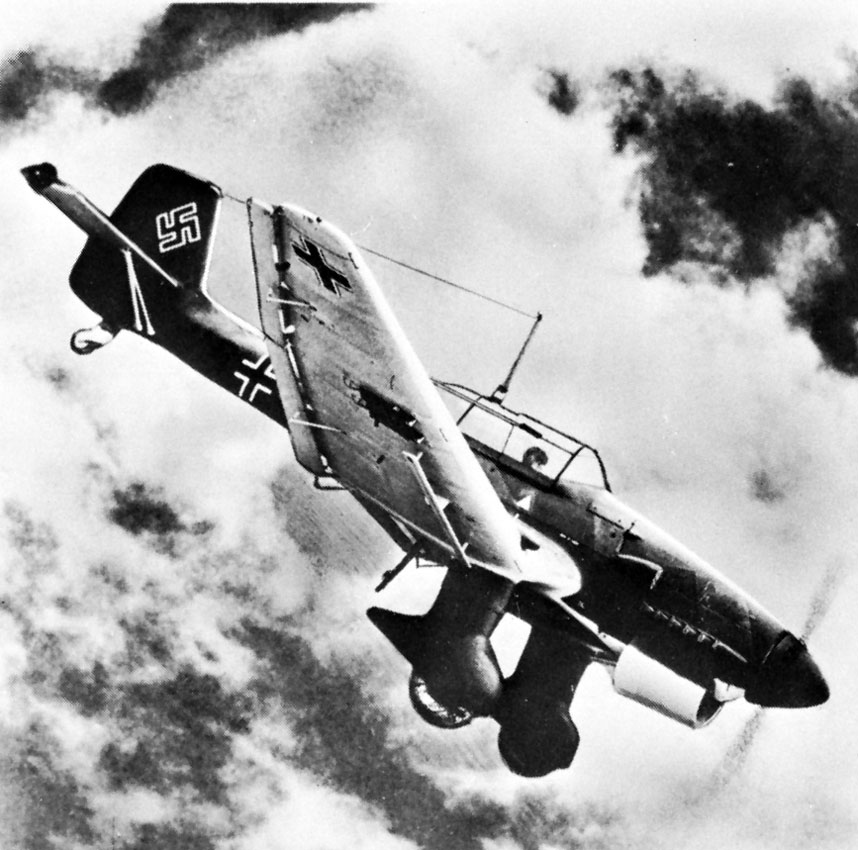 Any remaining air points that were not committed to Air Superiority (and were not removed as an indirect result of the immediately preceding Air Superiority combat) can be assigned to Air Ground Support missions, of which there are two types: direct Ground Support; and Interdiction. In the case of Ground Support, a single air point can be assigned by the attacking player just prior to the combat phase to each of his battles; this has the effect of increasing his combat die rolls by ‘1’. If the phasing player, for example, has ten available air points, then ten different battles could be supported in this way. Any air points not used in Ground Support missions may be used for Air Interdiction. Unlike Ground Support, Air Interdiction affects hexes and not units. Each interdiction marker deployed on the map (with a limit of one per hex) has much the same effect on a target hex as a ZOC; that is: it imposes an extra two-point movement penalty on any enemy unit attempting to enter (but not exit) the interdicted hex. Interdiction markers, it should be noted, also impose a five movement point penalty per rail hex on all enemy units using rail movement to travel through an interdicted hex. All Ground Support missions are limited in their range: both types of air operations may only be conducted within twenty hexes of an operable, friendly-controlled railhead that, itself, is connected by an unbroken line of rail hexes to a friendly map edge. Soviet Production: the “Game within a Game” If there is one design feature that really sets WAR IN THE EAST apart from other wargames of its era — at least, so far as the Campaign Game is concerned — that feature is the extensive amount of attention given over to Soviet Production. Of course, when playing the shorter scenarios, the Russian commander, like his Axis counterpart, receives new units according to the reinforcement schedule listed on the Turn Record Track; in contrast, when playing the 208 turn Campaign Game, the Soviet player (after the first seven game turns) is required to actually produce the specific combat units that he deems necessary to further his strategic war aims. It is no exaggeration to say that this ground-breaking Soviet Production subroutine is quite literally, a “game within a game.” Despite this fact, however, the actual process of Soviet Production is surprisingly straight-forward and relies on only four basic elements: Personnel Points (derived from friendly-controlled, but immoveable Russian Personnel Centers); Arms Points (derived from operable Arms Centers); operable Training Centers (the assembly areas where the production process actually takes place); and Time (the number of game turns required for a particular unit to complete the production process). Stated another way, Personnel Centers (major cities) are the source of Russian manpower; Arms Centers represent the manufacturing centers that produce weapons and equipment; and Training Centers are the specific locations (depots) where these two resources are combined, over time, to form individual combat units. When the Campaign Game begins, the Russian player starts with 20 on-map Personnel Centers and five off-map, in Siberia; he also begins play with 28 on-map Arms Centers and 21 off-map; and he starts the game with 12 on-map Training Centers and 6 off-map Siberian Training Centers. In addition to these production elements, the Russian player starts the Campaign Game with a reserve pool of 400 Arms Points.  Beginning on the first turn of the game, new Personnel and Arms Points become available for use based on the total count of those friendly-controlled resource centers that are still operable, multiplied by the Personnel and Arms ‘multiplier’ for that particular game turn. For example, on the first turn of the game, the Russian Personnel multiplier is ‘4’; thus, assuming that the Soviets control all 25 of their starting Personnel Centers, the Russian player would receive 100 Personnel Points, any portion of which he could immediately spend on the construction of new units or save for future production requirements. Needless-to-say, the constantly fluctuating totals of Personnel and Arms Points absolutely requires that the Russian player maintain a written and accurate, turn-by-turn record of these production resources as they come in and are expended. Both Arms and Training Centers are represented by counters and may be moved by rail; Personnel Centers, because they are major cities, are stationary sites printed on the game map. Russian Training Centers are recorded on one of two Training Center Charts. Each Chart is further divided into individual tracks for the different numbered Training Centers (from #1 to #20).  The Training Centers, of course, are where the real action takes place. Each Training Center consists of three separate production tracks: a Construction track; a Conversion track; and a Rebuilding track. Each track is arranged in a series of numbered boxes each of which represents one game turn. And since a Training Center can only begin processing one new unit per production cycle, production can only be initiated on a single one of a center’s three tracks on any given game turn. The precise function of each of the separate production tracks is evident in its name: the Construction track makes possible the creation of brand new units (rifle divisions, tank brigades, antitank and artillery units, to name just a few) which are also, in some cases, the building blocks necessary for the production of more powerful units; the Conversion track allows the Russian player to combine several smaller units to form a single more powerful formation (three 1-4 rifle divisions can be combined to form a 4-4 rifle corps, for example) or, alternatively, to convert a regular 4-4 rifle corps into a 5-5 Guards rifle corps; and the Rebuilding track provides the means by which Soviet Battle Groups that have been reduced by combat can be rebuilt to their original strength. Needless-to-say, all of these processes require the expenditure of Personnel and Arms Points; however, these costs will vary greatly from unit to unit. A Soviet rifle division, for instance, will cost 2 Personnel and 1 Arms Point, and require only 4 game turns to build; an artillery unit, on the other hand, will cost 2 Personnel Points and 30 Arms Points, and will require 20 weekly game turns to construct. This is the central puzzle presented by the Soviet Production Rules in the Campaign Game of WAR IN THE EAST; that is: the challenge, for the Russian commander, of deciding on and then implementing a reasonably efficient production program that both strikes a workable balance between the less-expensive combat units needed on a turn-by-turn basis at the front, and the other, far more costly units necessary to advance the long-term offensive goals of STAVKA and the Red Army. Admittedly, the "nitty-gritty" of the various Soviet Production procedures may occasionally become a little tiresome and time-consuming; nonetheless, the payoff for the Russian player — if only reckoned in terms of simulation value — is well worth the additional time and effort. "Odds and Ends"Besides the suite of game instructions already described, WAR IN THE EAST also includes a number of specialized rules cases which add a modest amount of extra historical color and texture to the game. For example, extensive rules relating to Weather and its changing effects on movement, supply, and combat have a critical impact on the flow and conduct of WIE. Included in this weather category is the Historical First Winter rule (the effects of which can be guessed). Also, certain specialized types of combat units are available only for use by the Russian player. Thus, Antitank Brigades (which halve the combat strength of any Axis mechanized units attacking the hex they occupy) and ranged Artillery units (which are able to bombard non-adjacent enemy positions by firing over an intervening hex) are only present in the Soviet counter-mix; and both play vitally important roles in the Soviet player’s defensive and offensive operations. The rules dealing with Manpower are handled in a very interesting fashion in WAR IN THE EAST. Thus, along with the familiar procedures for introducing reinforcements onto the map, there are special rules requiring historically-timed Axis Withdrawals at specific stages in the campaign. And the Soviet player is not immune to certain odd rules prescriptions, either; he must, for instance, regularly build aircraft units whether he wants them or not. Why? Because the rules tell him he must. Not every one of the game’s special rules is arbitrary or unreasonable, however. There is, for instance, a perfectly logical provision in the game for the amalgamation of depleted Kampfgruppen and Battle Groups to form full strength units while in the field; and, in much the same spirit, there are a pair of ingenious procedures, pretty much unique to WAR IN THE EAST, to handle both the introduction of German Replacement Points and the Rebuilding of completely destroyed German divisions. Also, as might be expected in any simulation of the Russian Front during World War II, there are elaborate, but (fortunately) optional rules for both Russian and Finnish Partisans. In addition, the combat operations of Axis Satellite forces in WIE, as was the case historically, are noticeably restricted both in their offensive scope and in their geographical reach. Certain sections of the map also receive their share of special attention; thus, both the Siberian Map Edge and combat operations above the Weatherline are each treated to their own special rules cases. Even units that have been trapped in isolated Pockets are governed by their own special set of rules. Finally, there are a number of restrictions (most of which can be treated as optional) on German operations. These include: Required German Garrisons (six combat factors for each Axis-controlled Russian Population Center hex); the Axis Continuous Line Requirement (the Axis player must maintain a continuous line of units and/or their ZOCs running north-south across the width of the entire front); and the most onerous of all, the Hitler No Retreat rule (the intent of which should be self-evident). Winning the Game The winner in WAR IN THE EAST is determined by the control of certain geographical objectives at various stages in the campaign. Casualties are irrelevant except for their effect on the combat power of the opposing armies. Victory conditions vary from scenario to scenario and are laid out in each scenario’s special instructions. In addition, depending on the battlefield performance of the two belligerents, different types of victory are possible; this means that one side or the other can win one of three levels of victory: Decisive, Substantive, or Marginal; a Draw is possible in several of the shorter scenarios, but not in the Campaign Game. Scenarios Soviet Offensive Counter-attack, Moscow, December, 1941, troops supported by tanks. WAR IN THE EAST offers four short scenarios (or mini-games): The "Barbarossa" Scenario, 1941 (20 game turns); The Stalingrad Scenario, 1942 (30 turns); The Kursk Scenario, 1943 (18 game turns); and The Destruction of Army Group Center Scenario, 1944 (20 turns). In addition, players can opt to fight out the entire war on the Russian Front by playing The Campaign Game, 1941-45 (208 game turns). The Campaign Game comes in two flavors: the Standard game and the Historical game. The two versions of the game differ only in that certain additional rules governing the actions of the German side are imposed when the Historical game is being played. These are: the First Winter Effects rule; the Axis No Retreat rule; and the Required Axis Withdrawal rule. In all other respects, these two variants of the Campaign Game are identical. In addition to the regular game rules, the Campaign Game also offers a number of “variants” for those players who want to experiment a little with alternative (might have been) historical occurrences. These “variants” run the gamut from the plausible to the highly unlikely and include the following player options: Axis Free Set-Up; Axis Satellite Neutrality; Russo-Japanese Conflict; Axis Satellite Early Entry; Axis Early Assault; Increased Finnish Participation; Axis preparation for Prolonged Campaign; Early German War Production Economy; Russian Maximum Build; and Turkish Attack. Besides this batch of historical possibilities, the designer also includes yet additional Campaign Game “variants,” including, among others: Axis Victory at El Alamein; Axis Success in Tunisia; Ukrainian Nationalism; Early Russian Neutrality; Full German Motorization (in my opinion, the most far-fetched of all of these historical ‘might have beens’); No Lend Lease; Russian Air Drop; Black Sea Assault; and No Purge of Red Army Officers. A PERSONAL OBSERVATION Looking back after my many years in wargaming, there are actually only three or four titles that, when I get to reminiscing about the past, really evoke a palpable feeling of nostalgia for the now long-gone “golden years” of the conflict simulation hobby; the first edition of WAR IN THE EAST (WIE) is, in spite of its several, oft-noted defects, one of those titles. When WIE initially became available from SPI, it was not the first commercially-produced monster game to deal with the Russo-German War, 1941-45, on an operational (brigade/division/corps) level; GDW’s DRANG NACH OSTEN! (DNO) had first seen print in 1973, almost a full year before the first edition of WAR IN THE EAST finally came on the scene. However, unlike DNO, which covered only the first period of the war — from June 22, 1941 to March 1942 (UNENTSCHIEDEN, a separate GDW add-on which, in combination with DNO, allowed the campaign to be fought from 1941 through 1945, did not appear until 1974) — WIE covered the entire titanic struggle. Thus, for the true East Front aficionado (and that certainly described me, in those days), it was all there: the initial string of easy German battlefield triumphs during the heady summer of 1941, as the Wehrmacht drove ever deeper into the heartland of the Soviet Union; the first awful Russian winter and, along with the snow, the sudden shock of serious German reversals at the hands of a new, better-equipped, and increasingly powerful Red Army; the Wehrmacht resurgent with the return of good weather in 1942; renewed Soviet offensives in the winter of 1942-43, and the end of German ascendancy on the battlefield in the summer of 1943; the Soviet hammer blows, one after another, in the summer and winter of 1944, and the start of the battered German army’s long retreat west from Moscow and towards the borders of the Third Reich; and finally, the end of Hitler’s dream of an empire in the east as a beleaguered Wehrmacht, shorn of its allies, is inexorably driven back by the Red Army, all the way to the bombed-out streets of Berlin, in 1945.  Of course, as already mentioned, WAR IN THE EAST is not without its problems. For starters, the Orders of Battle for the Red Army and the Axis Satellite forces, based on more recent information, are wildly inaccurate. And, to make matters worse, there is virtually no differentiation at all between different units of the same type: thus, all panzer divisions are 10-8s (whether Wehrmacht or SS) and all Soviet Guards rifle corps are represented by 5-5s. Also, it should be noted that the 208 turn Campaign Game, barring incompetence on the part of the game's participants, will virtually never develop along historical lines; in fact, players that transition from the shorter scenarios to the longer game will quickly discover that the Campaign Game battlefield situations (frontlines, force levels, etc.) that naturally arise in both 1942 and 1943 will bear almost no resemblance to those presented in the shorter Stalingrad and Kursk Scenarios. To be fair, this peculiar disconnect between the shorter "mini-games" and the 208 turn Campaign Game does not really detract from the simulation's overall playability; none-the-less, it does raise legitimate questions about some of the assumptions underlying Dunnigan's basic design, particularly among those players with a real penchant for historical accuracy. Unfortunately, these aren't the only problems with WIE: some of the game mechanics seem to be pointlessly obtuse. For instance, the multi-step procedures governing the creation of partisans are surprisingly cumbersome and, when everything is said and done, largely irrelevant to play. In addition, when it comes to the Finns, particularly during mud and snow game turns, the combat rules are — considering the actual events of the Russo-Finnish War, November 1939 to March 1940 — surprisingly friendly to the Soviets. Moreover, the rules governing air-to-air combat, and air operations generally, are so abstract as to border on simple-mindedness. Then there are the weather rules: the game’s rigidly preordained seasonal changes are both utterly arbitrary and completely unhistorical. In fact, because of the absolute predictability of weather conditions during every single turn of the game, the designer eliminates the possibility of any offensive opportunities, for either side, that could otherwise be expected to arise due to the early or late arrival of spring or fall. The railroad repair rules are also grossly inaccurate and biased in favor of the Russians. For example, the rail lines in both Poland and the Baltic States, just prior to the invasion, were still mainly constructed according to ‘standard’ European gauge and not the ‘wider’ rail gauge used in the Soviet Union; nonetheless, these European-type railroads are just as difficult to repair as the wider-gauged rail lines in Russia, proper. And speaking of odd railroad rules and their effect on WAR IN THE EAST: the notorious German Railroad Repair units, of which there are only three at the start of “Barbarossa,” are so obviously intended by the designer (along with the weather rules) to produce a predetermined limit to the German advance during the first campaign season, that more than a few of my friends have ruefully observed that the “Barbarossa Scenario” hardly even requires players, at all.  Yet, despite its many flaws, I still have a genuine soft spot for the first edition of WAR IN THE EAST. Admittedly there are a few rules problems. And certainly, because of the sheer number and "cookie-cutter" nature of the combat units, truly clever tactics are virtually impossible to implement in the standard version of the game; in fact, as one of my regular opponents long ago noted: “Except for 1941 and 1944-45, the game (like many of Dunnigan’s designs) has a disconcerting tendency to morph into a replay of World War I, except that in WIE the Germans don’t get to entrench.” His is a valid point. Nonetheless, while I acknowledge all of these criticisms — as well as the many others that have been piled onto the game over the years — WAR IN THE EAST is still, in my opinion, both a great game, and a reasonably instructive simulation of events on the Russian Front, 1941-45. I say this, first, because many of the most obvious rules problems can be corrected with a bit of inventive tweaking on the part of historically knowledgeable, experienced players; second, because the Soviet Production subroutine, all by itself, makes the game worth owning and playing. Not everyone, of course, will agree with this last point, I know. For some players, the turn-by-turn record-keeping, along with the work required to keep the operations at the many Training Centers running smoothly, is simply not worth the trouble. I understand this opinion, even if I don’t agree with it. Admittedly, the repetitive nature of the various Soviet Production procedures can occasionally become a little tiresome and time-consuming; nonetheless, the payoff for the Russian player — if only reckoned in terms of simulation value — is, in my view, well worth the additional time and effort. Even today, very few games allow a player to choose his own long-term goals, and then actually build the military forces necessary to accomplish those goals. This was the first operational-level simulation to truly make complex, multi-layered strategic decision-making both possible and necessary; I would argue that, in spite of its age, it still works surprisingly well as a strategic game, even today.  Inevitably, for most experienced East Front monster game players, the temptation, at some point, to compare WAR IN THE EAST to DNO/UNT becomes almost irresistible. The urge to match these two games against each other is understandable, not just because both titles attempt to simulate the same historical event — the Russo-German War, 1941-45, at the divisional level — but also because both games appeared at roughly the same time. I know the feeling; I’ve succumbed to the temptation, myself. That being said, I personally think that such a comparison is probably pretty much a waste of time. This conclusion, by the way, is not based on any particular bias on my part in favor of one or the other of the games. Actually, I have played these two titles extensively — both face-to-face and solitaire — and I still like them both, a lot. However, the two designs are really just too different from each other to make any kind of detailed comparison useful.  To begin with, DNO/UNT is, at its heart, an operational game. The players (teams are always a very good idea when playing these monsters) really perform the roles — in game terms, at least — of army group (or front) commanders. It goes without saying, of course, that each side will have its own short-term and long-term goals, but the bulk of the decision-making in the game will tend to focus on the operational problems of the moment. After all, it is the tactical ‘chrome’ — the complex interplay of highly specialized units, armored effects, airpower, and terrain — that really makes DNO/UNT a blast to play in the first place. If that weren’t enough, the playing area is so huge, and the movement ranges of many of the units are so great that accurately anticipating the turn-by-turn profile of the battle area will often be well nigh impossible. Moreover, the DNO game system is so dynamic (read: lethal) that attempting to plan for events six or eight game turns into the future will seldom be productive for either side. Granted, the Soviets will, because of their need to constantly build new fortifications in the vulnerable Russian rear areas, typically adopt a more long-term approach to their play than the Germans; but even for the Soviets, flexibility and not rigidity in battlefield operations will almost always be the order of the day. And there is another reason why long-term planning rarely makes an appearance in most games of DNO/UNT: unless the players on both sides are very experienced (and very, very good), the game has an unfortunate tendency to blow-up within the first four to six turns. The DNO combat system, particularly during the first two years of the war, is heavily biased in favor of the attacker, and offensive momentum, once acquired, is extremely hard to blunt. What this really means is that the Russians can ill-afford to make any mistakes at all, particularly during the early game turns, if they want to last long enough to have the chance to ultimately take the war to the Germans and their allies later in the game.  The Campaign Game scenario in WAR IN THE EAST, particularly after the first few game turns, will usually present players with a very different set of problems from those intrinsic to DNO/UNT. For one thing, operational issues in WIE are both simple to grasp and easy to execute. Since there is little or no tactical "chrome" built into the game’s combat system, most battles will be straight-forward, toe-to-toe punch-ups. Hence, during at least the first three years of the war, the Russians will deploy along their front in a layered belt of fortified zones; and the Axis — mainly because the victory conditions require it — will methodically batter their way forward against this fortified line, one hex at a time. Moreover, given the nature of this type of combat, attrition will be heavy for both sides; and breakthroughs, if they occur at all, will usually follow a protracted battle in one, or perhaps two sectors of the front. Because of this, major offensives will usually require the opposing sides to feed fresh units into the attrition ‘meat-grinder’ turn-after-turn until one army or the other runs out of reserves, or until the weather changes and the offensive sputters to a halt. Needless-to-say, although the casualties from such extended slugging matches may not be identical to those of the Battle of Verdun, they will certainly seem similar. For this reason, players in WAR IN THE EAST — once the initial turns of the German invasion have run their course — will find themselves taking on the tasks of Stalin and STAVKA in the case of the Soviets, and Hitler and the OKH in the case of the Axis; from this turn forward, there will seldom be an opportunity for players to reprise (in game terms, at least) the roles of senior battlefield commanders like Zhukov or Guderian. This, by the way, does not mean that the game problems that confront the two sides in WIE are any less interesting than those posed by DNO/UNT, only that they are different. And these differences are not inconsequential.  In my view, what most sets the WAR IN THE EAST Campaign Game apart from DNO/UNT is the fact that, despite its ‘operational’ trappings, it is really a strategic-level simulation — unlike its more colorful GDW counterpart — of the life and death struggle between Hitler's Third Reich and Stalin's Soviet Union. Granted, the players on both sides are obliged to move around hundreds of division and corps-sized counters, but these relatively uncomplicated, if time-consuming, game operations do not alter the fact that most of the truly important player decisions that are made in WIE are concerned with strategic rather than operational issues. In the case of the Russians, for instance, the complex and constantly changing demands of the battlefield force the Soviets to constantly juggle current against future military requirements, particularly when it comes to planning and implementing the critically-important Soviet production program. Because some Russian combat units require as many as twenty weeks to build (and even more weeks to build and then convert), the Soviets have no choice but to take the long view of the game. The Germans, of course, do not have to concern themselves with the same types of production decisions as the Russians, but they do have to allocate incoming reinforcements and, even more importantly, replacement points from their steadily diminishing pool of available replacements to those sectors of the front where they will do the most good. Since clever tactical maneuvers or even operational surprises are pretty much precluded from play by the game’s basic design, both sides are obliged first to focus on specific geographical objectives and then to organize and transport to the front the resources necessary to capture or defend those objectives. Moreover, because of the impact of operable railroads on the supply status of frontline units, the disposition of scarce Railroad Repair units, during the early years of the war, is critically important to German offensive and defensive plans; and during the later years of the war, equally important to Soviet offensive operations. In the final analysis, WAR IN THE EAST is probably a much better choice than DNO/UNT (or any of its several offspring) for those players who would actually like to refight the entire campaign on the Eastern Front, rather than simply setting up this type of monster game just to admire it. For players who are really interested in World War II combat in Russia, both the SPI and GDW titles can be informative and a lot of fun; however, the far more challenging GDW simulation is just too difficult to play for any except very experienced (and very dedicated) gamers. And even then, it is highly unlikely that a serious attempt by expert teams at DNO/UNT can be nursed much past the 1942 game turns. Thus, it is probably no exaggeration to say that the SPI game’s simplicity is also its greatest virtue; even relatively inexperienced gamers can refight Jim Dunnigan’s version of the "Barbarossa" Campaign, and still have a reasonable expectation that, when mistakes are made (and they will be), the game won’t suddenly blow-up in the players’ faces after dozens of hours of table time.  Nowadays, it is common to hear players disparage older monster games like WAR IN THE EAST in favor of newer, vastly more complicated treatments of the same or similar topics. While doubtless, some of these criticisms are valid; in most cases I suspect that the most vocal of these critics have not really mastered any of the games about which they are so quick to opine. For my own part, and after over four decades in the wargaming hobby, I tend to be a little less impressed with a lot of these newer games than many of my fellow hobbyists; and, at the same time, I am also much more inclined to look kindly on some of the older titles. Maybe it is just nostalgia talking, but I nonetheless recommend WAR IN THE EAST (or its updated 1976 version) highly. While it does not offer players the historical color, richly-textured game system, or challenging complexity of a game like DNO/UNT (or FIRE IN THE EAST/SCORCHED EARTH), it is still both an enjoyable and truly playable game. And, since I am in a reflective mood, I will go ahead and add one additional comment: in the course of preparing for our first attempt at DNO/UNT, I and my friends (experienced gamers, all) found ourselves compelled to send off fifteen pages of single-spaced, typed rules questions to GDW. We found that it was simply impossible to actually start play until we had heard back from the ‘Boys in Normal’. In the case of WAR IN THE EAST, on the other hand, this same group of players was able to, among other things: punch out and trim the counters; photocopy and learn the game rules; come up with a Russian starting set-up; plan the initial phase of the Axis offensive; and begin play within a week of actually getting our hands on two copies of the game (one copy for each team). Moreover, I should also note that none of this first band of players ever felt the urge to send a single question off to SPI about the game rules for WAR IN THE EAST. Oh, and what was the outcome of my friends’ and my very first game of WIE? Interestingly, it was a decisive Russian victory! The Red Army managed to hold both Leningrad and Kharkov through the fall and winter of 1941 in the face of wave after wave of determined, but mainly unsupplied, German attacks. Design Characteristics:
Game Components:
Recommended ReadingSee my blog post Book Reviews of these titles; all five of which are strongly recommended for those readers interested in further historical background. Blog Reviews: Command Decisions, A Genius for War, The Battle for Kursk, Panzer Battles, and the West Point Atlas of American Wars.THE WEST POINT ATLAS OF AMERICAN WARS (Complete 2-Volume Set)  ; edited by Brigadier General Vincent J. Esposito; Frederick A. Praeger, Inc. (1959); ASIN: B000MTBTEU
Subscribe to:
Posts (Atom)
Subscribe To
 Posts
All Comments Popular Posts
About Me
My Nephew Joe and Three Marine Buddies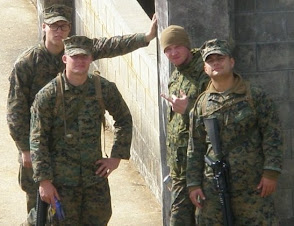
|


